Wednesday, January 13, 2010

A Tale of Three Conans...

As I've discovered over the years, Conan looks like this in Japan:


Which often causes people to cast funny looks my way when I'm asked if he's popular in America and I have to explain how in the U.S., Conan looks like this:


Thankfully, hardly anyone here has a clue about the late night talk shows in the States, so I probably won't have to explain the royal screwing NBC gave this Conan:


I've also found most Japanese people I talk to-- once they've grasped the concept of the American pulp hero Conan-- still prefer Detective Conan to our sword-wielding barbarian. Much in the same way I prefer Conan O'Brien's humor to Jay Leno's.

Tuesday, January 12, 2010

Nodame Is Stalking Me...

It's so strange. I barely gave Nodame Cantabile a thought before Ueno Juri started staring at me from those doughnut posters. Then I bought the manga... and now I can't escape her!

Today at work, my bosses were playing Nodame Cantabile: Final Movement First and Second Volumes, a CD of classical selections inspired by the movie adaptation of the popular manga and TV drama series. Lots of J.S. Bach, Beethoven, Chopin, Mozart and Ravel, plus a few others.

This reminds me once again of when I worked for Nova and the movie Nana came out, our Japanese staff piled volumes of the manga high on the lunch table in their tiny breakroom. As a comic book fan, I really dig living in a country that's so comic crazy people actually buy the comic after they see the movie, or see the movie because they read the comic. Or buy the soundtrack album to the movie based on the comic and play it all day at the office where I work.

Spidey 4: A Webcrawler No More!

That's a little more Stan-like. I was mostly wrong-- a new Spider-Man movie will get made, it just won't be Spider-Man 4. Thanks to script delays who knows what else behind-the-scenes shenanigans, director Sam Raimi and stars Tobey Maguire and Kirsten Dunst are off the Spider-Man franchise, which will now apparently be-- jargon I loathe coming up-- "re-booted." With a new director and a new cast. It's set for release in 2012, by which time the world will no longer exist. That's the bad news.

The good news is, the new screenwriter is Jamie Vanderbilt, who wrote one of my favorite movies of the past 10 years, Zodiac. The new movie will start over, with puny Peter Parker as a high school student and the awesome kick-ass super-jock Flash Thompson throwing his weight around and letting everybody know who's really the Big Man on Campus, or BMOC, as the kids say. Flash Thompson is really cool and all the ladies... OW! You're breaking my arm, Flash! Cut it out, dude!

Okay, he's gone.

I guess "re-booting" is the newest Hollywood paradigm, thanks to the success of the Batman and James Bond franchises and the new Star Trek flick. Got a movie series you've run dry of ideas for? Just start over at the beginning with a new director and cast! Now we can remake... er... "re-imagine" movies that are less than a decade old! It's the best form of double dipping.

Oh, sorry. "Re-imagining" is out, what with the failures of such reimaginings as Planet of the Apes, Rollerball and Death Race 2000. Re-booting. That's what we do. We boot, then run it into the ground, then re-boot and do it all over again but with more flash and even choppier editing and louder music and more CGI so it's bigger and better but still essentially the same thing. Familiarity doesn't breed contempt, it puts asses in the seats!

But I don't know-- a good, solid screenplay and just the right casting in the leads could revitalize Spider-Man after the underwhelming third movie. It's just that I was stoked to see Raimi and Maguire back in webtastic action, hopefully going out on top rather than slinking off like... some... Marvel... villain... person...

I got nothing. I used up all my vitriol on the concept of "re-booting."

Monday, January 11, 2010

Comic Book Series I Have Loved...

There haven't been too many series I've followed for extended periods. I used to just jump in and out on a monthly basis, giving The Amazing Spider-Man a ride for a few issues then switching to Batman. But every once in a while, there'd be a comic that would capture my imagination to the point of obsession. A comic that I enjoyed so much, I'd think about it between issues, wonder about the characters, draw them and write my own little fictions about them. These, then, are those comics...

1) Sgt. Rock/Our Army at War. To me, these are essentially the same comic. Sgt. Rock and his over-the-top yet strangely affecting adventures in WWII. I learned to read from these comics and maintained a collection of them from about age 4 to age 13 or so.

2) Micronauts. My friends and I loved the toys. Suddenly, there was this comic combining Michael Golden's slick art with a Star Warsian feel. Writer Bill Mantlo and Golden turned a licensed toy comic into a space opera epic, at least for the first twelve issues or so. I first got into it via issue 2 and bought it as often as possible even when it became a direct-only book. Somewhere early in Micronauts: The New Voyages, I finally fell out of the Microverse and resumed my normal size.

3) Uncanny X-Men. My superhero gateway comic. Before I got into Uncanny, I'd mostly just read a Batman, Superman, Spider-Man or The Incredible Hulk here or there, but it was a casual interest. This was the first ongoing superhero soap opera where I ended up caring more about the characters than their adventures, where I saw my own growing awareness of the world-- and subsequent pass through puberty into snotty, individualistic teenagerdom-- echoed by the book's growing sophistication. Looking back on it, Uncanny seems overwritten and overwrought, but at the time it was a revelation. The first issue I bought was #94, from a friend who had an almost complete run in a cabinet at his house. Actually, I accidentally ripped him off. In exchange for borrowing my left-handed fielder's glove for softball at school, he let me buy all his X-Men comics for a dollar each. I got 94, 95, 96, 97, 98, 101 and a few others and paid less than ten bucks. This was also the only comic I subscribed to, but that was much later during John Romita's art run. A victim of my abandonment of comics at age 16.

4) Fantastic Four. John Byrne's storied run. Whatever else people may say about the guy, Byrne took Marvel's moribund flagship title and brought back the fun and family togetherness. Byrne combined a Stan Lee/Jack Kirby feel with science fiction concepts and produced a few classic tales of his own. Who could forget "Terror in a Tiny Town" from Fantastic Four #236 where Dr. Doom exacts his most devastating revenge against Reed Richards yet, or the annual where milk from some Skrulls who have been hypnotized into thinking they're cows affects an isolated community in a terrifying, Twilight Zone-inspired way? Byrne even managed to parody Walt Disney and Neal Adams-- in the same character!

5) Judge Dredd. The American color reprints from Eagle. For a year or so I lived in a Dredd-induced post-apocalyptic nightmare world. But it was fun. I especially loved Brian Bolland's impossibly detailed work, but Mike McMahon and Ron Smith also piqued my interest. Another one that fell during the Great Comics Purge.

6) Cerebus. Another weird find. I bought #5 at a flea market and it hooked me immediately. The local comic book store owners also recommended it, so it became one of my "pull" titles. But this only lasted a few months because by then I was outgrowing comics altogether. I loved it enough it affected my personal drawing style-- for a while, I did everything slightly caricatured, with heavy shadows and lots of inky black.

7) American Flagg! A cool comic with a mature storyline that spoke to my maturing teen-self. As an art aficionado, I found Howard Chaykin's drawings sweet enough I began imitating him in my notebooks at school. Lots of heavy, pointy eyebrows and angular lines. Another book I stopped reading when I gave up comics.

8) New Mutants. This one I liked because it felt like The Uncanny X-Men, but the characters were all my age, so I could identify with them. I was immediately drawn to Dani Moonstar, possibly because Chris Claremont seemed so in love with her he made her the book's star... until he replaced her with Magik, who did nothing for me. Too gothy. I gave up New Mutants when Bob McLeod left, but when Bill Sienkiewicz took over, I jumped back in and read it right up until I abruptly cancelled all my monthly pulls at the comic book store.

9) Nexus. The Dark Horse series. The comic book store owners who encouraged my reading of indie comics over Marvel and DC's output championed this book, but Nexus looked too much like Cyclops of the X-Men. I did admire Steve Rude's clean artwork, though. When Dark Horse put out an origin book in 1992 and announced a run of Nexus mini-series, I finally caught the bug. Although I'd recently been dabbling in speculation thanks to the likes of Todd McFarlane, Jim Lee and Rob Liefeld, it took Mike Baron and Steve Rude to make me want to read comics again rather than just store them in plastic.

10) Every Valiant book. I got into this with the first issues of several of their titles and it became the first company whose entire output I bought each month. I still have a lot of these in a box at home. My favorites were Solar and Harbinger. Archer and Armstrong was cool, though. Who can argue with Barry Windsor-Smith's art? Not me!

11) Gen13. This light and stoopid comic-- heavily derivative of X-Men and New Mutants to the point where Marvel should have looked into a lawsuit-- kept me entertained with its trendy, misbehaving characters and tasty J. Scott Campbell artwork even as I deplored the submental writing and storylines and plot threads abandoned almost as quickly as they began. This was a dark time in my life, but Gen13 provided a bright spot. I even drew a couple of sample pages with the characters in a futile attempt to break into comics. The writing improved vastly-- Adam Warren especially brought a new and fresh intelligence to the series-- and Gen13 became less dependent on old X-Men plots but it still had the feeling of a road-to-nowhere ride. The high point is Adam Hughes's "Ordinary Heroes," a two-issue miniseries. Not only is his characterization of the teen heroes spot-on, but he makes their mentor look exactly like Clint Eastwood. It also appears to take place in Atlanta, Georgia, which is just down the road from where I was living at the time.

12) Hellboy. Anything Hellboy, including BPRD. I fell in love with Mike Mignola's artwork via his Bram Stoker's Dracula movie adaptation for Topps, so I first picked this up just to gaze at the pages. But before long the weird storytelling grabbed me and now I'm a die-hard fan of Hellboy and friends; I buy the monthly books whenever I find them and then I buy them all over again as trade collections. Currently my favorites are anything where Mignola collaborates with Richard Corben and anything drawn by Guy Davis, although that's not to take anything away from any of the other Hell-artists.

13) Lone Wolf and Cub. One of-- if not the-- greatest comic book series ever written and drawn. Dark Horse got me addicted (despite its consisting of twenty-eight volumes at a ridiculous 9.95 each) when they started putting out their little reprint books. This book destroyed my anti-manga stance. It also ended my interest in Frank Miller's work, because I realized everything I liked about him, he stole from Koike Kazuo and Kojima Goseki. If Koike Kazuo isn't the finest writer of pure adventure comics the medium has ever produced, I want to know who is so I can worship him or her. And the late Kojima is comics' ultimate storyteller, a producer of sequential work so vivid and perfectly paced, it's like experiencing a movie. He should be mentioned alongside Will Eisner and Bernie Krigstein whenever comic fans talk about this kind of thing.

14) Love and Rockets. Not since The Uncanny X-Men had a comic possessed my imagination so. I have no idea how this came about. I think I bought an issue of volume 2 one day on a whim and the next thing I knew, I was spending all my money on reprint volumes, almost trembling with anticipation whenever I scraped up enough cash to buy one. Love and Rockets turned back my comics-enjoying clock and gave me that old joy of discovery once again. Here we are almost 10 years later and I still buy everything Maggie and Hopey I can get my hands on here in Japan.

15) Swamp Thing. I read an issue here and there back when Alan Moore was writing it, but it never really clicked until DC started putting out the trade collection. Now I own them all, multiples in fact-- I bought some here in Japan I already owned but left back in the US.

16) Batgirl. The Cassandra Cain Batgirl, not the current one. I don't have a lot of interest in the boring new series, sorry. This is one I started picking up because the artwork confused the hell out of me, but I quickly fell in love with the concept, mostly because of its unfulfilled potential. Eventually, they revealed they had no idea of ever fulfilling it. The frantically paced early issues, when the concept was at its purest, work best. After that, it's hit-or-miss, although Rick Leonardi's run on art certainly looks wonderful. After a false re-start in Bludhaven, Cass abruptly lost her book and the next time we saw her, she was a horrible Dragon Lady caricature of herself. Since then it seems the powers at DC have deliberately done everything they can to destroy the character and alienate her fanbase. Sorry we liked your book, DC. Won't do that again. I'm still convinced this Batgirl could've been something vicious and sweet, like Kill Bill starring Zhang Ziyi instead of Uma Thurman, or DC's answer to Koike Kazuo's Lady Snowblood. Seems like they could never decide if this was a cutesy-pie title for kids-- a common failing for books starring teens, especially female teens-- or something disgustingly violent and dark. I would've gone for the latter, but no one asked me. Now why did I like this again?

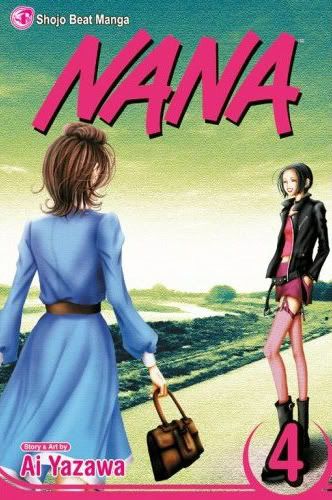
17) Nana. Not so much a collection as it is evidence of an addiction. Has there ever been a book as packed with soap opera-ish drama as Yazawa Ai's Nana? If so, I don't want to read it because money and time are limited commodities. Dirk Deppey of Journalista! called Yazawa the "Gilbert Hernandez of Japan." Imagine that! I think that's an understatement, because as much as I admire Mr. Hernandez's work, that admiration is a distant echo of my insane love for Ms. Yazawa's. Only the X-Men and Maggie and Hopey have ever swept me into the characters' world in the same way Nana and Hachi have. This book is my current craze and I can't get enough of it.

Honorable Mention: Any series Mike Allred is handling art for and/or writing.

Thursday, January 7, 2010

Oh No! Spider-Man 4 Script Problems Threaten to De-Web Wallcrawler!

Or some such nonsense. Sometimes I can channel the spirit of Stan the Man and sometimes I can't. This is obviously one of those can't times. In fact, I'm having as much trouble with this post as Alvin Sargent is with the screenplay to Spider-Man 4. It's giving him such a terrible time they've postponed shooting indefinitely; it was scheduled to start next month. And they've moved the Thor movie into Spidey's sweet May 2011 opening date.

But have no fear, True Believers-- this movie will get made. And hopefully it'll be better than Spider-Man 3, which had its moments but was very much a "tell, don't show" kind of flick with just too much plot, none of it particularly interesting.

As a comic book doofus with a blog no one reads, I feel obligated to share some of my asinine opinions about Spider-Man 4. In fact, as a comic book blogger, I'm contractually obligated to make a complete ass of myself by being a total blowhard about all of these superhero movies. It's an implied contract between me, the dork and you, the reader. But a contract is a contract, so here goes!

According to the story, director Sam Raimi wants John Malkovich to play the Vulture. I think that's a swell idea. He's a little too Malkovich to become the part totally; I think we're still going to see him as "John Malkovich essaying Marvel Comics' the Vulture" but he's got the look and we know he can menace on film. But here's where things get a little screwy. The studio wants names to draw in suckers... er... I mean viewers. If you're spending 400 million on a movie, you want asses in the seats. So at one point they were thinking Anne Hathaway as the Black Cat.

Insert needle-scratching-record sound effect here.

That's a really bad idea if you're going all Malkovich on us. Plus, they already muddied the Peter Parker-Mary Jane romance in the third movie. Putting another romantic rival for Pete's affections in this one would seem like a rehash of movie few, if any, are particularly fond of at this point. Also, Anne Hathaway has reached the point where she, like Malkovich, is Anne Hathaway on screen. She's a fine actor in her own right, but one major problem superhero movies have to deal with is willing suspension of disbelief, and the more big name stars you pack onto the screen the more difficult it is for the audience to believe in the story.

Call it the "Batman Franchise Effect." Jack Nicholson alone was a minor distraction in the first movie, but at least he was playing to type, and Kim Basinger wasn't that huge a star at the time. Christopher Walken was not much competition for the megawattage of Michelle Pfeiffer in the second movie but things were starting to get crowded with Danny DeVito. Again, perfect casting somewhat spared us. If Kim Basinger had appeared again, it would have been Hollywood overload. Which the third movie suffered mightily from with Val Kilmer, Chris O'Donnell, Nichole Kidman, Tommy Lee Jones and Jim Carrey, who was already too Jim Carrey for his own good. Kilmer alone might have pulled it off, or Kilmer and Kidman, but instead of enjoying a Batman adventure, audiences were starting to play Spot the Star.

And the fourth movie? Batman & Robin? The tendency towards glitz and camp begun in the third completely overwhelmed the meagre story. George Clooney, Alicia Silverstone, Uma Thurman, Chris O'Donnell and Arnold Schwarzenegger. These kinds of casts are fun for things like Ocean's 11, 12 and 13 but when your main character is a guy in colorful longjohns too many red carpet habitues can spoil what little veracity the film can muster.

But this is just my way of thinking. Obviously, studio executives think in a completely different, more inhuman way. Veracity and suspension of disbelief mean nothing to them compared to spectacle and cost-benefit analyses and Q-ratings. This is a world where Nicholas Cage almost played Superman, and these clowns were fine with that.

And no doubt a Spider-Man 4 with Tobey Maguire, Kirsten Dunst, John Malkovich, Anne Hathaway, Miley Cyrus, Lindsay Lohan, Balloon Boy, Octomom, Elizabeth Taylor, the late Dean Martin and the late Sammy Davis, Jr. making a swingin' cameo with the late Frank Sinatra plus the cast of TV's Glee in all the supporting roles and a special appearance by Ellen Page and Michael Cera reprising their Juno parts (they'd be on a whirlwind romantic tour of Manhattan and run into the Wallcrawler outside an abortion clinic) would recoup its costs and be a fairly solid summer hit...

But we'd have to read all the whining, complaining posts about how much we actually hate it on the Internet. There'd be a new "nuke the fridge" meme as lame as the current one. "Flip the spider" or "meet the Juno" or something like that. Spider-Man 4 would set the Tweeter world ablaze with hatred, send hordes of comic bloggers into hastily typed crescendos of exaggeration and rape metaphors, which in turn would set off a counterattack of offended feminist bloggers followed by an opposing outburst from conservative bloggers, then general recriminations and backbiting, friend against friend, brother and sister against each other, and, finally, the movie would not quite live up to its record-settting expectations and some entertainment pundit would use it as the centerpiece of an essay full of tortured, circular logic about how the superhero movie genre is dead. And the whole damned thing would start all over again.

Can we risk that, Marvel? I think not.

Leave out the Black Cat. Simplify the storyline and get back to the emotional content that made the first 2 Spider-Man flicks so enjoyable. That way you could avoid all those over-expository lines from the third one, like when Sandman says, "I'm not a bad man, I've just had bad luck," but all we'd seen so far was a lot of nothing. Give Spidey one strong villain like the Green Goblin or Dr. Octopus, or at the most two.

And if you must stick the Black Cat in there, I suggest Zooey Deschanel.

Tuesday, January 5, 2010

The 'Nam Volume 1: A Comic Review

The 'Nam Volume 1
Marvel Comics
Writer: Doug Murray
Penciller: Michael Golden and Wayne Vansant
Inkers: Armando Gil, Bob McLeod, Pepe Moreno, John Beatty
Colors: Golden, Phil Felix

I was going to do a post looking back at 2009 but I realized I have nothing much to say about the year and its comic book controversies. I’m not even sure what my “Best of” list would contain other than all the volumes of Nana and 20th Century Boys published during the year, a few archive books from DC, Dark Horse and Marvel, and Love and Rockets New Stories 2. The biggest mainstream event of 2009 as far as I was concerned was not "Blackest Night" or some similar crossover or any creative-team change at the big companies but the return of Xi’an Coy Manh and Dani Moonstar to monthly adventuring in New Mutants.

But right at the end of the year, Marvel hit me with this—the long overdue return to print of The ‘Nam, their ongoing series from the late 1980s. Remember the late 80s and its 60s revisionism? A look back finds Prince and Tears for Fears doing psychedelia… De La Soul as well. And the release of the Beatles’ catalog on CD for the first time.

This led to a spate of so many movies about the Vietnam War they became a genre unto themselves. Marvel Comics was right there with Vietnam-vet Doug Murray providing punchy, realistic scripts—within the limits of the Comics Code of the time, that is—and Michael Golden combining realistic renderings of combat equipment with slightly cartooned figures. The ‘Nam takes place in “real time,” meaning each story occurs roughly a month or so after the last.

According to editor Larry Hama's introduction, the plan was for the initial protagonist, a naïve and genuinely decent everyman figure named Ed Marks, to experience a 12-month tour or duty in country, then rotate back to “The World,” and other characters to take his place. Readers would learn the ins and outs of combat the same way our young infantrymen did—one soaking wet boot step at a time.

As much as I love Sgt. Rock and Easy Company and the Losers, Warren's groundbreaking failure Blazing Combat and other vintage war comics, The ‘Nam beats them as a realistic depiction of war and yet it's strangely sanitized. The new realism inspired by movies like Saving Private Ryan, Black Hawk Down and the Band of Brothers miniseries plus “shock and awe” imagery from the local news may cause readers to find The 'Nam almost quaint with its clean imagery (the inking by Beatty is especially slick and tasty). There’s a little blood and no gore, most killings taking place tastefully off-panel.

This expurgation extends even to the soldiers' language. One character uses the acronym “REMF” rather than the whole phrase (the book offers a helpful glossary in the back so you know what things like “11Bush” and “hat up” mean) but for the most part “Cripes!” is the curse word of choice. Murray’s humane depiction of his characters and deliberate use of G.I. jargon combined with Golden’s eye for detail more than make up for some of the self-censorship and give the reader a taste for what it might actually have been like to spend a few months humping the boonies and being dusted off by slicks for guys in their late teens and early 20s caught up in this Southeast Asian quagmire. Our pal Sgt. Rock might be able to bring down Stukas with rifle grenades, but Marks’ comparatively restrained attempts at heroism are only scoffed at by his fellow grunts as a little “too John Wayne.” You do that stuff for real and you only get yourself and your friends killed. And in that The ‘Nam more than holds its own after 20-odd years.

Golden makes sure almost all the characters look appropriately youthful and confused, except for the grizzled vets—the bloated, corrupt Top, a kind of African American Sidney Greenstreet in tiger-camo and Staff Sergeant Polkow, a muscular hulk on impossibly tiny legs. Marks himself is sort of blandly blond and wholesome, a fitting masking agent for young readers. As he matures and learns the ropes, Golden gives him increasingly longer hair; I’m not sure but I think at the time, the army experimented with allowing soldiers a bit more individualism in terms of hair length and mustaches. Or else they just didn’t have any military barbers at the firebase.

A stand out story takes us into the psyche of America's enemies, as told by a "Kit Carson scout," a former Viet Cong who has never given up his fight for freedom despite switching sides. Through his tale, Murray gives readers a broader view of the conflict, putting Marks' story into context. From the Japanese occupation and French collaboration to early OSS/CIA misadventures (we basically invented the Viet Minh, who later became the Viet Cong we fought so futilely for so long... glad to know we don't do that kind of crapola anymore) to the early days of America's involvement, Murray fits it all into a concise and emotionally moving narrative, giving humanity to what had been faceless, anonymous figures in previous issues and deftly conveying the political complexities without condemning. As always in these early issues, the focus is on the every weary ground soldier, be he American or Vietnamese.

Throughout, and despite Comics Code limitations, Murray and Golden manage to provide a “you are there” feel for Vietnam combat circa 1966, and it's meticulously researched. Marks’ 23rd Infantry regiment really exists and served as part of the 25th Infantry Division “Tropic Lightning” with the distinctive jungle leaf/lightning bolt shoulder patch-- and apparently they actually engaged in the actions depicted in the series.

The book contains 10 solid issues of The ‘Nam, just enough to get to know Marks and his buddies, but it leaves you strangely hanging as he breaks 90 days and declares himself “short” in the last story. I think adding a couple of more issues and completing Marks' tour would’ve been helpful, but this is one of the finest war comics, a matter-of-fact antidote to the heavyweight soul searching and self-evisceration of flicks like Platoon or Full Metal Jacket, but without the self-justifying defensiveness of Hamburger Hill. And it contains none of the surrealism/absurdism of the blatantly pro-war epic Apocalypse Now. At least as long as it features Golden’s art. I’m also not sure how long Murray lent his expertise and writing skills to the series, because this comic was hard to find locally back in the day. I missed a few issues here and there and after Michael Golden left I also made my exit as a reader. The next time I checked, Marvel had finally destroyed Murray’s carefully crafted verisimilitude by sticking the asinine Punisher character in a story.

An ongoing complaint I have with these types of reprints is with the colors. I wish they’d remastered them somehow. This book is essentially a reprint of the 1999 trade (even the Hama introduction comes from that version) and the colors seem a bit too garish on this slick paper. I wouldn’t want them to over-model it with computers but they could have toned it down just a bit to match some of the look of desaturated newsprint while still maintaining the clean whiteness of the page for something more naturalistic. The recolored cover looks fantastic, with painterly tones that make Golden’s artwork pop, and there are some gorgeous cover reprints in the back. There’s even Pepe Moreno’s stark photorealistic illustration for the last trade printing.

I'd been banging on in this blog for a while about how we needed this vital series available again in affordable form and now here it is! Thanks, Marvel. Sometimes you do the sweetest things for me!

Monday, January 4, 2010

Nodame Cantabile... the Motion Picture

It's fairly new to me, but you probably know all about Ninomiya Tomoko's famous manga Nodame Cantabile (available from Del Rey), the story of Chiaki Schinichi, a promising young musical genius who's stuck unhappily in Japan because he's afraid to fly and Noda "Nodame" Megumi, the bizarre girl next door who lives in filth but can play piano like nobody's business. I bought the first volume yesterday, and how I came to do so makes for a very boring story. But you're so very into Nodame Cantibile you're just dying to know how I came to buy it. You're obsessed, a veritable Nodame Cantabile maniac so anything related to the manga has your rapt attention. Right? Am I right?

Eh, probably not. But here we are anyway.

It seems as long as I've been in Japan, I haven't been able to escape Nodame Cantabile. A few of my students are big fans of this series, and especially the TV drama adaptations, which were big hits in 2006 and 2008. And the anime. Still, I resisted for the longest time despite their breathless recommendations. We even have an ex-student who's off living the Nodame Cantabile lifestyle, studying music at a special music university and living in an apartment with a grand piano as her main piece of furniture, just like Nodame herself. Although I imagine this real-life Nodame keeps a nicer place; she's as fastidious as she is studious. But while I like Takahashi Rumiko, Kazuo Koike and everything Nana, I'm just not that susceptible every single manga that comes down the pipe. Some people are obsessed with Japanese comics as a genre; I only go apeshit over individual creators and their works if they meet my exacting standards.

However, I am very susceptible to the charms of Ueno Juri. For about a month now, her smiling image in character as Nodame has been gazing down upon us from front windows of the local Mister Donut franchises. I recognized her immediately, and understood from her pose (she's sitting at a piano as if she's energetically playing it, yet can still make eye contact with passersby) she wasn't selling doughnuts as herself, but as some TV or movie character. But who?

Oh, Nodame from Nodame Cantabile. Thanks, Internet!

Juri is the perfect choice to play Nodame. She has the looks and she's already shown some musical talent-- she had to learn to play the saxophone for her lead role in 2004's comedy hit Swing Girls. So this Ueno "Nodame" Juri/Doughnut campaign ties in with the brand new Nodame Cantabile big-screen adventure, the first of two sequels to the TV dramas. What do doughnuts and music have in common? Well, other than a doughnut slightly resembling a whole note on a music staff, I have no idea. But thanks the wonders of cross-marketing, doughnuts and Nodame Cantibile have been joined in holy matrimony and no "defense of marriage" proposition is going to split them asunder.

As I've said before, Japan is a wonderful place-- perhaps the best-- for comic fans and fans of comic book-based movies. Practically every single popular comic book, no matter the genre, becomes a TV show or movie at some point. Since I've been here, I've watched a TV drama adapted from Suenobo Keiko's Life (the theme song of which became a huge pop hit for Nakashima Mika, who played the punk-Nana in the movies based on that comic), had the plot to the movie 20th Century Boys related to me several times by various people, watched the hit first version of Nana, avoided the flop sequel and gone on a movie date to watch Rookies. Drama, sci-fi, romance. And of course, the Hollywood comic book adaptations invariably make their way here. Superheroes and crime. Now this. Nodame Cantabile starring Ueno Juri has caused me to try the manga.


Although now that I've watched the trailer, I think Ueno Juri acts like nothing resembling any type of human I've met in my all too short sojourn here on planet Earth. She's more than a little scary.