I miss Curt Swan. Diversions of the Groovy Kind has a look at The Amazing World of DC Comics #7 (July 1975), with a Curt Swan interview and lots of sweet Swan artwork. I was seven years old when that came out, and I never read it. I'm trying to remember who my Superman artist of record was in those days.
Oh yeah, it was Curt Swan!
Curt Swan was THE Superman artist for me, the way I thought Walt Disney drew all those movie cartoons. Sorry, Joe Shuster. I know you were the original, so it should have been you, but you were long gone by the time I started reading. And when I started reading, as far as I was concerned, you couldn't have a Superman unless he was drawn by Swan. Later I got into Superman reprint books and discovered Wayne Boring, Al Plastino and Neal Adams, and while I liked and still do like their versions of Superman-- there's something really appealing about the beefy, barrel-torsoed Boring Supes-- practically every new Superman or Action Comics I bought had the familiar-looking Swan Superman. So Swan Superman simply WAS Superman for me.
Swan had a way of drawing facial expressions that impressed younger me. Like Superman eating the defunct kryptonite, or posing as Clark Kent doing his day job and making one of Steve Lombard's pranks backfire, startling and humiliating the would-be bully into making a really amusing facial expression, which Swan and whatever inker was handling the book that month rendered in characteristically clean, readable linework.
And I don't know if Swan took a lot of artistic shortcuts, because I don't know much-- if anything-- about his drawing methods. I have a feeling he didn't, because his characters inhabited a solid, believable world. Sure, it was generally neater and more squared-away than our own, but if Superman or Lois Lane happened to be tackling pollution as a social issue in that story, Swan would make that pollution look like the loveliest pollution you ever did see. Municipalities across the land would be proud to fester in Swan-rendered pollution. The Daily Planet offices, the Metropolis skyline, the studios of Galaxy Broadcasting, some alien spaceship-- whatever it was, Swan gave it all a solidity and reality. He simply drew the hell out of it, without a lot of fuss and muss and fidgety crap and visual noise. Swan didn't have to hide anything with flash because he could just flat-out draw, man, draw.
In the DC Comics interview, Swan says, "As the Superman character evolved, Mort [Weisenger] felt, at the time, that we should get a little more humanistic qualities into him. We wanted people to relate to him better." Swan was certainly successful at that. From those facial expressions, to the body language, to the backgrounds, to the stories themselves, he worked on a Superman who had a down-to-earth quality about him. Like a real dude, with real feelings, despite his godlike abilities. When pro writers (and fans) say things about Superman being unrelatable because he's all-powerful, or boring because he can't be challenged, I get the feeling they never read a Superman story drawn by Curt Swan.
Also, it's pretty cool to watch the Swan Superman evolve from the early 60s into the 70s. First he has that tall forehead, the slightly receding hairline of an older guy. Even Superboy looks like he needs a little Minoxodil, or soon will. By the time Clark Kent is anchoring the nightly news at Galaxy, his spit-curl has become a more full-bodied wave and his hair is creeping down over his ears. But what doesn't change in all that time is the basic appeal of Curt Swan's art. If you can look at it and not feel uplifted, then you are reading the wrong blog.
Well, you might be doing that anyway. Go read Diversions of the Groovy Kind, you nut!

Showing posts with label Curt Swan. Show all posts
Showing posts with label Curt Swan. Show all posts
Wednesday, May 14, 2014


Monday, June 25, 2012
What a super weekend!
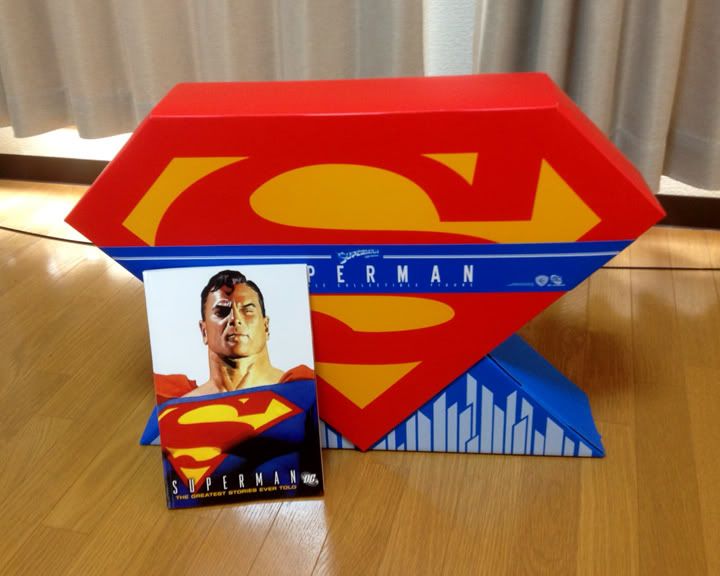
The book has a nice Alex Ross cover featuring his version of Superman looking stern and appropriately heroic, spit curl, narrowed eyes, lantern jaw, big red and yellow emblem on his chest. The stories inside feature a wide array of writers and artists, but a more appropriate title is Superman: Some Pretty Good Stories. Alongside the origin story from Superman #1 (June 1939) and the John Byrne revamp "The Man of Steel" from The Man of Steel #1 (June 1986) there are some curiosities like the 1940 short story "What If Superman Ended the War?" written and drawn by Superman creators Jerry Seigel and Joe Shuster for Look Magazine and an otherworldly pin-up by none other than Moebius himself. It's amusing to see the rudimentary yet compelling storytelling of Simon and Shuster as they pit Superman against the real world menace of both Adolf Hitler and Joseph Stalin. All it takes is a quick trip to Nazi Germany and the Soviet Union and Superman deposits both dictators in Geneva, Switzerland where they're judged for crimes against humanity and the world enters a utopian age of peace and scientific progress...

To be fair, I didn't read this story when it first came out in Action Comics #775 way back in 2001 and in the years since we've had rapes and murders, Identity Crisis making the regular rank-and-file of DC's caped marvels almost as nasty as the Elite are supposed to be and Wonder Dog devouring Wendy, so maybe I'm just jaded, so beaten down by the banality of all this caped decadence I can no longer feel Kelly's intended impact. You really want a Superman who's a beacon of restraint and decency, and Kelly attempts to give that to us while scoring points off guys like Warren Ellis-- who's actually a damn fine writer-- and even DC's own Vertigo line, but when you turn all your heroes morally ambiguous and then pat yourself on the back for it, ironically it turns out Superman won the battle but lost the war. This Superman doesn't even exist anymore.
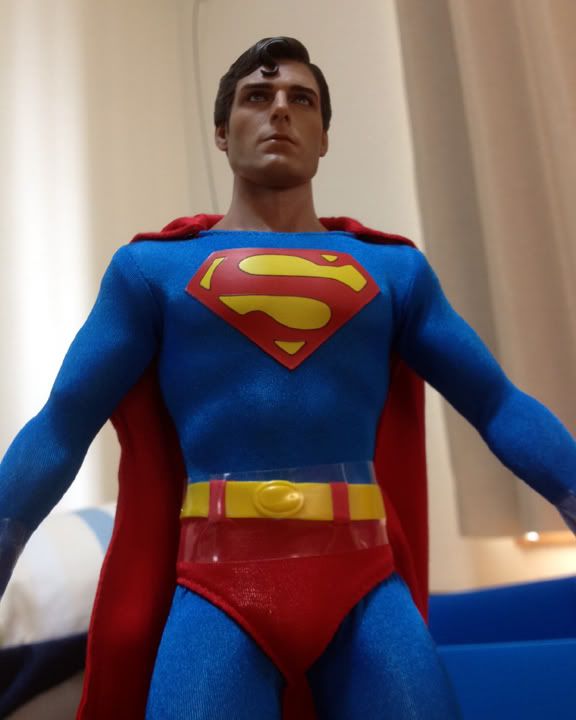
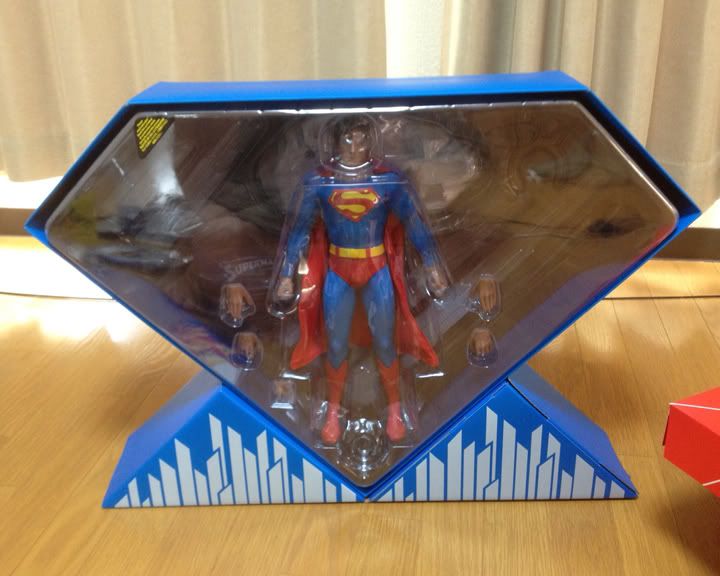
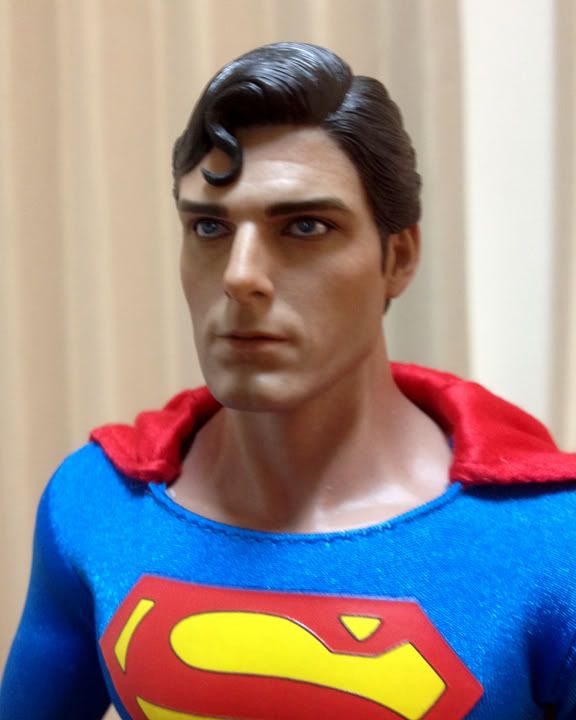
Even at their best, none of these stories approach the magic of Superman the Movie, a relic of time when movie makers told stories. The Hot Toys Superman is every bit as fun as the movie itself. It doesn't scream "I'm from the 70s!" at you, though. They've accurately reproduced Christopher Reeve from the movie and managed to create a timeless image of the first and still greatest of all the super-people.
But it's a little scary, too. I showed it to my girlfriend via Skype and she freaked out over the eyes. Too intense, too real. The Reeve likeness is as close to perfect as you're likely to get, but it's got the same uncanny valley feel you'd expect to encounter in a Hollywood wax museum. The uniform is spot on, a tiny reproduction of what was already an iconic visual-- the classic blue suit with red cape, undies and yellow highlights. I paid a ridiculous amount of money for this figure but I had to have it. I've been looking for the best representation of Superman in toy form for the past few years. This is it. By Jor-El's shade, this is it! I also believe Reeve's performance as Superman to be the most perfect iteration of the character in any medium and this figure is a triumphant celebration of the role. Part of the proceeds go to Reeeve's charitable organization, the Christopher & Dana Reeve Foundation, and the interior box lid features a poignant dedication to Reeve.
Subscribe to:
Posts (Atom)