Getting my hands and eyes on American comics can be a bit of a hassle here in Japan. Luckily, I'm more into vintage comics than the new stuff (except for a few titles from Dark Horse, Fantagraphics, Boom! and IDW, that is) and I can buy all the Essentials, Archives, Best ofs and Collected Editions I want from Amazon.jp. They're a bit pricey, though, and while I love the feel of a nicely-designed hardcover archival comic collection printed on quality paper, those take up a huge amount of space and they're heavy. Buying them digitally from the Dark Horse website or single issues from Comixology means transferring money home and keeping track of my US funds and that's a huge headache because the post office bank here isn't open on weekends for that kind of stuff.
So what to do? Why, find a way to pay with my Japanese money. Amazon.jp makes that easy when you want a paper version. You can order COD, for crying out loud, a system that resulted in my receiving a box a day there for a while. You can also go to the nearest convenience store, input your order number into a special machine and print out an invoice, then pay at the register. A day or two later, a delivery person shows up with your package. It's fun. But that doesn't help now that I'm married and I have to share space. I can't just pile up a huge library of gigantic comics reprints anymore. Plus, we're kinda trying to save money for our future, something I never considered having before transforming myself from a single person into one half of a couple.
Switching my collection to mostly digital makes a lot of sense, but it entails a new set of solutions. Comixology has been fantastic, but there's that bank transfer thing, and Dark Horse has its archival material exclusive to its website which involves doing that even more. Rats.
Luckily, there's Kindle. Dark Horse has generously provided Amazon with Kindle versions of its Creepy and Eerie books, and DC has done the same with a lot of its collected editions. IDW even put out a Kindle version of Torpedo with Alex Toth art. I don't have a Japanese credit card, but I can buy an Amazon gift card for myself and go nuts. The best thing is, instead of paying the equivalent of 40 or 50 bucks for a book, I can get a digital copy for about 17 dollars. This means even more of the Creepy and Eerie volumes become desirable, whereas before I had to cherry-pick them based on material I considered "essential."
Now the Kindle I have is the base model and it's pretty old now-- in relative terms as these gadgets go. It won't display graphic novels. And I should have checked to see if I could read them on my Windows Kindle app before I bought them. That would've been the smart thing to do. But I was so excited by the prospect of buying Creepy cheaply (say that five times fast) I jumped the gun. The end result is I'm contemplating buying one of those full-color expensive Kindle things and I have Creepy Archives Volume 1, Torpedo 1 and DC's Jack Kirby's OMAC on my iPhone now. That's where I'll leave things for a while. I'm not in any big hurry to buy the new Kindle and it's the kind of thing I have to vet with my wife before I do. Major purchase. It's a good system we have, and luckily for us both I've inherited my dad's Depression-born reluctance to spend more than 100 dollars a year unless it's on food. It took me two years to work up the nerve to buy the computer I usually read comics on these days and even then I felt sick to my stomach for a month.
On the other hand, I'm addicted to books and old comics.
Now with Amazon having bought Comixology, it will be interesting to see how the payment plans shake out. Will Comixology start accepting Amazon gift cards, for example? And will they furthermore accept them if they're bought with Japanese yen? That doesn't seem likely, but it would certainly make my comics buying-- even of new titles-- much easier. And what about Dark Horse? How do they fit in since they have their own proprietary digital comics-reading engine?

Showing posts with label digital comics. Show all posts
Showing posts with label digital comics. Show all posts
Tuesday, June 10, 2014


Wednesday, April 30, 2014
Re-downloading those Gold Key Star Trek comics inspires this Captain Kirk ink drawing...
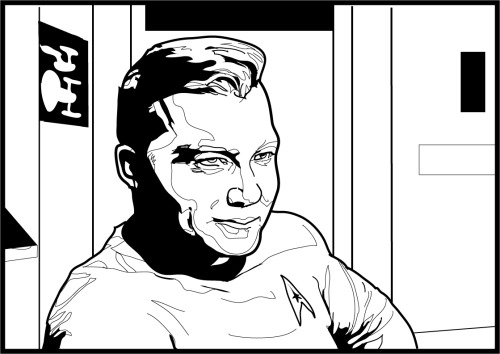
Not really. Actually, it was the other way around. I've been writing about Comixology and drawing lately and working on this drawing reminded me I needed to get those Star Treks back onto my phone. Any excuse for drawing Trek characters, though, is a good one. Grabbing the new Comixology iPhone app requires we download all our comic books again. There are a few series I absolutely cannot do without: Kamandi, New Mutants, Teen Titans and, of course, Gold Key Star Trek. I'd add New Gods and Mister Miracle if they were available. There's one more, but I blog about it elsewhere because it falls outside our mission statement here. It's nice being able to carry around entire runs of Fantastic Four, Uncanny X-Men and Amazing Spider-Man, too.
The first thing I did when I started the app is fill one very important area of it with Kamandi. Yesterday, I started the process of re-acquiring my digital Trek books from IDW. You have two options. One is to purchase the individual issues, which is my preference. Be warned, though-- for some reason the first few substitute the old Checker Publishing softcover artwork for the original comic book covers. Then they start in with the original and very lovely photo-montage covers and-- even better-- the off-model fully-painted ones! The other option is to buy them in little groups as collections. At $11.99 a pop, that's probably the cheaper of the two, but for me, money is little or no object.
Well, even if you think I'm an ass for shilling for Comixology-- I haven't meant to; it's just worked out that way-- please enjoy Captain Kirk wearing something of a smirk. I need to fix his left eye, mouth and chin, but I'm almost as satisfied with this drawing as ol' Kirk here is with himself!
Sunday, April 27, 2014
A few words on Comixology...
While I've got several bookshelves at home groaning under the weight of trade collections of old comics like New Gods, New Teen Titans, New Mutants, Uncanny X-Men, Tomb of Dracula, Creepy, Eerie and assorted other old school delights, my primary reading source for vintage comics (and new) these days has been Comixology. And despite a glitch here or there and the lack of Fantastic Four #50 and the rest of the Nick Cardy/Bob Haney-era Teen Titans, I'm pretty well satisfied with Comixology.
I carry a huge collection of individual issues around with me on my iPhone. Or, rather, I did until the other day when Comixology retired their old iPhone app in favor of a new one. I only just downloaded it so I can't say if it's an improvement over the old. The old one was a little frustrating when I wanted to stop reading one book and switch to another. Finding the sweet spot on the screen proved difficult and I'd be stuck paging through a comic, back and forth, while puffing out my cheeks or whatever the hell it is I do when I'm mildly annoyed. But it was worth it to have a collection like that at my fingertips, especially when waiting for a bus or riding a train.
Comixology's at-home reading app has vastly improved. The newest reading method beats their older one. When they gave customers the option to beta-test it, I found it more responsive and easier to enjoy because the pages displayed larger. You can zoom way in on panels and really look at the details. Of course, since most of these comics came out in the days of cheap printing on newsprint, and they've been subject to some at-times clumsy restorations, this isn't always the best way to experience them. The guided-view technology is generally well-handled, with panel transitions appearing almost cinematic at times. Guided-view provides zoom-ins for emphasis and scans full-page panels in ways that seem well-chosen. I haven't noticed whoever programs that for any particular book screwing much of anything up as far as reading flow goes, and in fact, for some newer books where the panel-to-panel order can be... er... confusing at best, Comixology has managed to provide a clarity which enhances the reading experience. You know, by actually giving you one when the artist has failed to.
While my preferred way of reading will always be sitting up in bed with an actual book in my hands, turning real pages, Comixology is providing me with a convenient way to tote a lot of books around while also saving shelf space at home. I tend to worry about licensing agreements giving out and since thanks to copyright laws and corporate issues you can't download the comics and store them on your own hardware to preserve what you paid for forever (you're actually buying a license to read them rather than the ownership of the actual comics), but as long as Comixology and the publishers maintain friendly relations and my books stay available, then I have no complaints about the service.
Getting 5 bucks to spend thanks to the iPhone app changeover is pretty nice, too. I just wish I could spend part of it on Fantastic Four #50!
I carry a huge collection of individual issues around with me on my iPhone. Or, rather, I did until the other day when Comixology retired their old iPhone app in favor of a new one. I only just downloaded it so I can't say if it's an improvement over the old. The old one was a little frustrating when I wanted to stop reading one book and switch to another. Finding the sweet spot on the screen proved difficult and I'd be stuck paging through a comic, back and forth, while puffing out my cheeks or whatever the hell it is I do when I'm mildly annoyed. But it was worth it to have a collection like that at my fingertips, especially when waiting for a bus or riding a train.
Comixology's at-home reading app has vastly improved. The newest reading method beats their older one. When they gave customers the option to beta-test it, I found it more responsive and easier to enjoy because the pages displayed larger. You can zoom way in on panels and really look at the details. Of course, since most of these comics came out in the days of cheap printing on newsprint, and they've been subject to some at-times clumsy restorations, this isn't always the best way to experience them. The guided-view technology is generally well-handled, with panel transitions appearing almost cinematic at times. Guided-view provides zoom-ins for emphasis and scans full-page panels in ways that seem well-chosen. I haven't noticed whoever programs that for any particular book screwing much of anything up as far as reading flow goes, and in fact, for some newer books where the panel-to-panel order can be... er... confusing at best, Comixology has managed to provide a clarity which enhances the reading experience. You know, by actually giving you one when the artist has failed to.
While my preferred way of reading will always be sitting up in bed with an actual book in my hands, turning real pages, Comixology is providing me with a convenient way to tote a lot of books around while also saving shelf space at home. I tend to worry about licensing agreements giving out and since thanks to copyright laws and corporate issues you can't download the comics and store them on your own hardware to preserve what you paid for forever (you're actually buying a license to read them rather than the ownership of the actual comics), but as long as Comixology and the publishers maintain friendly relations and my books stay available, then I have no complaints about the service.
Getting 5 bucks to spend thanks to the iPhone app changeover is pretty nice, too. I just wish I could spend part of it on Fantastic Four #50!
Monday, August 19, 2013
Colleen Doran's "A Distant Soil" is another one of those books I've been meaning to read for years!
This was inevitable. Last night I bought the digital version of the new remastered A Distant Soil. I may buy a printed copy, too. In fact, I will. Apparently, it's inescapable.
I've followed Colleen Doran's career through interviews and magazine articles for about as long as I can remember, but I'd never actually read a comic she worked on before this year. I've always admired her artwork-- it's gorgeous-- and respected the way she broke herself into comics at the age I was still just reading them and vaguely dreaming of drawing Uncanny X-Men "when I [grew] up," and how she fought through a lot of crap that would have beaten a weaker person.
A couple of months ago, I saw through a friend's feed she was on Facebook, thought what she had to say was interesting, started following her. She's one of those pros who actually engages her followers. She'll "like" your comment if it's a good one, respond if it moves her to and dispute you if she thinks you're wrong. There are probably a lot of pros who do the same thing (I wouldn't know, since I'm pretty shy about friending the ones who have personal but not fan pages and I'm too Facebook-averse in the first place to spend a lot of time searching for "official" pages to follow), but I consider this kind of engagement above and beyond, especially from someone writing and drawing a ongoing series.
Then I bought the Shade the Changing Man issues she penciled. While I really dig Peter Milligan's work on X-Force/X-Statix (I consider this run flawless in every way), the story itself is mediocre by the standards of some of the other contemporaneous Vertigo titles and that supposedly edgy inking job doesn't do Doran's pencils any favors. Then I bought the latest two issues of A Distant Soil. Beautiful books, not sure what's happening in them because I've missed so much already, the Comixology guided view format isn't the best way to experience the story due to the way Doran designs pages. That's no complaint about the book, because obviously you're meant to hold the actual paper thing in your hands and read it that way.
Taking all this together, with the release of this "definitive" edition of the first part of A Distant Soil it seems now is the time to crank things all the way back to the beginning and finally read something I believe I should have been reading all along. This is the kind of thing that pleases me. Something buzzing in the back of my mind, some recurring encounter with material and finally, when everything aligns, a chance to get into it in a major way right from the beginning. Love and Rockets, Xenozoic Tales, Jack Kirby's Fourth World books, Creepy and Eerie magazines, Lone Wolf and Cub and now A Distant Soil.
So that's another one we'll be talking about here before much longer. I'd have started with a little more today but I've only read a few pages. Hey, I also bought the first year of The Amazing Spider-Man plus some later issues and I didn't even get to open them. Something about jetlag and just not having enough time to do everything I'd like to do in a day!
I've followed Colleen Doran's career through interviews and magazine articles for about as long as I can remember, but I'd never actually read a comic she worked on before this year. I've always admired her artwork-- it's gorgeous-- and respected the way she broke herself into comics at the age I was still just reading them and vaguely dreaming of drawing Uncanny X-Men "when I [grew] up," and how she fought through a lot of crap that would have beaten a weaker person.
A couple of months ago, I saw through a friend's feed she was on Facebook, thought what she had to say was interesting, started following her. She's one of those pros who actually engages her followers. She'll "like" your comment if it's a good one, respond if it moves her to and dispute you if she thinks you're wrong. There are probably a lot of pros who do the same thing (I wouldn't know, since I'm pretty shy about friending the ones who have personal but not fan pages and I'm too Facebook-averse in the first place to spend a lot of time searching for "official" pages to follow), but I consider this kind of engagement above and beyond, especially from someone writing and drawing a ongoing series.
Then I bought the Shade the Changing Man issues she penciled. While I really dig Peter Milligan's work on X-Force/X-Statix (I consider this run flawless in every way), the story itself is mediocre by the standards of some of the other contemporaneous Vertigo titles and that supposedly edgy inking job doesn't do Doran's pencils any favors. Then I bought the latest two issues of A Distant Soil. Beautiful books, not sure what's happening in them because I've missed so much already, the Comixology guided view format isn't the best way to experience the story due to the way Doran designs pages. That's no complaint about the book, because obviously you're meant to hold the actual paper thing in your hands and read it that way.
Taking all this together, with the release of this "definitive" edition of the first part of A Distant Soil it seems now is the time to crank things all the way back to the beginning and finally read something I believe I should have been reading all along. This is the kind of thing that pleases me. Something buzzing in the back of my mind, some recurring encounter with material and finally, when everything aligns, a chance to get into it in a major way right from the beginning. Love and Rockets, Xenozoic Tales, Jack Kirby's Fourth World books, Creepy and Eerie magazines, Lone Wolf and Cub and now A Distant Soil.
So that's another one we'll be talking about here before much longer. I'd have started with a little more today but I've only read a few pages. Hey, I also bought the first year of The Amazing Spider-Man plus some later issues and I didn't even get to open them. Something about jetlag and just not having enough time to do everything I'd like to do in a day!
Friday, September 23, 2011
I tried Dark Horse Digital the other day and I didn't die!

That's right. I've entered the digital age of comic book consumption. No more glossy covers and the ever-present danger of receiving a paper cut so severe I have to go to the emergency room and risk contracting that nasty flesh-eating bacteria strain our local hospitals are rife with. The only reflections interfering with the pure joy of reading a comic book are the ones on the monitor glass, instead of on the shiny, coated paper. But I'm only reading Dark Horse's free digital offerings because I'm broke. No money. Zilch.
My first digital comic? The first issue of Gilberto Hernandez's Speak of the Devil, which begins as the mysterious story of a young gymnast who dons a smiling devil mask and black clothes to spy on her neighbors. Why is she doing this? Who are all these people? At first it seems Hernandez has simply created an intriguing little world, kind of insular and suburban with a lot of those bizarre touches he brings to his Love and Rockets stories-- the ones with all the nude sex with naked people having sex with other naked people without any clothes on.
Obviously, there's a lot more to Gilberto Hernandez than just nekkid getting-it-onness. His Palomar stories form a multi-generational epic with dozens of richly developed characters spread out over time and place. Speak of the Devil eventually turns into a story about an ultraviolent crime spree. I know this because I read one other issue of this in print form several years ago. I bought it relatively cheap during the Free Comic Day sale at Blister when it was in Harajuku, something I'd completely forgotten until researching a little more about Speak of the Devil for this blog post and coming across a very negative review. Somehow I'd blocked it out of my mind.
Ordinarily, ultra-violent killings stick with you.
Lesson learned? When you're reading the works of a writer-artist who created as one of his early signature characters a stigmatic punk, did some X-rated work during the early 90s porn comic boom and recently sent a couple of low-rent Martin and Lewis imitators to an alien world, you have to expect dark twists and turns from time to time. Hernandez has never been one to shy away from depicting the lows of human behavior along with the highs. I've never known him to wimp out on a story. Also, along with his more calculated work, he has this kind of experimental, stream-of-consciousness mode where he follows characters all through the various shock corridors down which they care to traipse. I get the idea the stories are telling themselves and Hernandez is only recording them with his brush. And I, for one, love stream-of-consciousness and surrealism.
Speak of the Devil is as twisted as any of the other more experimental stories he's written, those surreal tales of decadence and violence that would make David Lynch go, "Whoa, careful there, buddy" and tug uncomfortably at his collar? The first issue reminds me of Blue Velvet and its small town with so many secret bedroom worlds of drugs and violence uncovered by a protagonist with a strong voyeuristic streak. The other issue was more like Natural Born Killers, with more killing added.
This is particularly fitting because it's also a metatextual tale, the "true story" behind a movie in which one of his characters-- Fritz from High Soft Lisp and other stories-- stars. In his poem "The Two," W.H. Auden writes of a green field coming off like a lid, "revealing what was much better hid," but Gilberto Hernandez has no problem showing us these things in startling clarity with his clean, direct artwork.
But yeah, digital comics. What about those?
It took me a few minutes of clicking back and forth to figure out the interface. This isn't a flaw in the design; it's the product of my technical incompetence. At first I was frustrated with these dark bars covering some of the dialogue at the top of the page. Eventually, I learned these go away when you move the cursor to certain spots on the screen. The drawbacks are eye strain from staring at a computer screen and the intense isolation of each panel which detracts a bit from context and storytelling. When you read a printed comic book, you're still aware of the relationship of the panel you're currently reading to the others around it, and its size and shape within that relationship affects the "cinematic" feel of a page-- that the events are unfolding as actions, rather than as a grouping of related but frozen tableaux. With the Dark Horse interface, this effect is almost-- but not quite-- eliminated, creating a stronger focus on the panel. You end up absorbing more information from it, at the cost of most of what you'd get from the whole page.
You can look at the entire page, but it appears very small and the text is unreadable. I can see this eventually affecting storytelling in much the same way the increasing popularity of trade collections caused writers to telescope their stories into arcs and pace them so the story beats fall with certain financially-desirable page counts. With the best writers and really compelling story arcs, you're not losing a whole lot. With hacks, you're actually getting ripped off if you bother with the monthly magazines because they're padding; you're getting less storytelling for your three bucks. But then again, they're hacks so their stories by definition can be no better than mediocre and therefore aren't worth reading in any format.
When writing print comics that companies will also publish digitally, writers and artists might choose proportional rectangular panels of various sizes for different effect, and asymmetrical or odd-shaped panels-- or in our best-case scenario, even the current lazy-ass "widescreen" pages with lots of squished horizontals-- could become a thing of the past-- who wants to put just a section of a panel on a page? Or two out of an action sequence of four? That would severely inhibit e-readability! But with planning, the skilled creators could still get various pacing and impact effects on the printed page and intensify them for e-version, which would result in something closer to the weird hybrid of literature and movies the best comics usually are. Even now it feels like a failure of imagination to make web comics and constrain yourself with the pretense that you're making a printed page. Although I may do that one day myself.
But how will these new comics that work both in print and digitally come about? Don't look at me! When someone gifted beyond my kindergarten-level artistic skill and thought process decides to pull an Orson Welles and gifts us with the Citizen Kane of digital comics, then we'll all know.
Actually, do look at me! 'Cuz I can dance! Check it! Woo hoo!
Subscribe to:
Posts (Atom)