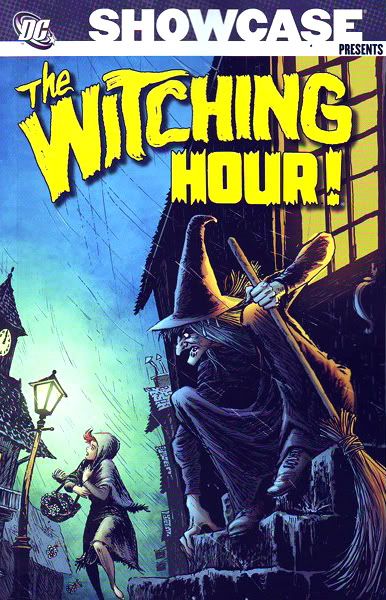
I'm not sure if EC started the tradition of having horror anthology books hosted by recurring characters but by the late 60s and early 70s, it was a pretty well established trope. The Crypt-Keeper is perhaps the most famous of all, immortalized by HBO's Tales from the Crypt series. The EC original looked somewhat more human, but the TV version had that crazy cackle, a warm, infectious laugh, as gleeful as a Christmas morn. In the comics, the Crypt-Keeper and his fellow hosts the Vault-Keeper and the Old Witch directly address readers and are playful rivals, sometimes more interesting than the stories they introduce. Warren Publications had as their presenters Uncle Creepy and Cousin Eerie. They queasily look like the results of several generations of inbreeding within some old money family sliding into decadence and disrepute; the Crypt-Keeper and friends seemed positively savory next to those two geeks. Gold Key had caricatures of real people for their comics; Rod Serling appeared in comics based on his Twilight Zone TV show while Boris Karloff headlined his own title, Boris Karloff Tales of Mystery.
EC and Warren alumnus Joe Orlando outdid them all as an editor with DC, teaming up with Dick Giordano, Bill Draut and Gerry Conway among many others to give horror fans such memorable hosts as Cain and Abel, the ultimate pair of sibling rivals, and their books House of Mystery and House of Secrets, Eve from Secrets of Sinister House... and... Lucien the Librarian. My favorites, however, are from the Giordano-edited The Witching Hour: the three witches, Mordred, Mildred and Cynthia. I'm not sure who gets credit for creating them. Possibly William Shakespeare, although his three "weird sisters" are uniformly hideous, described in Macbeth as "withered," "wild in their attire," and, most alarmingly:
You should be women,
And yet your beards forbid me to interpret
That you are so.
And yet your beards forbid me to interpret
That you are so.
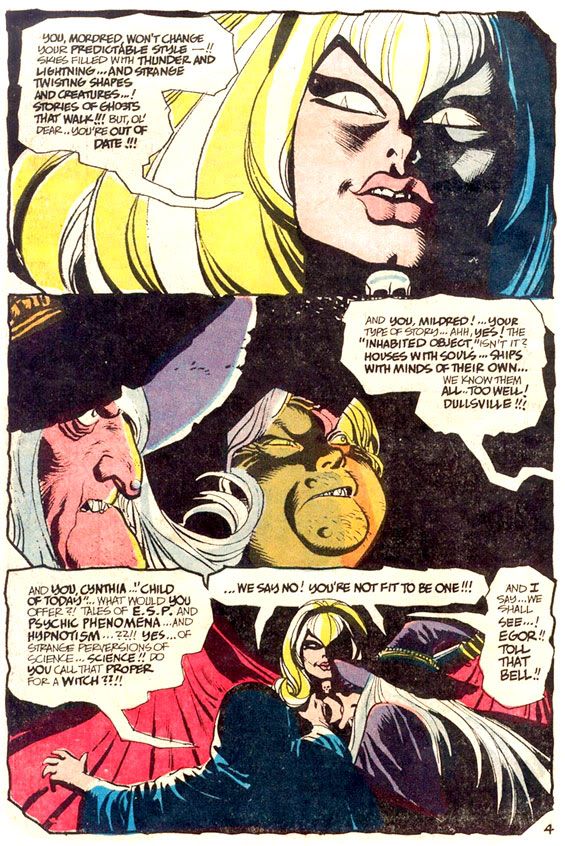
Mordred and Mildred come closest to the Shakespearian example. They're fairly standard witches, complete with a pointy hat and a hooded cloak, stringy hair and appropriately old school ideas about what constitutes a horror tale. Cynthia, however, gives the Bard a middle-finger salute. She's the very model of a modern major witch, a little Samantha Stevens and a whole lotta love. With the pouty face of a Bridget Bardot-- albeit with slitted cat-pupils-- and the voluptuous figure of a Sophia Lauren, Cynthia slinks around in a skin-tight black dress, a skull-shaped brooch at her throat. She speaks in groovy 60s slang-- she'd probably call each issue of The Witching Hour a "scare-in"-- and her bag is telling far out, contemporary stories that swing like a pendulum do.
The Witching Hour host segments have a distinct narrative flair all their own, each issue opening with some comedic vignette. Cynthia taunts the older witches, they respond in kind. Cynthia usually comes off best, with an Addams Family-esque joie de mourir. She's just more likable than her companions, too. While Mildred and Mordred gnash their teeth and verbally abuse the help, Cynthia poses vivaciously for the readers, a smile on her fleshy lips. Given the choice between two witches who seem constantly pissed and one who's on a cool trip, daddy-o, which would you choose? I'm turning on, tuning in and dropping dead with Cynthia.
Alex Toth's Cynthia has a strange widow's peak that appears to have consumed her pointy eyebrows, huge feline eyes, lashes heavy with mascara, bee-stung lips and a square-ish jaw with a pronounced chin dimple. Here's a splash page from The Witching Hour #8 (1970) where Toth has her introduce a story in a novel way:
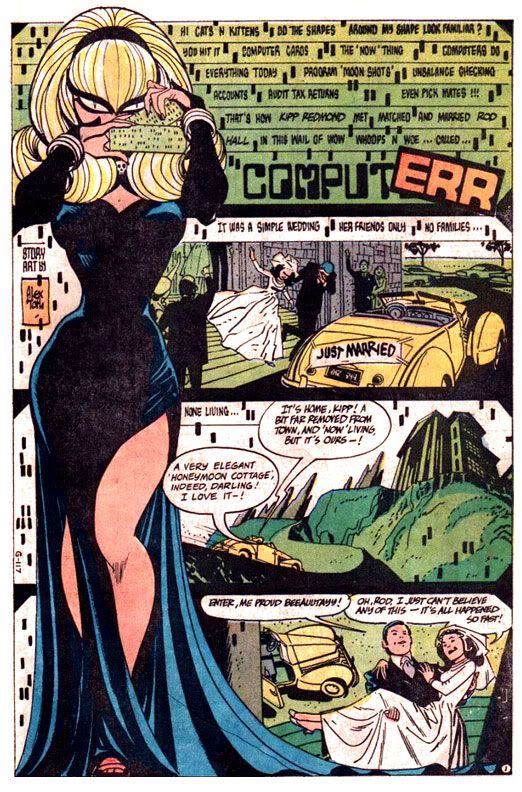
I love her cheeky, playful pose. Lots of personality in that drawing! The page layout is innovative for the time, Cynthia providing a visual frame for the first three panels and black gutters instead of the traditional white. It may be technologically dated now, but even the computer-style typeface was a little ahead of its time. The story is credited to Toth, but the DC Showcase reprint lists none other than Sergio Aragones as the writer. Maybe Toth plotted and Aragones scripted. If you're a Toth fan, the early issues of The Witching Hour are a treasure trove of his work, which makes the DC Showcase volume indispensable.
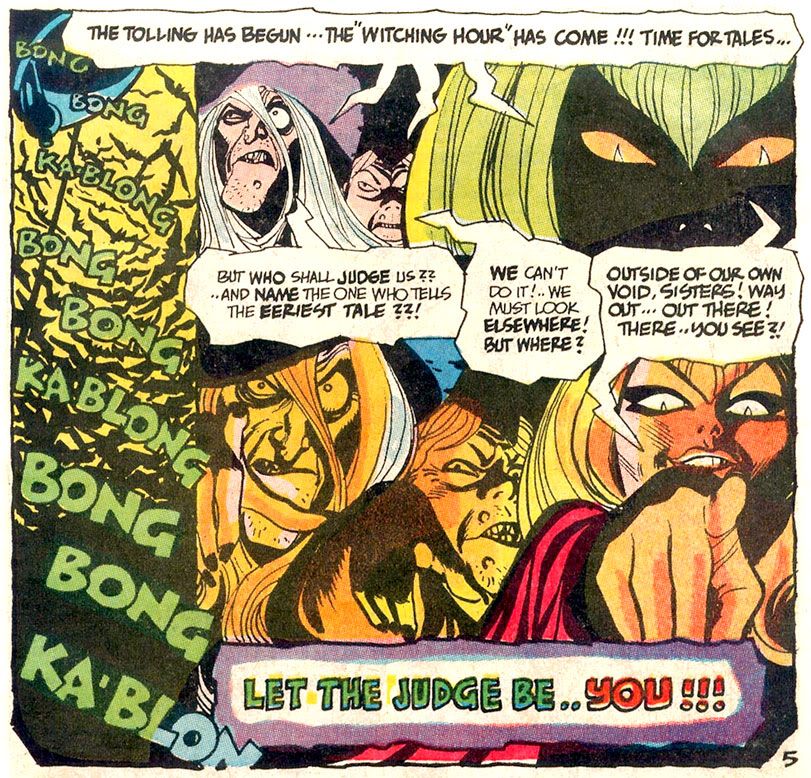
This is from Neal Adams's framing sequence for the same issue, also written by Aragones-- who was apparently on fire that month:
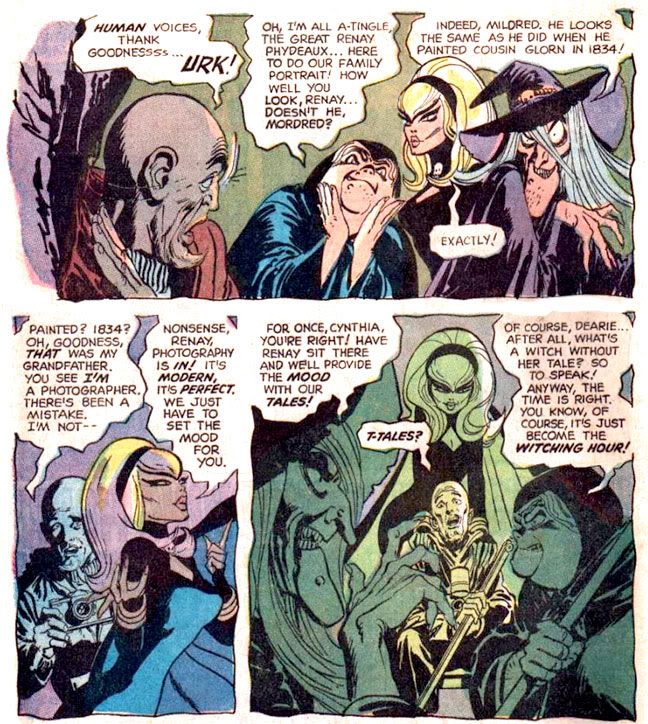
Adams makes his Witches look uncannily like Toth's. That's one of Adams's most amazing artistic abilities-- mimickry. You probably read the Batman story guest-starring Enemy Ace where Adams made the pilot look exactly as if Joe Kubert himself had drawn him.
Gray Morrow's Cynthia from #10 (1970) is more naturalistic than Toth's, but no less alluring:
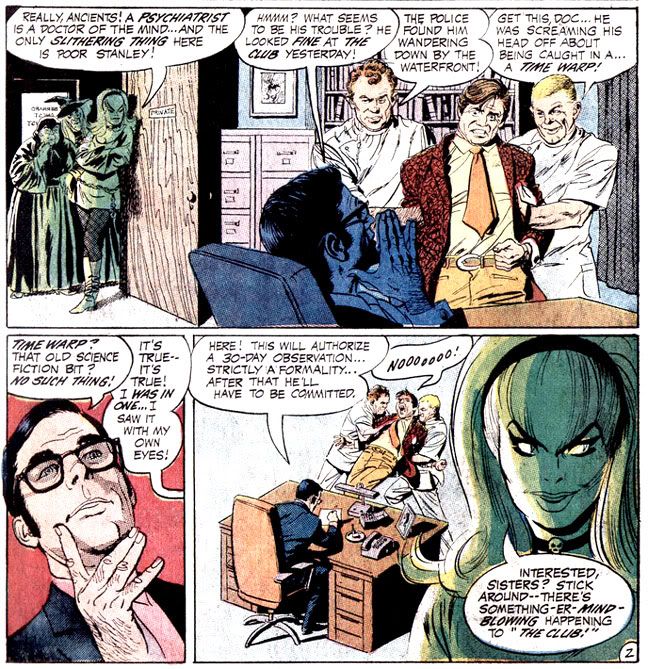
Morrow is rare among The Witching Hour artists in that he gets Cynthia out of her long Morticia dress and into a mod mini-dress, patterned tights and go-go boots. In a later issue, she sports a purple bodysuit, but Morrow was there first, drawing inspiration from the psychedelic fashions of the time. He interprets her eyebrows as separate entities from her hairline, too.
Other artists interpret her in various shades of sinister beauty, but Mildred and Mordred look pretty much the same throughout. Like the other horror titles, The Witching Hour distinguished itself as the gorgeously appointed home of a number of DC's Filipino artists. Guys like Tony DeZuniga, Alex Nino, Alfredo Alcala, Nestor Redondo and others made their way to the United States where they flooded DC's horror titles with incredibly rendered work.
Here's a nice Alcala Mordred from #27:
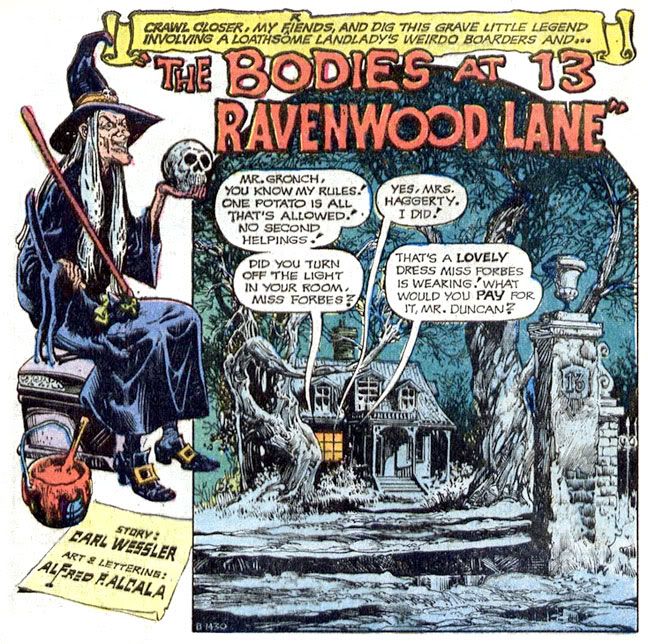
Very atmospheric and Halloween-appropriate. The buckle-shoed witch, a creepy nightscape, even a skull and the number 13.
And a Gerry Talaoc Cynthia from #28:
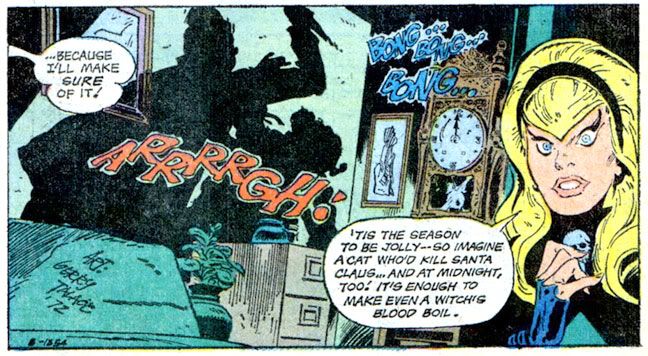
She looks a little surprised. Probably because she's talking about Santa Claus in my Halloween-themed blog entry.
From the same issue, another holiday image, this time with Mildred courtesy of Ruben Yandoc:
It's strange to think these three once headlined their own book and had their own little adventures. Once these horror anthologies ran their course, Mordred, Mildred and Cynthia spent some time with Cain and Abel and then fell into the clutches of Neil Gaiman, who worked them into the supporting cast of his The Sandman series. I have to give him credit for keeping them alive. Gaiman didn't do just that; he also added a lot of symbolism and mythology to the trio-- Erinyes, the Furies, maiden, mother, crone, the Kindly Ones and all that clever, clever stuff that probably didn't occur even to Shakespeare when he was writing his play. I'm only familiar with any of it from the tidbits of Greek mythology my art history professor offered when she desperately tried to fill my head with knowledge of amphora and statuary.
This is more my speed:
But why should these three play supporting roles when they're such powerful female characters, so fascinating unto themselves? All that literary and folkloric synthesis is interesting, but it seems more an exercise in author self-aggrandizement-- I should know since I'm the ruler of that junk-- rather than a true continuation of their narrative. I prefer the witches as stars of their own book, telling their quirky stories rather than as members of the background ensemble within some other character's story, no matter how dazzlingly the author enfolds them with the plot.
I'd love to see them headlining another anthology book, mocking each other, talking directly to the readers and demanding our attention. Cynthia could be updated for the current generation, a little auto-tuned to the post-modern vibe, destroying hipsters and Facebook moguls. Mordred might draw inspiration from Japanese horror comics and movies-- just like Hollywood!-- while keeping up her interest in ghosts and phantoms. She could probably teach all these ghost hunting fool on cable TV a thing or three. And Mildred might find some common ground with tech-savvy forever up-to-date Cynthia by coming up with stories about possessed iPods and Blackberries.
Or not. And now... more Japanese rock from Spookey! Yes, I've posted this one before, but it's directly related to Halloween and it's awesome: