Showing posts with label Dick Giordano. Show all posts

Thursday, October 9, 2014

October is Spookey Month: Batman #319 (January 1980)

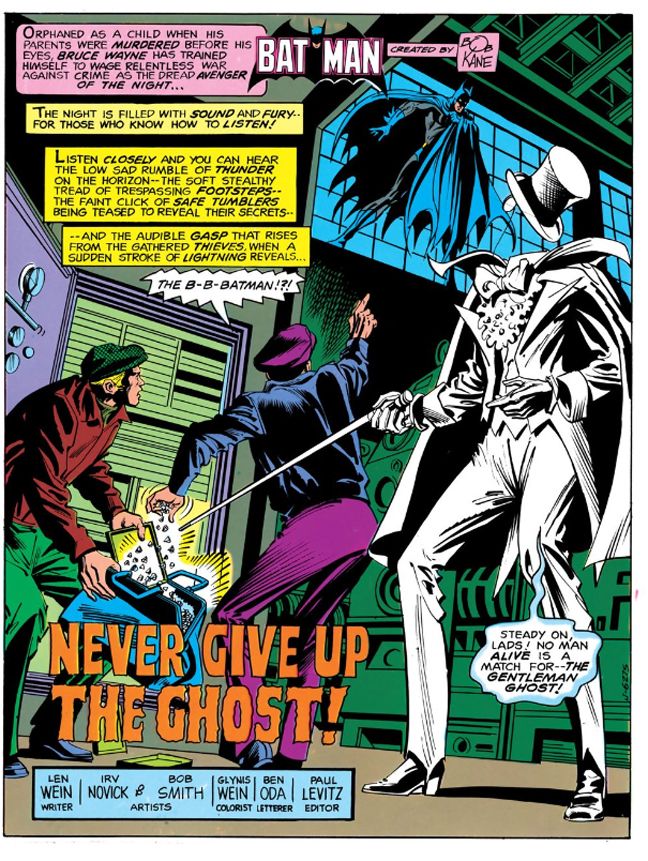
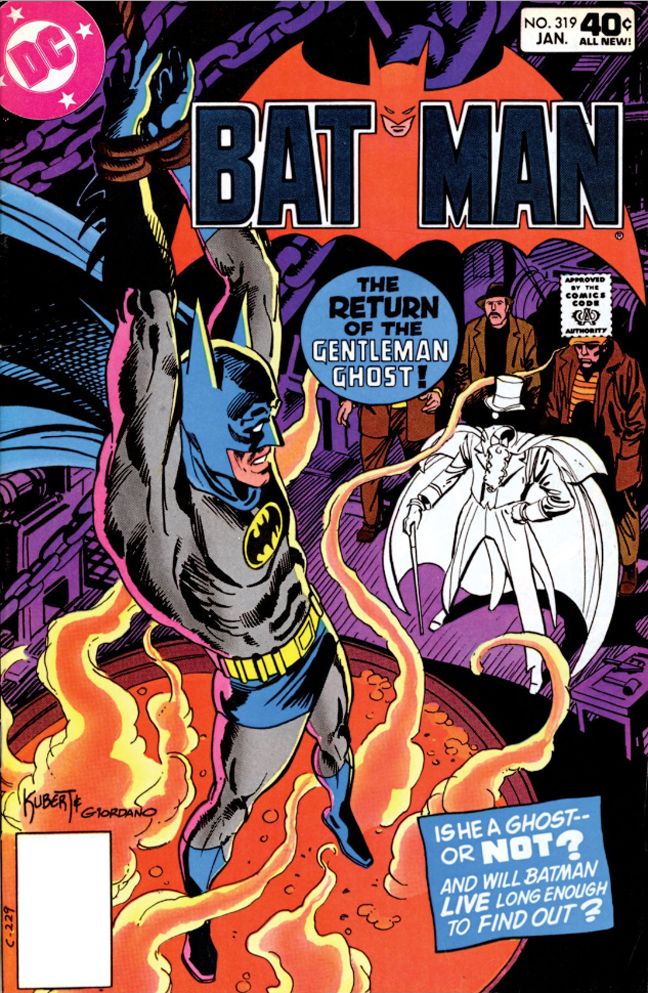
Batman #319 (January 1980) sees Batman and Gentleman Ghost battling once again.  This mean we get a Halloween treat in the form of a spectacular Joe Kubert cover with Batman in pulpy danger, suspended over a bubbling vat of wholesome Campbell's Tomato Soup with milk added.  Just like my dad loved to do!  Dick Giordano inks and the result is as rich and creamy as the soup Gentleman Ghost plans to dip Batman into.  Eerie underlighting and a line quality that's recognizably Kubert but somewhat cleaner and not as expressionistic.

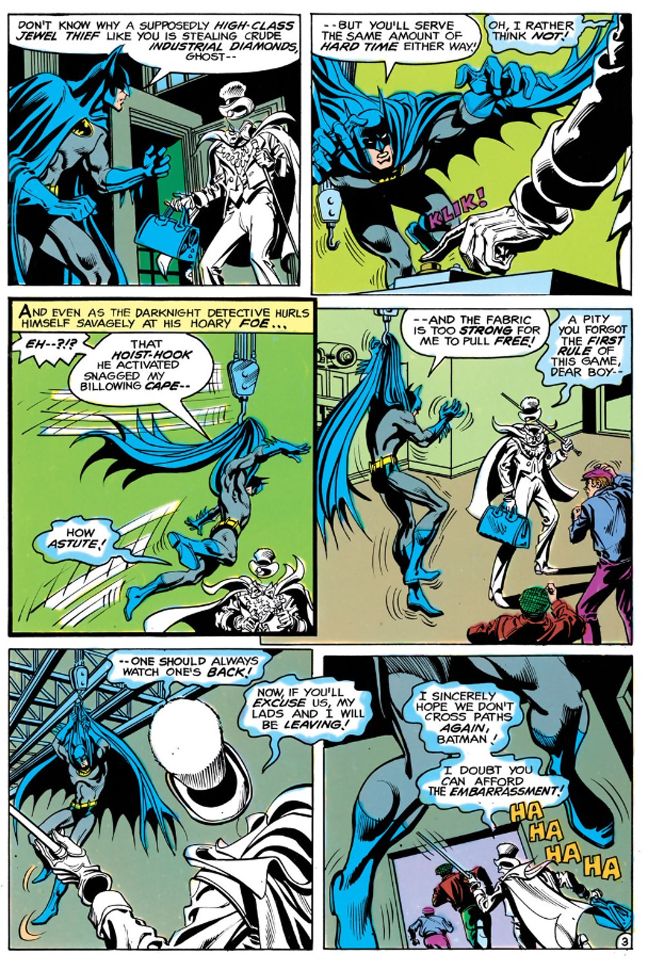
The story starts in mid-action, just like the previous Gentleman Ghost appearance.  Batman once again interrupts the Ghost and his henchpeople in mid-heist and ends up hoisted by his own cape.  While starting stories like this instantly ups the energy level and leads us to expect something rapid-fire and thrilling, there's a danger of this approach devolving into formula.  But Batman's dilemma-- which writer Len Wein points out is self-inflicted due to Batman's cape being rip-resistant, a helpful quality in most situations but not when you need it to tear so you can free yourself from a dangling hook-- proves startling and original in its details.  Wein also uses it to show that Batman, while fallibly human, is also resourceful and dangerous even when apparently helpless.  Never count out the Caped Crusader, as Gentleman Ghost finds before cleverly making his own escape.

Script: Len Wein/Pencils: Irv Novick/Inks: Bob Smith

From there we find Batman setting a trap for the Ghost, with a Halloween-appropriate setting.  He plans a costume ball at Wayne Manor with jewels on display as bait.  Gentleman Ghost finds this irresistible, and once again Batman ends up dangling from a hook.  This time over boiling soup.  I mean acid.  It's not tomato soup.  It's a vat of acid, a wicked comic book convention.  This time Wein shows us the mechanics of a Batman escape.  The story has the feel of someone working through all those classic Batman tropes.  The death traps, the fist fights, goofy henchpeople (somehow the very British Gentleman Ghost has found a couple of very British oafs to help him, one named, fittingly enough, Alfie) and another ambiguous ending.

Script: Len Wein/Pencils: Irv Novick/Inks: Bob Smith

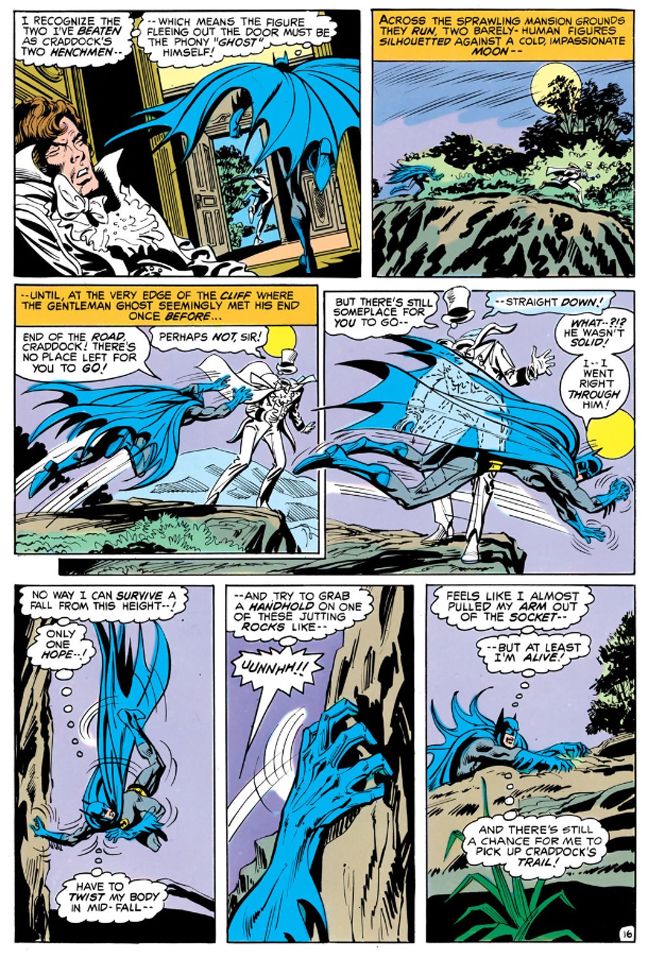
We still never learn if Gentleman Ghost is a real ghost or not.  His lackies disguise themselves as the Ghost as a distraction and Wein suggests the headless quality is mere fakery when one of them is revealed to be merely hunching down.  That doesn't explain the floating top hats or monacles.  Later there's a bit with a convenient hologram projector which also seems to tell us the Ghost is more technological trick than supernatural treat, but Wein leaves the truth of the matter hanging, kind of like his Batman this issue.  You can have it either way.  He's a clever illusionist with a creepy gimmick or he's a creepy ghost with a penchant for high-tech chicanery.

Script: Len Wein/Pencils: Irv Novick/Inks: Bob Smith


It's up to you!

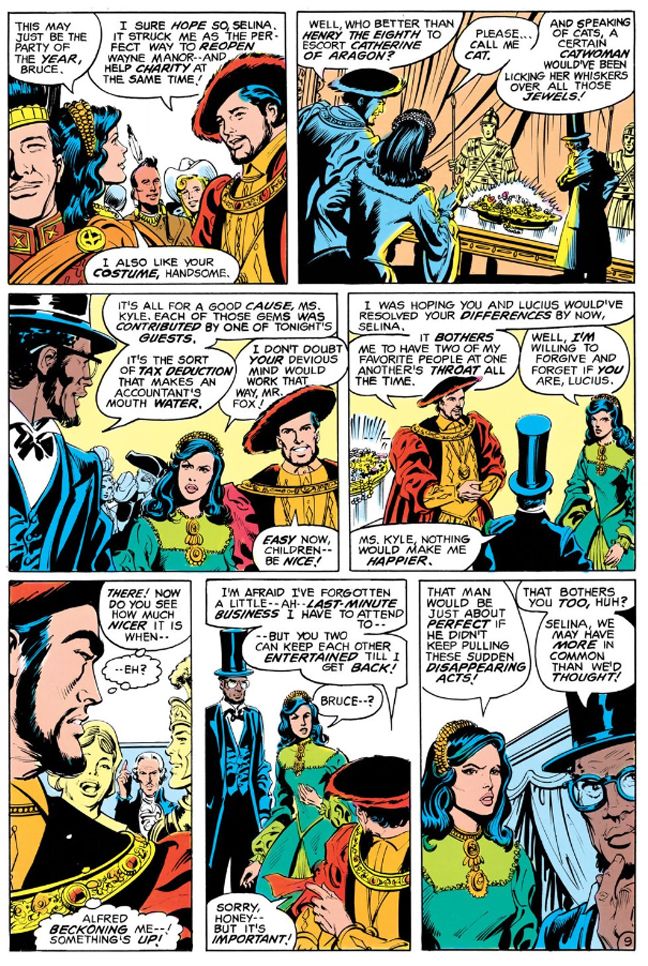
Irv Novick once again pencils, but this time Bob Smith inks.  Smith's line is thinner, sharper, more angular than Giordano's.  Well-defined figures and clarity of action make this issue very appealing throughout.  Batman is almost always on the left side of the panels, inciting things in the proper reading order so you get this forward thrust and momentum that carries through all the way to the end.  With Novick and Smith the crowded costume party has focus and detail, with one wide panel that's a treat to linger on.  Batman comes as Henry VIII, Selina Kyle as Catherine of Aragon ("Please... call me Cat," she quips) and Lucius Fox is Abraham Lincoln.  You can make out a plethora of other historical personages surrounding them and even when the Gentleman Ghost and friends gate-crash, Novick and Smith maintain a clear sense of where everyone is relative to each other.  Even when Selina Kyle and Lucius Fox abruptly switch sides so Fox can occupy the foreground with his thoughtful countenance you're not likely to freak out with the change and fall out of the story.  Good, solid stuff.

Script: Len Wein/Pencils: Irv Novick/Inks: Bob Smith

The issues I've read of this Wein run are sleekly enjoyable reads.  He drops exposition into dialogue and gives us meaty narrative captions to chew on while we enjoy the visual banquet Novick and Smith provide.  Very tasty stuff, the kind that satisfies.

Thursday, October 2, 2014

October is Spookey Month: Batman #310 (April 1979)

Batman #310 (April 1979) is a comic I bought solely for its cover.  Even back then I was a big Joe Kubert fan, and I believed the cover artist always did the interior art.  I was wrong.

Choosing Kubert as cover artist makes perfect sense because he and Robert Kanigher co-created Gentleman Ghost as a Hawkman/Hawkgirl adversary.  Gentleman Ghost debuted in Flash Comics #88 (August or October 1947, take your pick) but I’d never heard of him.  Why?  Because I never read any Hawkman comics.  Never had anything against Hawkman, just wasn’t my thing. 

Joe Kubert, on the other hand, certainly was and still is very much my thing.  Being 11 years old when this comic book came out I had no idea he’d ever done anything other than war comics and Tarzan.  A chance to see him draw a Batman story piqued my interest, but I can’t say the Irv Novick-Dick Giordano team that actually did the inside art disappoints.  They do a bang-up job.  Theirs is my ideal visual representation of Batman.  He has human proportions and he's not always gritting and grinding his teeth to the point where his molars must be just about gone.  He's a serious guy, but he has recognizably human emotions!
 
Here we are 35 years later and I’m still not particularly into Hawkman and my knowledge of Joe Kubert’s long comics career remains spotty at best.  I love his art and still adore this attractive, exciting cover, though.  I just find it odd I’d have an Irv Novick comic and never have it click with me despite coming to appreciate his solid Bat-work from all the reprints I’ve read over the years.  Maybe it’s not so odd.  I once had a Russ Heath Sgt. Rock and didn’t realize it until much later.  Same with a Rich Buckler-Bernie Wrightson Batman book.  I’m kind of an idiot.


Script: Len Wein/Pencils: Irv Novick/Inks: Dick Giordano

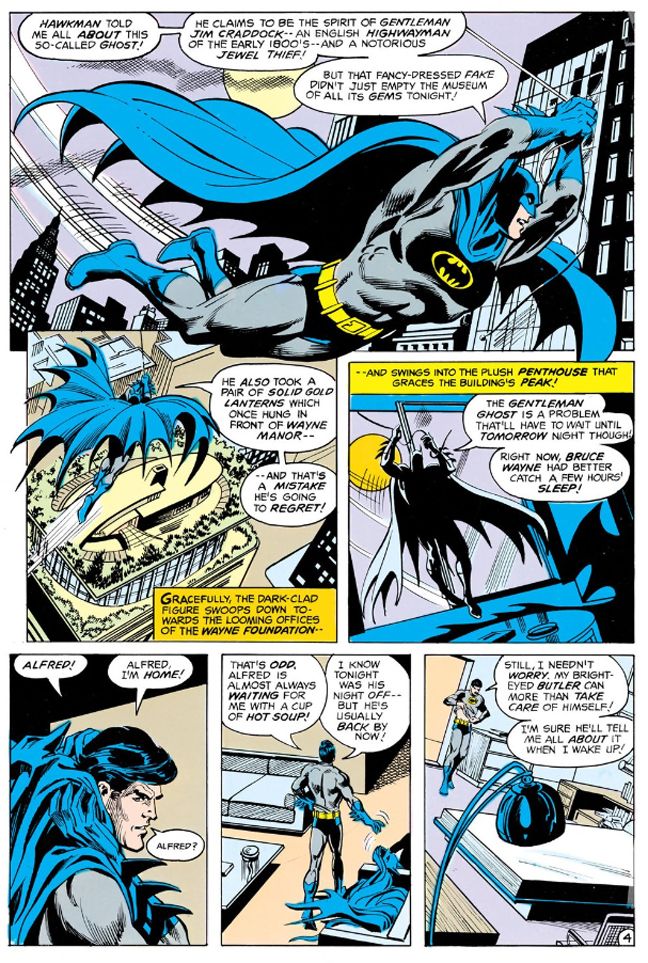
The story, titled "The Ghost Who Haunted Batman," is a jaunty, assured effort by all involved.  It would have made an excellent episode of the 1990s Batman: the Animated Adventures TV series.  Len Wein's script sets up a neat double mystery and wraps it all up in a single issue.  One one hand we want to know why is Gentleman Ghost, known for stealing jewels, suddenly after things like antique lanterns and furniture?  And on the other, where did Bruce Wayne's loyal butler Alfred Pennyworth disappear to?  Wein also plays the whole "is Gentleman Ghost a real ghost, or is he just some clever illustionist with a gimmick?" routine to great effect.  Batman remains pretty skeptical of the supernatural throughout, and when his bat-rope falls ineffectively between Gentleman Ghost's cuffs and gloves, he's disturbed.  But not enough to stop scoffing, as when he sneers, "Mister, you're about as supernatural as my shoe."

No doubt like Batman himself, I distinctly remember expecting some kind of prosaic explanation at story's end.  A special effects artist or magician revealed in an unmasking...

What I admire about this book is how every moment moves the story forward or reinforces the then-current Batman status quo.  There's no waste.  Even for a reader like me, who bought books based on whim and might go months between Batman purchases, could pick this issue up and learn all its players and how Batman relates to each of them.  There's a quick bit of Catwoman romance, a Lucius Fox appearance and even a return visit to Wayne Manor, and yet the central plot remains at the fore.  It's a quick read and certainly no gyp for being self-contained and short.

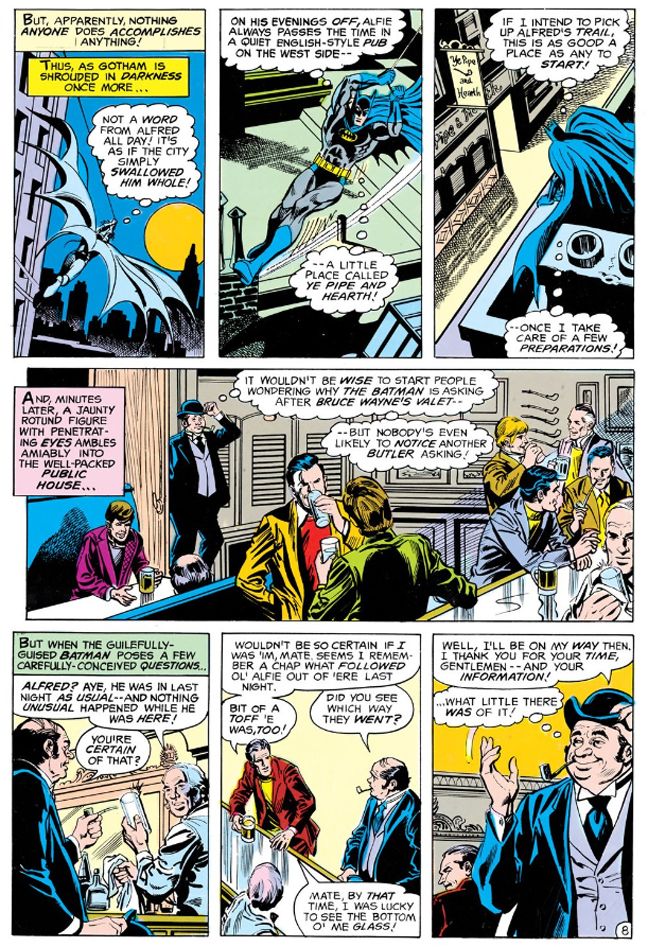
One of my favorite scenes in this book comes when Batman disguises himself as a portly fellow butler to infiltrate a UK-themed bar where Alfred likes to hang out on his nights off and brag to anyone who will listen and buy him a pint about his awesome job with the Waynes.  In the interest of blending in, Batman goes for the old school stereotype complete with bowler and crooked little pipe.  He kind of goes from one panel in his Batman jammies staring down at the pub to the next walking-- the caption tells us it's a mere few minutes later-- in all dressed up with a waistcoat and padded suit.  I'm not sure how Batman pulls this off so quickly when he doesn't even have his Batmobile around to carry things for him, but Wein doesn't let a little detail like this slow the story's pace.

Script: Len Wein/Pencils: Irv Novick/Inks: Dick Giordano

I like to imagine Batman spouting off with a Dick Van Dyke-quality accent and all the ex-pat Brits mocking him after he leaves.  For the story's purposes, Batman probably puts on an accent not only dead-perfect for some particular region of the UK, but also a specific neighborhood.  Came up with a complete biography for this one-off character and everything.  He is a master of disguise, after all.  He's right that it would be odd for Batman to go around asking about Bruce Wayne's butler-- but why doesn't he go in as Wayne?  Because subterfuge is fun!
 
Novick and Giordano lovingly create a creepy, fog-bound mood throughout, turning Gotham City into a vast haunted house.  The atmosphere compares favorably with that ultimate night-bound comic, Marvel's Tomb of Dracula.  And Gentleman Ghost makes an excellent Batman foil.  I’ve always enjoyed Batman stories where he comes up against the supernatural and he’s left a bit befuddled in the end.  Batman benefits from being depicted as vulnerable and not as hyper-competent.  Nowadays he’d anticipate Gentleman Ghost’s every move and have some kind of pre-built anti-ghost device.  In 1979, a hypnotized Alfred could sneak up behind him and knock him out with a heavy gold lamp and he could be deked by an empty suit, then try and fail to save Gentleman Ghost from a carriage crash.  The final scene certainly lives up to the story's title as Batman is left there with the Ghost’s mocking laughter ringing in his ears in one of those ambiguous “just what the heck was that guy?” endings. 
 
Batman and Gentleman Ghost would tangle again shortly and we'll talk about that one when I get the time to read it and react to it.

Sunday, February 3, 2013

Class! Class! Let's compare the live action Isis characters to their comic book counterparts...


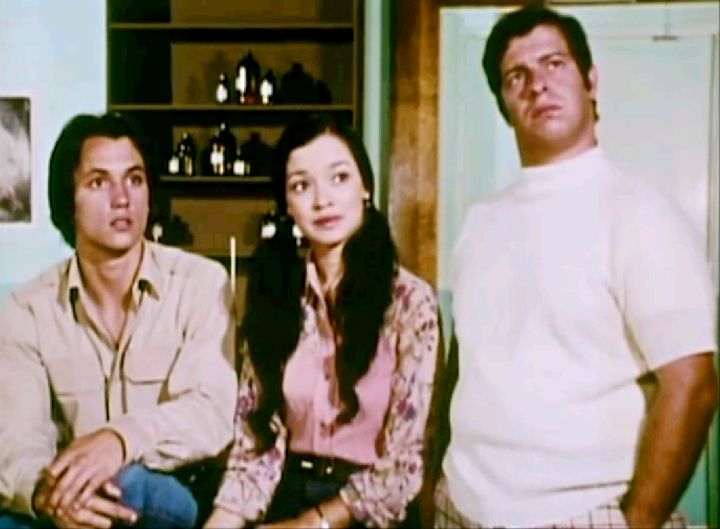
Okay, class.  Good morning, glad to see you're all here.  We're going to do something a little different today.  That's right, Cindy, this will be on the test.  So pay attention all of you and take notes.  Let's take a look at the DC comics versions of our favorite characters from the Filmation live action TV series Isis-- also known as The Secrets of Isis-- and see how alike or different they are from the real thing.  Yes, Cindy, it will be fun.  Everyone look at the screen...

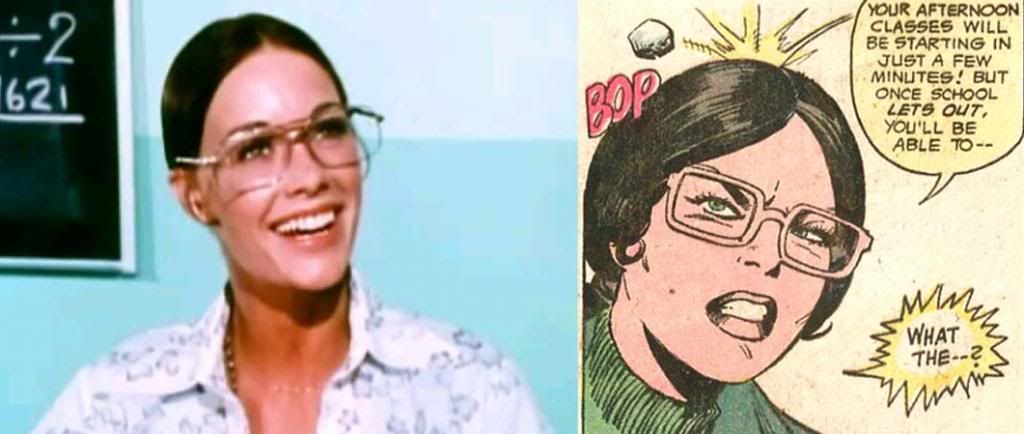
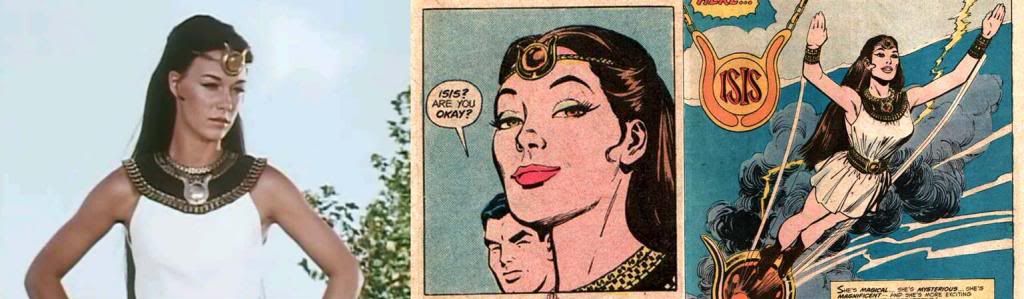
Here's Andrea Thomas in her everyday guise as a teacher:

(Mike Vosburg/Vince Colletta, Isis #3, Feb.-March 1976-77)

She is smart and pretty, Cindy, and a model teacher.  I completely agree.  And here she is in her Isis identity:

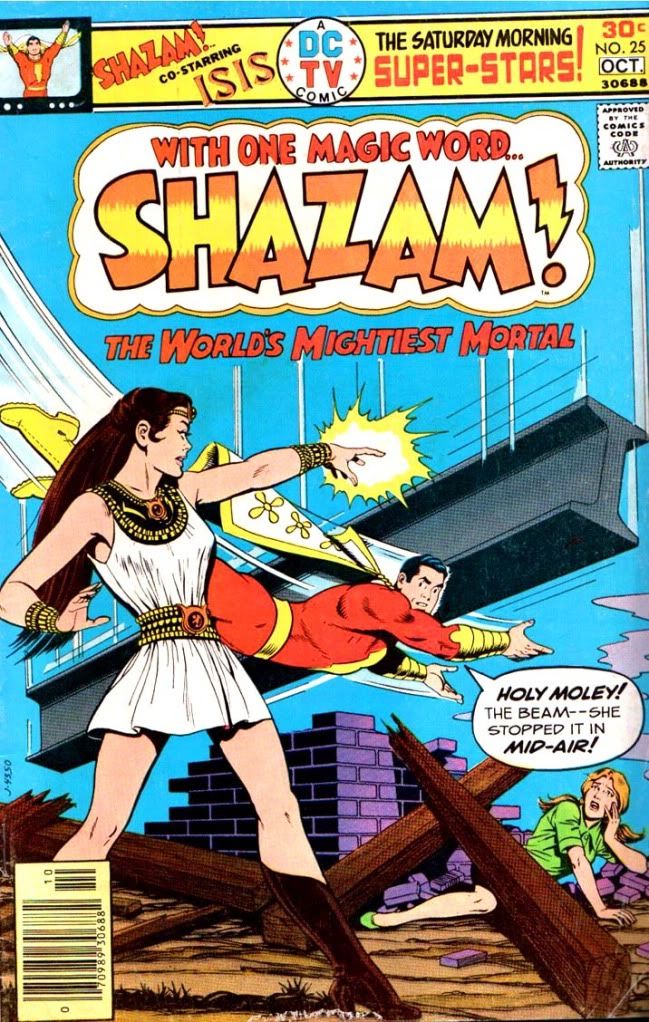
(Dick Giordano, Shazam #25, Sep.-Oct. 1976)

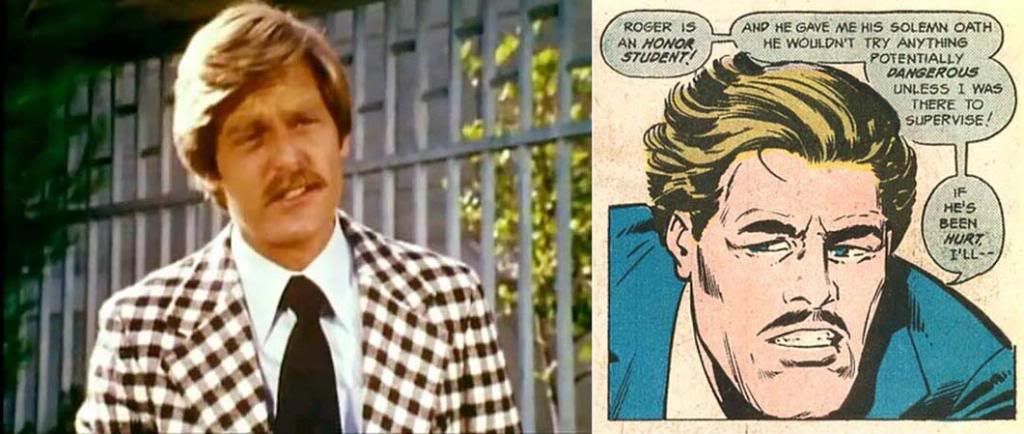
What's that?  How many times has she saved you, Cindy?  Amazing!  Yes, if you'd like, you can write an extra-credit essay about Isis and what she means to today's young women.  Here's Andrea Thomas's colleague Rick Mason:

(Mike Vosburg/Vince Colletta, Isis #2, Dec.-Jan. 1976-77)

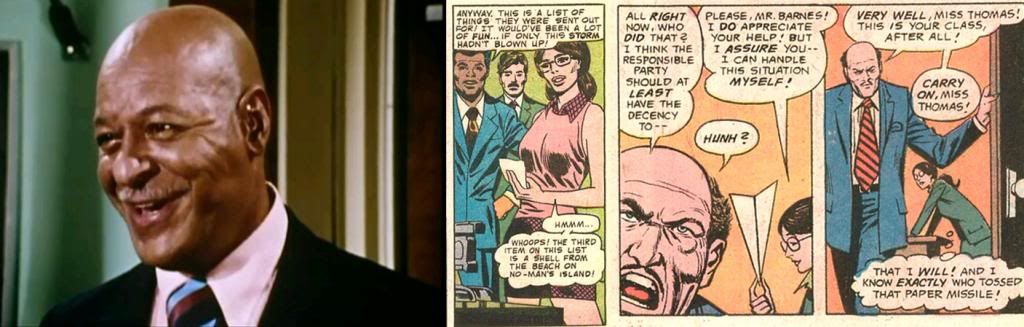
Thank you, Cindy.  You're so right.  He is a dedicated teacher and his mustache is quite snappy.  Here's Dr. Barnes:

(Mike Nasser/Frank Giacoia, Isis #2 Dec.-Jan. 1976-77; Mike Vosburg/Vince Colletta, Isis #3, Feb.-March 1977)

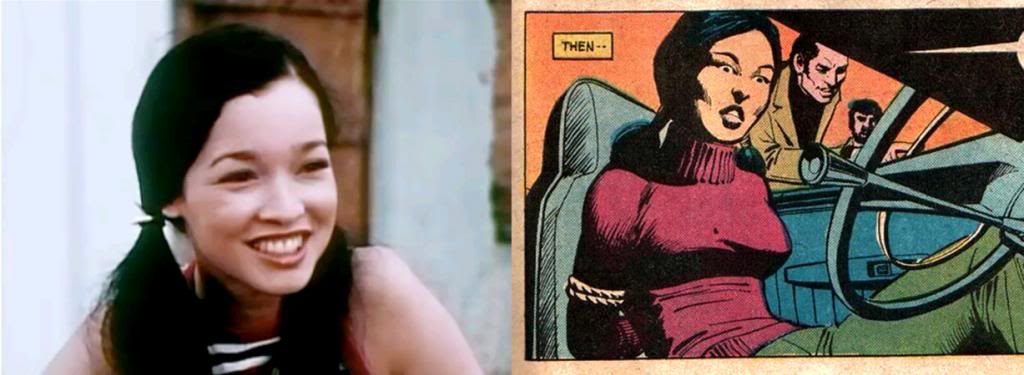
Good question, Cindy.  We'll talk about that in just a moment.  Anyone besides Cindy have a question?  Anyone?  No?  No one has a question?  Okay, I hear some talking but no questions.  Let's hold it down and look at the screen.  I think we'll all recognize...

(Dick Giordano, Shazam #25, Sep.-Oct. 1976)

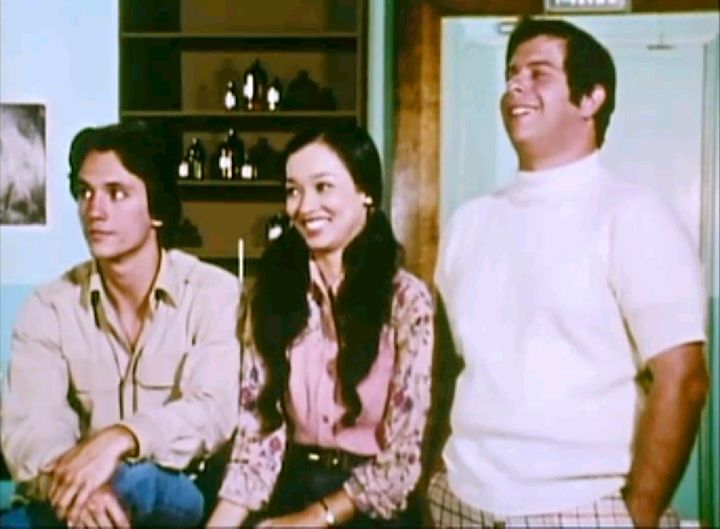
Yes, Cindy, that's you!  And no, Rennie Carol never appeared in The Mighty Isis comic.  The closest anyone came was the depiction of a character named Rennie Roberts (although I could have sworn her first name is lettered as Pennie) in the final issue.  That's also the one where the writer labels you "class president" of Larkspur High, Cindy.

Now, as to your question about why Dr. Barnes looks so different.  Compared to the main cast, the character wasn't on the show that often and some of the artists probably never saw even a single publicity photo of actor Albert Reed.

Actually, as you've noticed, none of the likenesses are exact.  They're more general than perfect caricatures.  I think Dick Giordano's take on the cast Shazam! #25 comes closest, but I have a suspicion this has something to do with licensing.  If you've read Marvel's Planet of the Apes adaptations, you'll notice at no time does George Tuska make Taylor look like Charlton Heston, nor does Alfredo Alcala give his Beneath the Planet of the Apes astronaut more than a passing resemblance to James Franciscus.  To do so would have involved other legal and financial arrangements and it just wasn't considered worth the time, effort or money.

Another good point, Cindy!  As you say, Marvel did occasionally use exact likenesses of the Star Wars actors in that title, and DC made a point of at least trying for perfect likenesses in their Star Trek titles.  Yes, even now at Dark Horse, artists draw Buffy as close to Sarah Michelle Gellar as they can.  These things depend on legal departments and the artist's hand, but sometimes licensing means "make 'em look consistent with all appearance in every medium."  Luke Skywalker looks just like Mark Hamill on every book cover, Captain Kirk is always either William Shatner or Chris Pine these days and so on and so forth.

Anyway, back to Isis.  My guess is we're looking at a similar deal here between DC and Filmation and as long as Isis had long dark hair, Rick Mason his mustache and Cindy Lee her pigtails, no one probably gave a rip.  As for Dr. Barnes, he could be anything or anyone depending on who drew him.

You're right again, Cindy.  I am just a speculating fool.  Still, that was a lot of fun, wasn't it, class?  Comparing these?  We enjoyed it, didn't we?


Class?

Saturday, September 15, 2012

Shazam! #25: Cindy Lee Loves Danger!

"She's magical... She's mysterious... She's magnificent-- and she's more exciting than any other super heroine!  Part human, part goddess, all wonderment-- with the most unusual powers anyone ever possessed!  She uses them now in a desperate race to save her friend Cindy Lee from certain doom as Andrea Thomas becomes--  ISIS... AS IN CRISIS!"

Ah, Shazam! #25 (DC Comics, September-October 1976).  This is what feel-good comics are all about.  It's also a breakthrough moment enshrined forever in comic book history.  Why?

Because even though cover artist Kurt Schaffenberger seems to have little or no idea who she is, this book marks the sizzling debut of our favorite sidekick and teacher's pet from the CBS Saturday morning live action television show Isis (also know as The Secrets of Isis), Cindy Lee.  Oh yeah, and if the introduction didn't clue you in enough, this is the first comic book appearance of Cindy's co-star Isis, too.  She's okay, too. I guess. I mean, if you're interested in such things.  But we know the real draw is Cindy Lee.  

And what a splash she makes!  Editor Julie Schwartz must have known he had something special in Cindy, because he put his varsity team on this story.  It's written by Denny O'Neil, with art by none other than Dick Giordano himself.  I do miss Giordano.  His art in this story is just so smooth, so appealing.  Rik Estrada and Wally Wood do a bang-up job on The Mighty Isis #1, but after reading this, Giordano is forever my artist pick for these characters.  And I prefer O'Neil as writer.  After all, O'Neil and Giordano are the team-- along with some guy you may have heard of named Neal Adams-- that brought to life some of the most influential and memorable Batman stories of all time.

Here's how it starts:
 

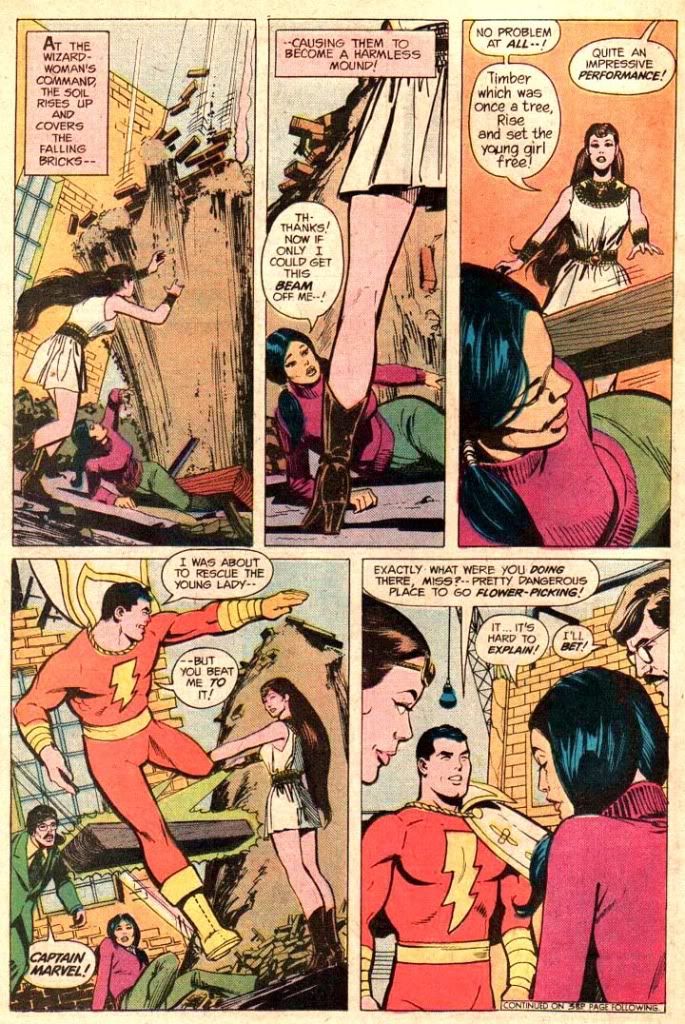
CINDY LEE?!  OH NO!  The last thing you expect to see when the wrecking ball crashes into your old high school is your star pupil in mortal danger.  This is one of those moments where you can almost see O'Neil's script showing through the drawings.  He has ten pages, needs Isis in action as soon as possible, so he puts Cindy Lee in harm's way.  She's from the TV show, right?  Stick her inside the school as it comes tumbling down, explain it later.

As you can see, science teacher Andrea Thomas and her colleague Rick Mason are a little concerned because they know damn well Cindy's parents didn't sign the school's special permission slip with the indemnity clause regarding any and all Cindy-related fatalities, including her own.  So much for their raises for the next several years.  So much for any more field trips to Egypt.  So much for the computer lab.  So much for art supplies.

The football stadium will still get its new scoreboard and the team its new uniforms, however.  And they can't cut the head coach's pay.  In fact, they can't even fire the guy without buying out his contract to the tune of four or five language, visual arts and home ec faculty members.  Fortunately for the school system, Andrea Thomas has a secret power beyond that of any two or three thousand lawyers.  She's the "dual person" known as Isis.  A quick change and some rhyming magic... 


And then this muscle-headed guy shows up all, "Uh-- er-- Well, I was about to do that, but since you already did it for me..."  Nice try, Captain Marvel.  You zoom in a few long moments after too late and try to make Isis feel less special.  Well, he does exert his male authority figure privilege to get Cindy's explanation of why she thought it would be a good idea to hang out in a building during its demolition.  And here we go...


O'Neil quickly and brilliantly seizes on the little-known fact that the future valedictorian and resident pyramid enthusiast of Larkspur High School (class of 1978) is a sensation-seeker.  Dare you doubt me?  I have proof-- in "Fool's Dare," (September 13, 1975),  the second episode of Isis, Cindy enters a dangerous junkyard in answer to some hurtful words from a classmate and tangles with car thieves wearing pitted-out shirts.


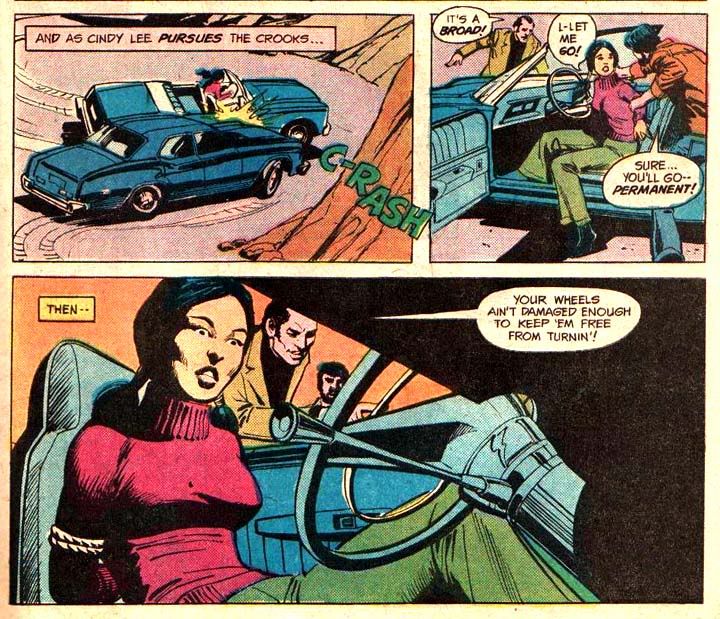
Back here in the four-color world, our secret thrill-junkie was once again doing some sleuthing of her own and followed a couple of suspicious creeps right into danger's maw.  She's so intrepid she'll chase them round Good Hope, and round the Norway Maelstrom, and round perdition's flames before she'll give them up... if that's what it takes to bring them to justice.  Whatever it was they did.  Which we don't know yet.  We'll find out later, thanks to Cindy.

There's a flashback to Isis's origin at this point in the story, too.  Boring.  And, his work finished, the Big Red Cheese soars away feeling self-satisfied at having patronized Isis.  Back to The Simply Awesome Misadventures of Cindy Lee!


 Wow!  Check that out!  She actually puts moves on Rick Mason!  Cindy Lee, bold seeker of dangerous, age-inappropriate love.  Certainly can't blame her.  In life, if you want something, you have to go right for it.  It's good Cindy understands this, and of course, we all know Rick Mason is one swell fella.  At least he's not married.  Cindy is no Tracy Flick.  However, for her well being, I really think Cindy should go for someone more in her peer group.  A student.  Like photographer/budding cryptozoologist Lee Webster.  

What a guy, that Rick Mason.  He's right to quash Cindy's romantic notions.  While it's natural for a student-- especially one we now know harbors a hell-bent streak-- to confuse admiration for an authority figure with love, as a dedicated educator Rick Mason knows even giving Cindy the slightest--- WHAT THE HELL?  Loaning her his car?  What kind of responsible teacher does something like that?  I take it all back.  Rick Mason is a mixed-signal sending bastard.

And look how nonchalantly he does it.  It's the ol' over the shoulder "I'm godlike in my lack of concern whether you live or die" keys toss.  It's not even a decent throw because Cindy has to lunge into a semi-crouch to catch them.  The least Rick Mason could have done-- since even this much is wildly beyond the bounds of proper teacher-student interaction-- is place the keys in her hand.  Once the school officials get wind of this, he's out on his guitar-strumming ass faster than you can say, "Matthew Broderick as Mr. McAllister" anyway.  Show some class while you simultaneously destroy a girl's feelings and your career.  Instead, our ostensibly nice guy teacher puts on this smug, superior act as if to tell her, "You can't have me, but take my car for a spin, you baby."


Down in the dumps, sitting on a pile of rubble that visually symbolizes her fractured heart, Cindy soon finds another adrenaline-pumping adventure.  I'm so impressed with this characterization I'd buy a Cindy Lee monthly.  No superheroics.  Just Cindy Lee and her pals getting themselves into all kinds of crazy scrapes.  You know what this comic is starting to remind me of?  A mid-70s kiddie version of David Lynch's Blue Velvet.

Now there's a thought.  In fact, Cindy prefigures Kyle MacLachlan's Jeffrey Beaumont in many ways.  He finds an ear, becomes involved with an older woman and discovers an underworld of crime and perversion in his little town, Cindy Lee sees the aftermath of a crime, wants to become involved with an older man and finds a tame young-readers version of the Lynchian paradigm right there in whatever town it is she lives in.  And much like Jeffrey, Cindy's involvement nearly results in her death.


"When the green field comes off like a lid/Revealing what was much better hid," wrote W.H. Auden in his poem "The Two."  Some things you and I-- and Cindy Lee-- are just not meant to know.  But characters like Jeffrey Beaumont and Cindy are impelled to pull off that lid and reveal the sinister, sordid things happening all around us.  There are no gas-huffing Dennis Hoppers or lip-synching, make-up wearing Dean Stockwells in Cindy's world.  Just vaguely menacing thugs in leisure jackets  Luckily for Cindy her planet orbits a sun a bit brighter and friendlier than the one in Blue Velvet.

But Cindy and pals would easily update to modern, darker storytelling.  Lynch famously described his film as "The Hardy Boys Go to Hell."  Well, apparently O'Neil's take-- which I'm guessing he based largely on "Fool's Dare"-- on Cindy Lee is she's a 21st century Nancy Drew with a knack for getting herself into trouble of the same sort.  We could build on that and have her enthusiastically investigate crimes, her optimism and incorruptible innocence contrasted with the sick, perverse things she uncovers and reveals to the world.  Meth labs, porn rings, bizarre blackmail plots, public figures who are secret degenerates.  Narrow escapes without an Isis there to bail her out, forcing Cindy to rely on her own pluck and quick wits.


Or not.  Maybe she'll always need an Isis for advice and guidance.  Cindy is smart and spunky but she is, after all, a risk taker.  She's lucky to have a friend and guardian like Isis.  Solve a crime and win Rick Mason's heart?  Oh, Cindy...

As a special bonus, here's Captain Marvel beating up a bear.

Friday, October 7, 2011

2nd Annual Spookey Month: DC's Witching Hour trio


I'm not sure if EC started the tradition of having horror anthology books hosted by recurring characters but by the late 60s and early 70s, it was a pretty well established trope.  The Crypt-Keeper is perhaps the most famous of all, immortalized by HBO's Tales from the Crypt series.  The EC original looked somewhat more human, but the TV version had that crazy cackle, a warm, infectious laugh, as gleeful as a Christmas morn.  In the comics, the Crypt-Keeper and his fellow hosts the Vault-Keeper and the Old Witch directly address readers and are playful rivals, sometimes more interesting than the stories they introduce.  Warren Publications had as their presenters Uncle Creepy and Cousin Eerie.  They queasily look like the results of several generations of inbreeding within some old money family sliding into decadence and disrepute; the Crypt-Keeper and friends seemed positively savory next to those two geeks.  Gold Key had caricatures of real people for their comics; Rod Serling appeared in comics based on his Twilight Zone TV show while Boris Karloff headlined his own title, Boris Karloff Tales of Mystery.


EC and Warren alumnus Joe Orlando outdid them all as an editor with DC, teaming up with Dick Giordano, Bill Draut and Gerry Conway among many others to give horror fans such memorable hosts as Cain and Abel, the ultimate pair of sibling rivals, and their books House of Mystery and House of Secrets, Eve from Secrets of Sinister House... and... Lucien the Librarian.  My favorites, however, are from the Giordano-edited The Witching Hour:  the three witches, Mordred, Mildred and Cynthia.  I'm not sure who gets credit for creating them.  Possibly William Shakespeare, although his three "weird sisters" are uniformly hideous, described in Macbeth as "withered," "wild in their attire," and, most alarmingly:

You should be women,
And yet your beards forbid me to interpret
That you are so.


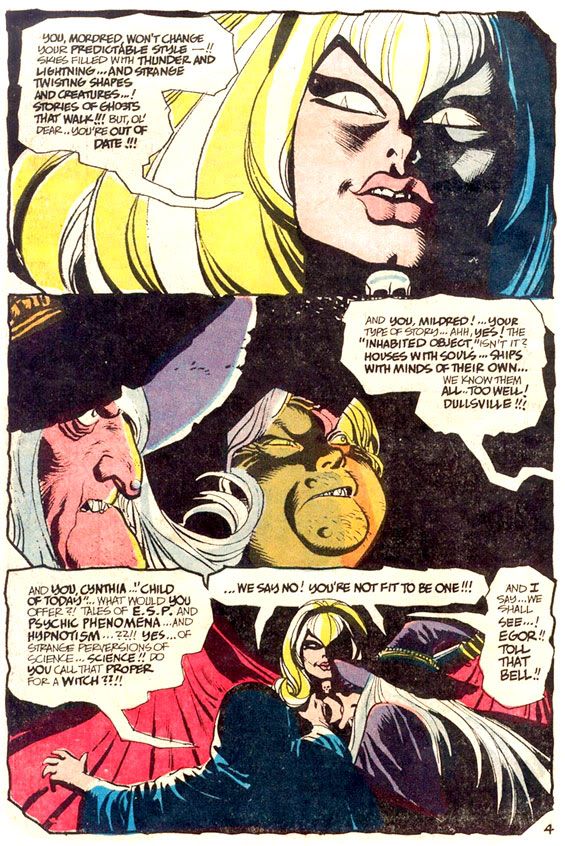
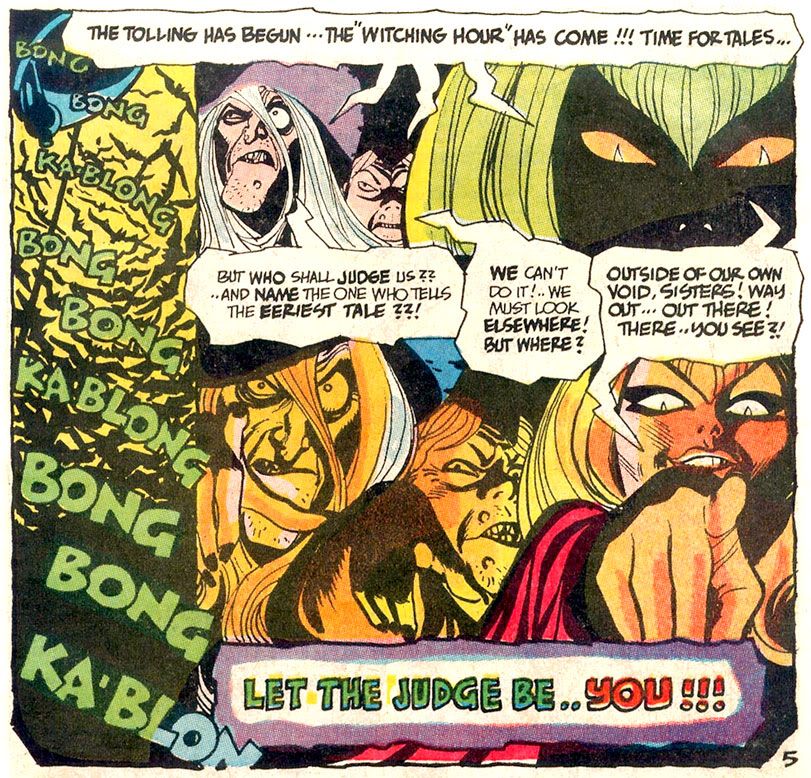
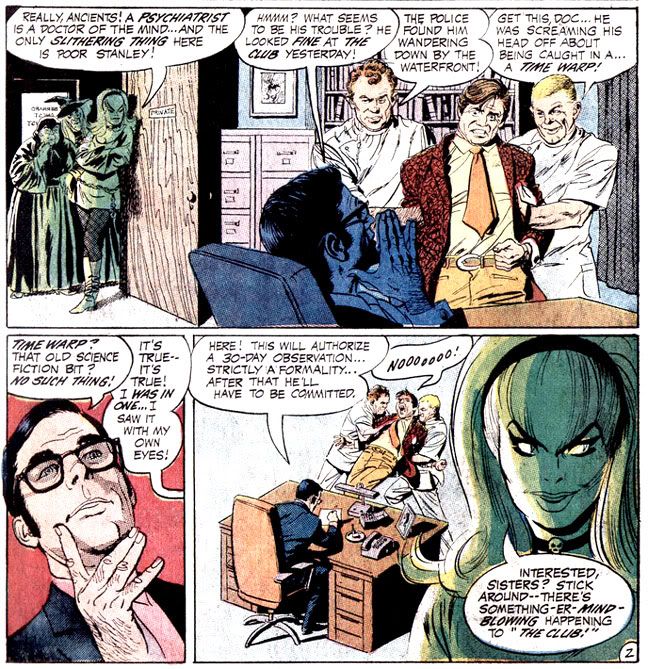
Mordred and Mildred come closest to the Shakespearian example.  They're fairly standard witches, complete with a pointy hat and a hooded cloak, stringy hair and appropriately old school ideas about what constitutes a horror tale.  Cynthia, however, gives the Bard a middle-finger salute.  She's the very model of a modern major witch, a little Samantha Stevens and a whole lotta love.  With the pouty face of a Bridget Bardot-- albeit with slitted cat-pupils-- and the voluptuous figure of a Sophia Lauren, Cynthia slinks around in a skin-tight black dress, a skull-shaped brooch at her throat.  She speaks in groovy 60s slang-- she'd probably call each issue of The Witching Hour a "scare-in"-- and her bag is telling far out, contemporary stories that swing like a pendulum do.

The Witching Hour host segments have a distinct narrative flair all their own, each issue opening with some comedic vignette.  Cynthia taunts the older witches, they respond in kind.  Cynthia usually comes off best, with an Addams Family-esque joie de mourir.  She's just more likable than her companions, too.  While Mildred and Mordred gnash their teeth and verbally abuse the help, Cynthia poses vivaciously for the readers, a smile on her fleshy lips.  Given the choice between two witches who seem constantly pissed and one who's on a cool trip, daddy-o, which would you choose?  I'm turning on, tuning in and dropping dead with Cynthia.

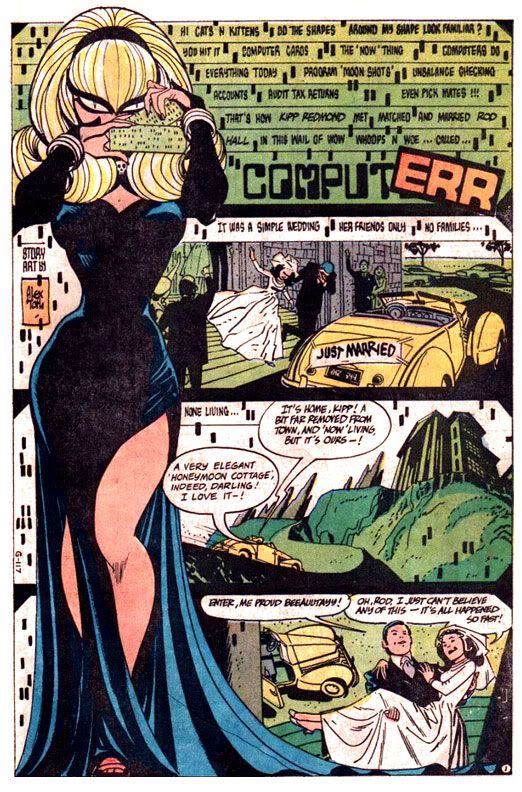
Alex Toth's Cynthia has a strange widow's peak that appears to have consumed her pointy eyebrows, huge feline eyes, lashes heavy with mascara, bee-stung lips and a square-ish jaw with a pronounced chin dimple.  Here's a splash page from The Witching Hour #8 (1970) where Toth has her introduce a story in a novel way:


I love her cheeky, playful pose.  Lots of personality in that drawing!  The page layout is innovative for the time, Cynthia providing a visual frame for the first three panels and black gutters instead of the traditional white.  It may be technologically dated now, but even the computer-style typeface was a little ahead of its time.  The story is credited to Toth, but the DC Showcase reprint lists none other than Sergio Aragones as the writer.  Maybe Toth plotted and Aragones scripted.  If you're a Toth fan, the early issues of The Witching Hour are a treasure trove of his work, which makes the DC Showcase volume indispensable.

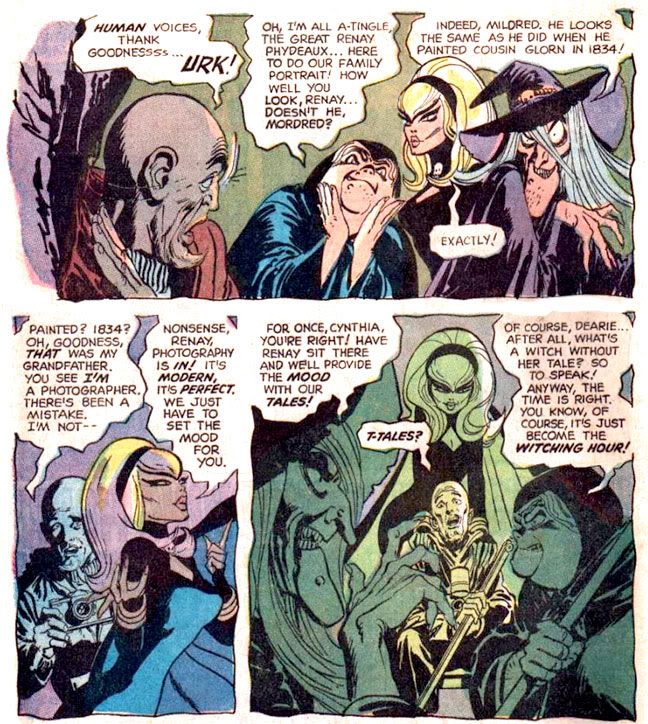
 This is from Neal Adams's framing sequence for the same issue, also written by Aragones-- who was apparently on fire that month:


Adams makes his Witches look uncannily like Toth's.  That's one of Adams's most amazing artistic abilities-- mimickry.  You probably read the Batman story guest-starring Enemy Ace where Adams made the pilot look exactly as if Joe Kubert himself had drawn him.

Gray Morrow's Cynthia from #10 (1970) is more naturalistic than Toth's, but no less alluring:


 Morrow is rare among The Witching Hour artists in that he gets Cynthia out of her long Morticia dress and into a mod mini-dress, patterned tights and go-go boots.  In a later issue, she sports a purple bodysuit, but Morrow was there first, drawing inspiration from the psychedelic fashions of the time.  He interprets her eyebrows as separate entities from her hairline, too.

  Other artists interpret her in various shades of sinister beauty, but Mildred and Mordred look pretty much the same throughout.  Like the other horror titles, The Witching Hour distinguished itself as the gorgeously appointed home of a number of DC's Filipino artists.  Guys like Tony DeZuniga, Alex Nino, Alfredo Alcala, Nestor Redondo and others made their way to the United States where they flooded DC's horror titles with incredibly rendered work.

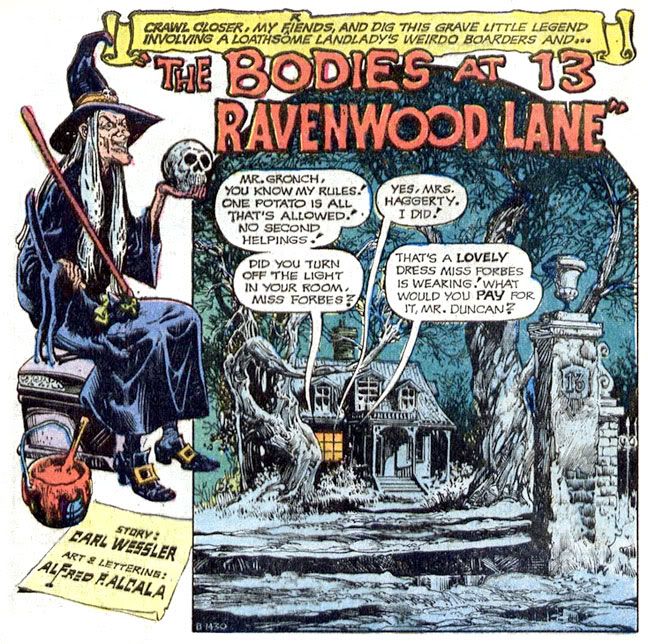
Here's a nice Alcala Mordred from #27:


Very atmospheric and Halloween-appropriate.  The buckle-shoed witch, a creepy nightscape, even a skull and the number 13.

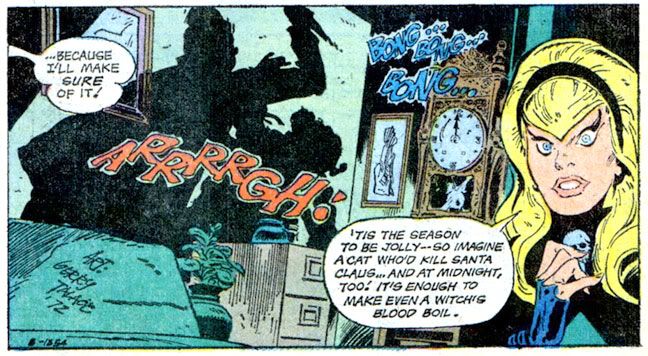
And a Gerry Talaoc Cynthia from #28:


She looks a little surprised.  Probably because she's talking about Santa Claus in my Halloween-themed blog entry.

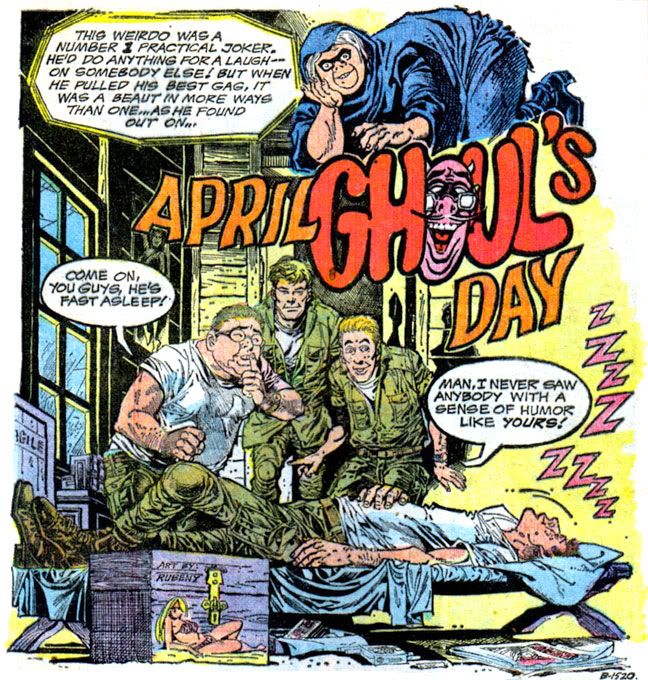
From the same issue, another holiday image, this time with Mildred courtesy of Ruben Yandoc:


It's strange to think these three once headlined their own book and had their own little adventures.  Once these horror anthologies ran their course, Mordred, Mildred and Cynthia spent some time with Cain and Abel and then fell into the clutches of Neil Gaiman, who worked them into the supporting cast of his The Sandman series.  I have to give him credit for keeping them alive.  Gaiman didn't do just that; he also added a lot of symbolism and mythology to the trio-- Erinyes, the Furies, maiden, mother, crone, the Kindly Ones and all that clever, clever stuff that probably didn't occur even to Shakespeare when he was writing his play.  I'm only familiar with any of it from the tidbits of Greek mythology my art history professor offered when she desperately tried to fill my head with knowledge of amphora and statuary.

This is more my speed:


But why should these three play supporting roles when they're such powerful female characters, so fascinating unto themselves?  All that literary and folkloric synthesis is interesting, but it seems more an exercise in author self-aggrandizement-- I should know since I'm the ruler of that junk-- rather than a true continuation of their narrative.  I prefer the witches as stars of their own book, telling their quirky stories rather than as members of the background ensemble within some other character's story, no matter how dazzlingly the author enfolds them with the plot.

I'd love to see them headlining another anthology book, mocking each other, talking directly to the readers and demanding our attention.  Cynthia could be updated for the current generation, a little auto-tuned to the post-modern vibe, destroying hipsters and Facebook moguls.  Mordred might draw inspiration from Japanese horror comics and movies-- just like Hollywood!-- while keeping up her interest in ghosts and phantoms.  She could probably teach all these ghost hunting fool on cable TV a thing or three.  And Mildred might find some common ground with tech-savvy forever up-to-date Cynthia by coming up with stories about possessed iPods and Blackberries.

Or not.  And now... more Japanese rock from Spookey! Yes, I've posted this one before, but it's directly related to Halloween and it's awesome:

Tuesday, September 20, 2011

Congratulations, DC! I knew you could do it!


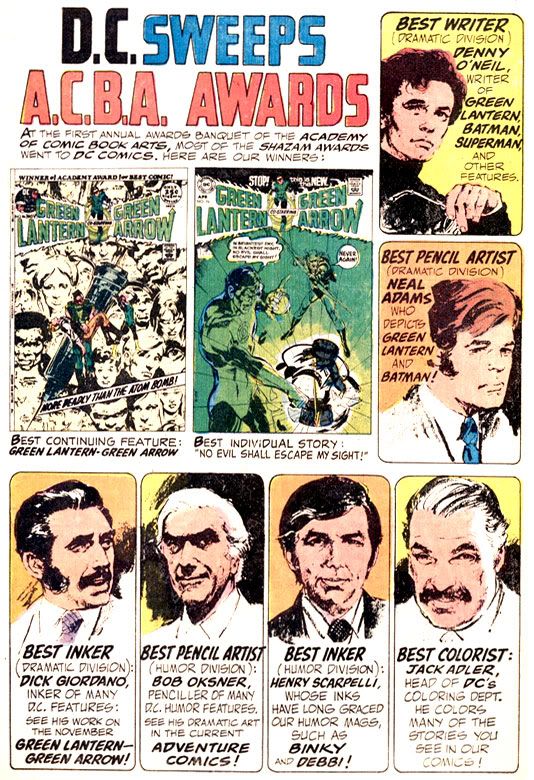
In the olden days, the people who made your comics were all middle-aged and wore ties, except for Denny O'Neil, who wore a turtleneck.  He's thinking, "Hurry up and draw me.  I've got stories to write.  But first let me take off my glasses for a slightly casual, candid look."  I'm going to steal that pose for my author's portrait, only I'm going to hold a pipe.  Why a pipe instead of glasses?  Why not?  Why so glum, Neal Adams?  Is it because in order to fit the copy in your panel, you weren't able to draw the back of your own head?  Someone just said, "Hey, Dick!  Have you finished that job for Detective?"  Bob Oksner looks cool; kind of a Doc Brown vibe, but snappy and not disheveled.  I'd like to think his hair was really that startlingly white in real life.  Henry Scarpelli later added his actor son, Glenn, to the Archie universe.  Jack Adler started working at DC in 1946 and retired in 1981.

PS:  Blogger wouldn't allow me to add "Denny O'Neil" to my tags.  Guess I'll never write about his work again.

Monday, March 7, 2011

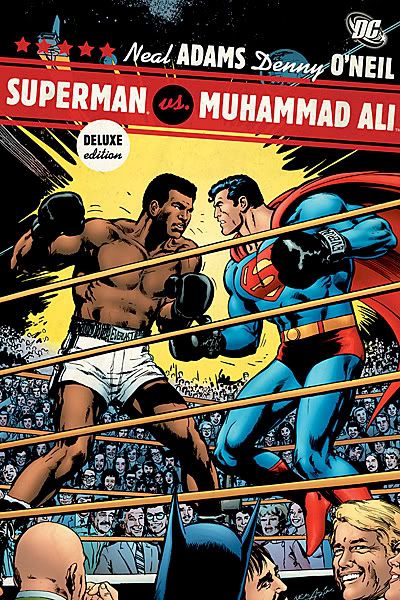
Superman vs. Muhammad Ali Deluxe Edition: A Comic Review

Superman vs. Muhammad Ali Deluxe Edition
Publisher: DC
Script: Denny O’Neil
Pencils: Neal Adams
Inks: Dick Giordano and Terry Austin

This is the big one we were all waiting for! I remember seeing the tabloid-sized original at our mall's Waldenbooks way back in 1978 and, as a major fan of both Muhammad Ali and Superman, wanting desperately to buy it. But $2.50 was beyond my price range at the time and there was a question of just where to keep the damned thing. It was monstrous and wouldn't fit easily on any of our bookshelves. In time, I came to think I'd dreamed it all. Superman versus Muhammad Ali? Why would those two ever fight?

Here we are decades later and thanks to our perceived hunger for overblown hardcover "archival" reprints of beloved childhood stories, Superman once more floats like a butterfly while Muhammad Ali stings like a bee. Two pop culture icons take on aliens with the stupidest name—the Scrubb. From the planet Bodace. I was kind of hoping it would be the planet Bonaduce and the erstwhile Danny Partridge might make a guest appearance as Jimmy Olsen, but no such luck.

That disappointment aside, where else can you see Superman punch his mighty fists together to stop a tsunami caused by plasma missiles from outer space? Or Muhammad Ali explain the sweet science from jabs and uppercuts to rope-a-dope tactics to the Man of Steel, then use his famous psych-out pre-fight patter on a bunch of star warriors? Or Superman disguise himself as Bundini Brown before battling an entire armada of enemy starships?

This is an outlandish and at times extremely silly epic-- witness Superman sheepishly explaining to Muhammad Ali why the Fortress of Solitude is full of so much junk and Jimmy Olsen's laughable ringside commentary to a crowd that includes anthropomorphized chickens-- that breathlessly spans light years and features crowd scenes that would have blown Cecil B. DeMille’s mind and bankrupted George Lucas. Neal Adams dazzles with double-page layouts full of space freaks and bizarre interplanetary vistas, and his Muhammad Ali caricature is spot-on.

Preserved in his beautiful prime-- the book apparently was so late in hitting the stores Ali was actually slightly past it in reality-- and transformed into a comic book hero by Adams and inker Dick Giordano, Ali may be the only real life person who could go mano-a-mano with Superman (convenient red sun pocket universes or not); he was and remains that much a legend, a towering figure of the 20th century sports/pop culture scene along with Babe Ruth. I wouldn't be surprised to find this story somehow entering mythological status a couple of thousand years from now (when I'm very old) and Ali's become some sort of demi-god figure whose factual existence academics debate at good ol' Mars University's Classics Department. Okay, I'm stretching things, but not by much.

For his part, Denny O’Neil provides fevered captions with appropriately purplish prose and nails Ali’s distinctive speech patterns. Confronted by an armored green alien, Ali is definitely not nonplussed-- not that you'd expect him to be:

ALIEN: We intend to prove ourselves you superior by showing our standard-bearer is the greatest!

ALI: WHOA... Right there, Dog-face! I AM-- the Greatest! Man... They rank me with Joe Louis... Sugar Ray Robinson.. Ezzard Charles... Archie Moore... Rocky Marciano... Gene Tunney... Jack Dempsey! I ain't agreein' to fight... but if I did, I'd whup your man. I'd stomp him--

If you grew up with Ali on TV and at the movies, you can "hear" this dialogue in your head in the man's distinct cadence; Ali's working himself up and preparing to do some real ass whuppin'.


It seems to take place outside of regular DC continuity. There's no Justice League satellite to warn Superman of the alien armada; he has to fly up into space to look for himself. And while some sort of Athena being makes an appearance at the fight itself to observe (over at Marvel, Stan the Man would've given us the Watcher with appropriately lofty nonsense dialogue, no doubt), there's no sign of Batman or the Green Lantern Corps. It's almost as if Ali's powerful charisma crowded them right out of the universe. So if you're a hardcore geek who has to fit every story into some sort of overarching narrative-- well, you probably should seek psychological help. Here it helps to lighten up and enjoy the weird.

Why? Because there's a sense of the creative team just knocking themselves out (otherwise Ali might have done it for them) to produce something special, an event reminiscent of one of those “Battle of the Network Stars” specials or a Bob Hope holiday show with everyone in his Rolodex invited and then some. And because they manage to convey such a sense of fun, the book works both as a tribute to Ali and as a curious artifact of the 70s, the latter emphasized especially by the inclusion of Adams’s famous wraparound cover featuring such leisure suit era luminaries as Jimmy Carter, Pele, Sonny Bono, Johnny Carson, the entire Jackson 5 (man, they got some shitty seats!), a couple of Sweathogs from Welcome Back, Kotter and a young Ron Howard. If you look closely, you can make out a reunion of sorts for the Fab Four-- that's right; John, Paul, George and Ringo are there in the crowd. No sign of Linda or Yoko. You can also see a few famous faces with mustaches slapped on them because, as Jenette Kahn relates in her afterward, a few celebs balked at making a ringside appearance. And in what kind of world does George C. Scott turn down DC Comics only to be replaced by Kurt Vonnegut?

All this and a selection of Adams's surprisingly tight layout thumbnails. Just buy it and dig it, my babies.