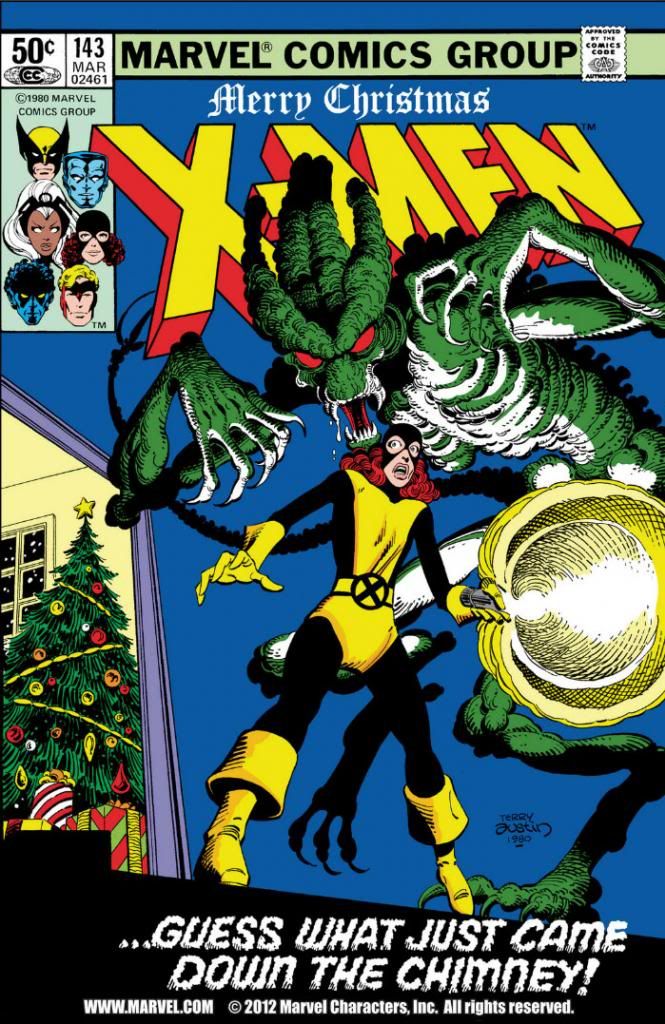
One Christmas Eve the rest of the gang leave her home alone, just like in that fun holiday movie about being left home alone. The title escapes me. Oh yeah-- It's a Wonderful Life. Unknown to everyone but Chris Claremont and John Byrne (those scamps!), it turns the portal to the N'Garai dimension is still slightly ajar. One of them, or a close relative, pops out, having visited Swiss surrealist H.R. Giger for a makeover sometime during the intervening years. The first thing the new, Alien-style N'Garai does is shred an unfortunate couple out poaching a small Christmas tree for their apartment. Then the poor, lost little demon, as lonely and in need of companionship as Kitty, goes looking for a friend. After all, it's no fun to be by yourself during the holidays. Kitty knows this, because this is the first Chanukah she's spent away from home herself. Unfortunately, thanks to various cultural differences, things don't go the way the demon planned. Kitty is less than appreciative of its presence, they don't get along, there's a misunderstanding, a fight and a blast from a white-hot jet engine.
 This story, called simply, "Demon," ran in Uncanny X-Men #143 (March 1981) a pretty minor work compared to the galaxy-spanning drama that made up the
recently-concluded "Dark Phoenix Saga," and it lacks the influence of
"Days of Future Past," which took up the previous two issues It's kind of the
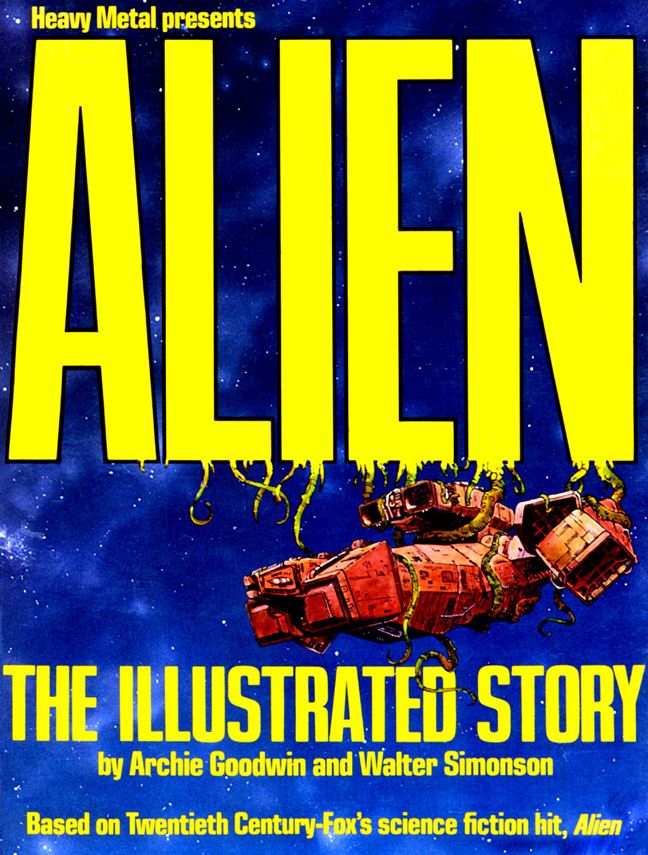
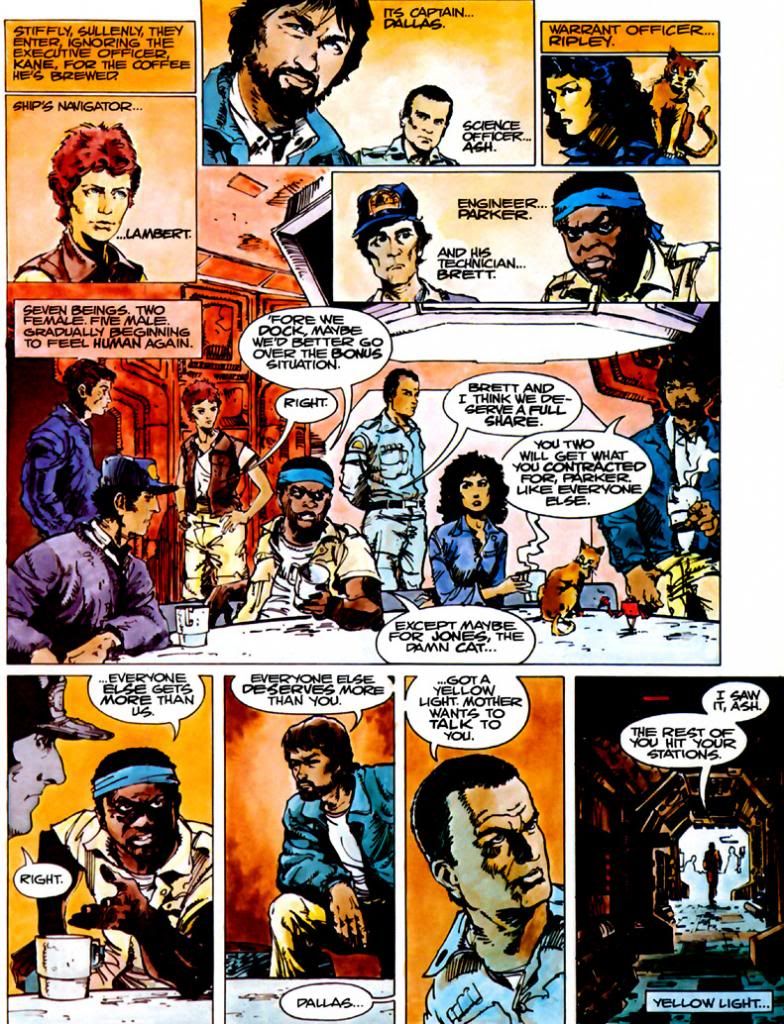
Claremont-Byrne team's last little laugh before the team split, and from its title to its monster and most of its plot, it's openly cribbed from Ridley Scott's sci-fi/horror masterpiece. You know, White Squall. Claremont
must have enjoyed using Scott as much as he did H.P. Lovecraft in the prequel to this issue; he'd later re-homage Alien with his Brood creatures,a kind of otherworldly insect species with a
life-cycle that resembles a toned-down version of the Giger creature's.
I don't know if Byrne tried again. He seemed to content himself with
mining Marvel's own history for ideas when he moved over to Fantastic
Four as writer and artist. And tossing in a little Twilight Zone or
Invasion of the Body Snatchers for good measure-- remember that issue
with the town that drank the cow-Skrull milk and turned into evil
shapeshifters? That one was disquieting in a way this one can't quite match.
This story, called simply, "Demon," ran in Uncanny X-Men #143 (March 1981) a pretty minor work compared to the galaxy-spanning drama that made up the
recently-concluded "Dark Phoenix Saga," and it lacks the influence of
"Days of Future Past," which took up the previous two issues It's kind of the
Claremont-Byrne team's last little laugh before the team split, and from its title to its monster and most of its plot, it's openly cribbed from Ridley Scott's sci-fi/horror masterpiece. You know, White Squall. Claremont
must have enjoyed using Scott as much as he did H.P. Lovecraft in the prequel to this issue; he'd later re-homage Alien with his Brood creatures,a kind of otherworldly insect species with a
life-cycle that resembles a toned-down version of the Giger creature's.
I don't know if Byrne tried again. He seemed to content himself with
mining Marvel's own history for ideas when he moved over to Fantastic
Four as writer and artist. And tossing in a little Twilight Zone or
Invasion of the Body Snatchers for good measure-- remember that issue
with the town that drank the cow-Skrull milk and turned into evil
shapeshifters? That one was disquieting in a way this one can't quite match.The monster itself tries its best, but falls a little short because neither Claremont nor Byrne seem particularly interested in it. Their main concern is putting Kitty through her paces and making readers adore her.
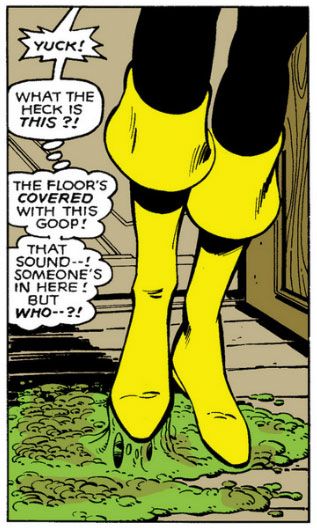
Let's examine our N'Garai for a moment. In X-Men #96, the story makes the point these smaller demons consist of smoke, and Dave Cockrum makes them more bug-eyed. Storm is even able to wave one of them away with her hand. They do, however, sometimes use long spears or lances with which they can stab someone and inflict pain and perhaps drain away life force like Kierrok does with his very presence. Claremont is almost out of pages with no time to explain it fully, and Storm herself only says something about pain and possible death if she's stabbed again. In this issue, the lone N'Garai is definitely made up of solid matter of some kind, albeit demonic, and it uses its claws and teeth on the young marrieds before eating their bodies and their souls. It also leaves Alien slime wherever it goes and crashes through walls. Essentially, it's an unauthorized guest appearance by the movie monster without any of the icky bio-mechanical sexual reproduction connotations.
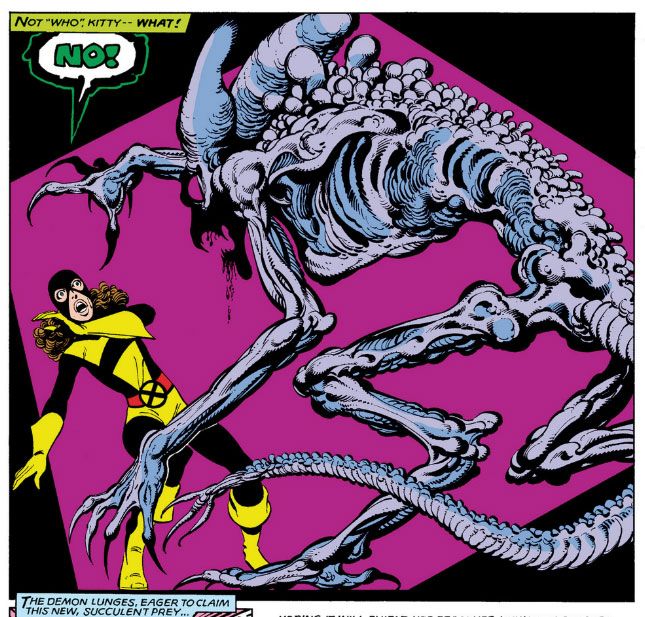
Confined within the pages of a single issue and the limits of what the Comics Code would approve, the poor beastie doesn't really get to cut loose and terrify us. The chase it inspires is chaotic but not as frightening as it needs to be. Byrne smudges Kity's face and draws some sweat droplets on her brow and Claremont has her tell us through a thought balloon she's scared but "coping," but she comes across as a bit too unflappable throughout most of the comic.
Sigourney Weaver's redoubtable Lt. Ellen Ripley-- for whom Kitty acts as a stand-in and occasionally physically resembles here-- is self-possessed throughout the majority of the film, but frazzles during her frantic escape attempt. Then she just about loses her shit when she discovers she's accidentally taken the alien with her in her little life pod before she pulls herself together. Weaver's iconic performance helps, as she's able to convey both Ripley's palpable fear and her agency simultaneously. This crucial element is missing in Uncanny X-Men #143, despite the tear in Kitty's eye in one close-up. Also, we haven't really seen the demon do a whole lot beyond kill two people-- both taken by surprise and, as civilians, without even Kitty's ghostly phasing powers-- and a room full of plants.
The story comes close to its full Alien-esque horror potential when the creature jumps out at Kitty and slashes through her, causing her pain and the temporary loss of feeling in one arm even though she's in her incorporeal "phase state," and in the hyper-kinetic Danger Room sequence as well, but there's no real feeling Kitty's in serious jeopardy. After all, this entire issue is more or less a love letter to her, so we seriously doubt from the get-go Claremont and Byrne plan to kill off this kid so soon after the start of her comic book career.
So what we're left with is more a puzzle situation, and the interest is in watching how courageous and clever Kitty solves it. Which, I suppose, makes it kind of akin to one of those Quinn Martin detective shows. Barnaby Jones or something. We see the criminal commit the crime right at the outset and instead of a whodunnit, we get a how-solve-it.
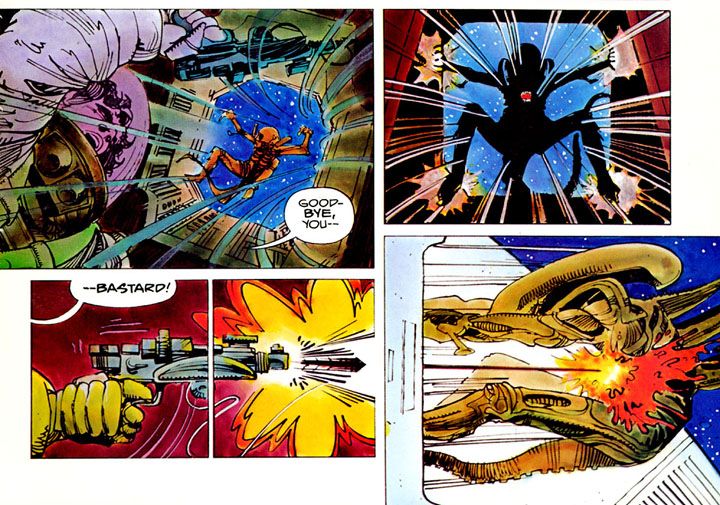
Speaking of how Kitty solves things-- well, if you've seen Alien, you know how it all ends. Byrne even borrows heavily from the film's visuals to show it, a kind of acknowledgement of just how baldly he and Claremont are riffing on Scott. To set it up, there's a neat bit of foreshadowing right at the start when we see Professor X teaching Kitty how to start the Blackbird. I find it really fun to see a young hero's education in process, and who would have thought the day's lesson would pay dividends so quickly? This premise-- how superheroes learn to be superheroes within a school setting-- is a lot more interesting to me than the demon/Alien stuff. It's a precursor to The New Mutants and it's almost as if we're watching Claremont inspire himself along those lines, with the genesis of that series appearing right here on these pages.
The weirdly saccharine denouement also foreshadows Claremonts of future past when the team returns to the mansion only to find a tired but otherwise unshaken Kitty sipping hot cocoa in front of the fireplace. That's right-- she has barely escaped death or even worse at the demon's claws, has no way of knowing if this was a one-time event or the harbinger of a full-scale monster invasion, isn't expecting anyone home for hours... and Claremont has her drowsily lounging about in her robe, as if nothing at all out of the ordinary had happened.
Okay, so Kitty's much tougher than I'd ever imagined, and she's recently returned from the future where she watched everyone die, but don't you think almost being killed by a demon warrants some kind of emotional response beyond the slight embarrassment one gets from denting the family car? And even if Kitty is too cool to worry, you'd think the older superheroes who almost died fighting Kierrok and supposedly have years of combat experience would do some kind of reconnaissance or go into a defensive posture on the chance there are more demons or enemies lurking around. They don't even spend much time trying to debrief Kitty. Storm just gives her the concerned mom act. After all the mayhem, it turns out nothing more is at stake here than in any given episode of Facts of Life.
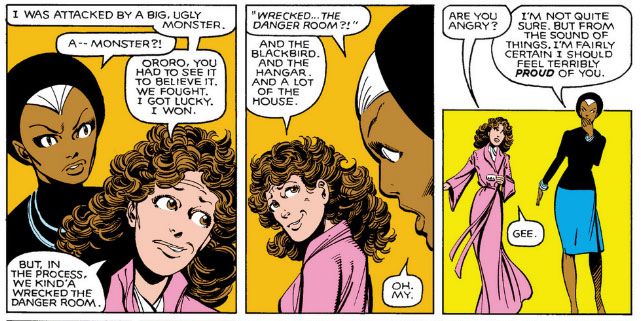
This comes dangerously close to making the whole "spunky teen girl joins the team" aspect insufferable. I guess my tolerance for this stuff was a lot higher when I was Kitty's age. The New Mutants, which came out a mere year or two later, would consist almost entirely of this kind of tonal dissonance, and I ate it up. And still do, but then my outright hero worship-love for Dani Moonstar has always overshadowed my liking of Kitty Pryde. As it is here, everyone's muted reaction further undermines any peril Kitty might have been in earlier in the story and reveals a Claremont a little too in love with his cast. While it's nice to show Kitty as a teen character able to pull herself together and save herself (a trait she's going to need when the team rockets into space or faces down Dracula himself later on), if you're going to take your superhero story the sitcom route, a better, more appropriate gag for the ending would have been the team coming back to find a pumped up Kitty toting around a baseball bat or that M16 rifle Moira MacTaggert used on Kierrok when these demons first appeared.
And one more thing, gosh darn it-- it's really too bad this wasn't set at Halloween.