Showing posts with label Dani Moonstar. Show all posts

Friday, September 5, 2014

"Forget it, Kitty! You're not good enough for us 'X-Babies!"


Ah, I remember New Mutants #13 (March 1984) when Kitty Pryde was like, "Oh, guys, can I hang out with you?" and Dani Moonstar was all, "Nuh uh!  You called us 'X-Babies,' so you can take your sorry butt right on out of these woods we're hanging out in and suck an egg!"  I was thinking about that the other day.  I've always loved the cover by Tom Mandrake.  Crying Kitty's in the foreground in her garish green circus costume, phasing sadly through a fallen tree, and the New Mutants are behind her looking fierce.  Especially Dani, who Mandrake places in this pose of haughty dismissal.
 
The story inside is heavy on Amara, Kitty and Doug Ramsey, none of whom I had the least interest in back in the day.  I briefly gave up reading the series right around this issue because the book seemed moribund.  No more Bob McLeod art, the team's central conflict-- Dani versus a Brood-controlled Professor X-- had long been resolved and the X-Men were back from space, where everyone had believed them dead.  There was really no need for a junior X-Team, unless it was to give Chris Claremont's complex narratives in Uncanny X-Men extra space to play out as a kind of main story footnote.  Hardly a compelling reason for another title, although it's standard operating practice at both Marvel and DC these days.
 
Rather than establish a distinct identity, New Mutants in its second year tended towards dull, generic super-kid stories. It hooked me again when Bill Sienkiewicz became the regular artist and Chris Claremont re-established his unique authorial voice by taking the kids and their narrative in a darker direction.  Demon bears, slumber parties, shape-shifting cyber-aliens from outer space.  All classic stuff.

But I loved this conflict between Kitty and Dani.  I took Dani's side, of course.  Who wouldn't?  Dani is only Marvel's greatest post-Jack Kirby creation.  Kitty's fine, but there's no competition there.  Mandrake's cover stuck with me for years after I'd forgotten Amara gets her codename in the story, long after I'd given up comic book reading for serious literature only to start in with them again, kind of the same way I did with New Mutants.

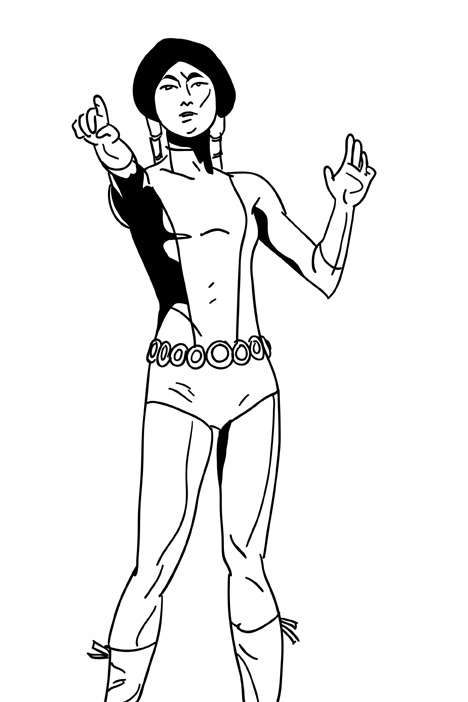
Every so often, I want to revisit that cover image, only my brain invariably turns it into something that only slightly resembles the Mandrake original.  Like with this drawing, which I knocked out the other day before work.  I felt like working on a foreshortened pointing pose, because I'd convinced myself Mandrake had drawn Dani that way.  Actually, if you take a look at New Mutants #13, she's just sort of waving her hand at Kitty.  And I really thought since Dani was establishing herself as team leader and spokesperson she was the one who let Kitty have it with the cover dialogue.  How wrong I was!  Well, my little sketch is poor Kitty Pryde to Mandrake's powerful Dani Moonstar.

Monday, May 12, 2014

The New Mutants and my artistic misadventures up to now...


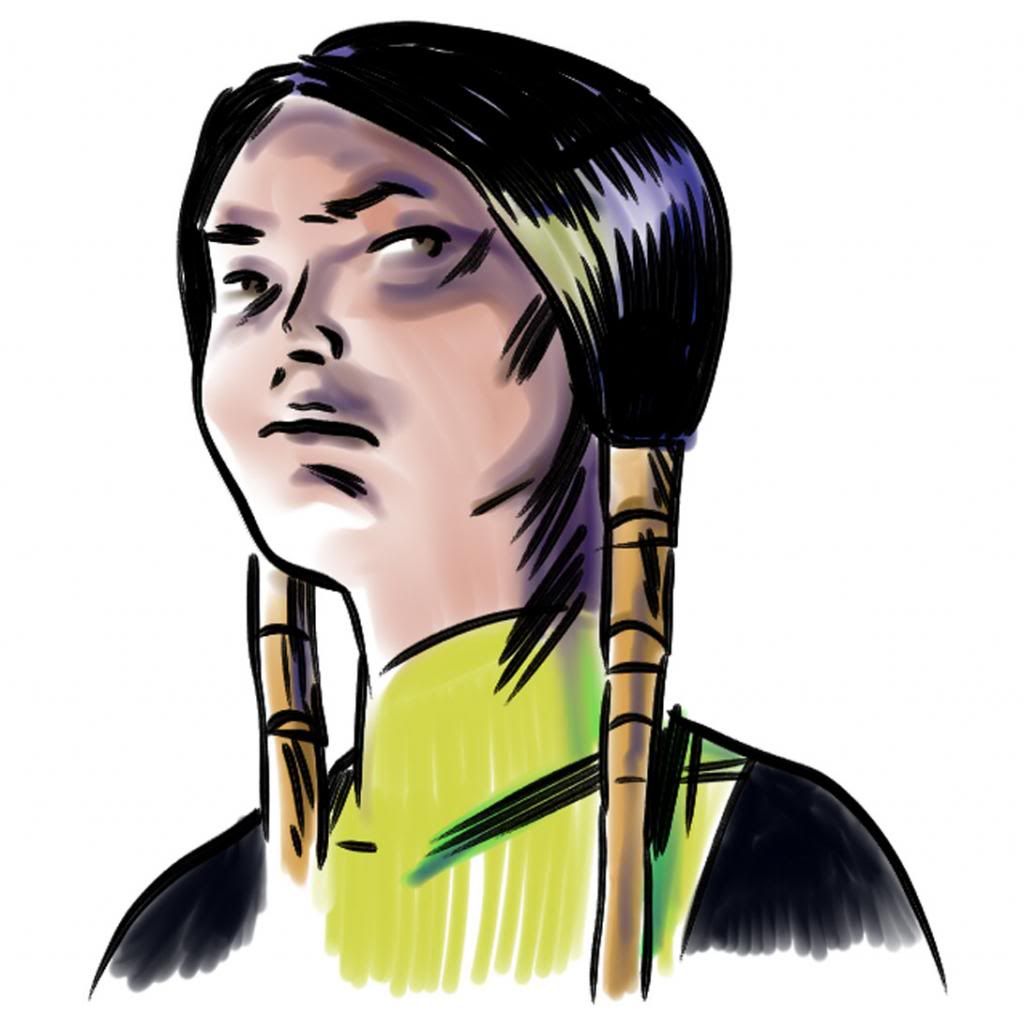
This unfinished sketch began its life as just a dull portrait of Dani Moonstar (AKA the Greatest Comic Character Ever Created) I did months ago, possibly in ArtRage Studio or Sketchbook Pro. Yesterday, feeling kind of feisty, I opened it up in Manga Studio and penciled over it and, I believe, fixed one or two things that used to bother me about it.

 For some reason, I felt a Hulk appropriate to the story and once I added the Jade Giant, obviously we needed a cringing Sam Guthrie doing a sort of Archie comics fear pose on the right. Such was my thought process at about 7pm, the end of a full day of drawing and self-directed art study which began around 630am. By the time I started coloring it, I was physically exhausted. I only got this far and decided to call it quits, but at that point I'd discovered oil painting and I played around with a digital piece I did a couple of years back of a screaming Captain Kirk being left behind in deep space by the Enterprise.

Yesterday's efforts included the writing, lettering and laying out of a story I call, "The Legend of Billy Jack versus Bruce Lee." I also drew Conan attacking Mickey Mouse, an image I've been toying with for the past month. The idea I could make the Conan figure look a bit like a John Buscema drawing wrecked me. Then I discovered my own line and had to re-draw it in a more personal way. In blue pencil just for fun.

I find I've developed some measure of precision to go along with the speed I've long had. I also have a tremendous amount of self-discipline where I can keep myself drawing for hours, minus a couple of rest breaks here and there, and push through blocks and frustrations to keep putting down lines. What I lack are basic storytelling skills and an appealing aesthetic quality. I don't have a particular "way" to draw eyes, or a characteristic approach to shadows and highlights. What I seek is a natural way of drawing, without getting hung up on ideas like "style."

 But at the same time, I want something I can reproduce consistently that looks attractive in case people might actually come to desire my art in some financially remunerative way. The way to do this is simply to do this. Then do it again. And again. Do it a million times if necessary, or even more.

I wish I had all day every day to devote to art, but I also have to do my regular day job. So for now, I'll be getting up at 5am to draw for two hours and then maybe 4 hours on a Saturday and a Sunday each as long as my wife is cool with it. I mean, she's pretty darned important to me!

Anyway, as I've no doubt mentioned here, many years ago I had this idea I could write a 48-page graphic novel or the first two issues of an ongoing series, a kind of "slice of life" thing partially inspired by the existence of Love and Rockets, Ghost World and even Peter Bagge's Hate. Visually, I wanted it to resemble classic romance comics, but with the clothes and hairstyles all up-to-date. Then I thought, "Hey, why don't you try to draw it in as close an approximation to Alex Toth's style as you can?"

 I guess I kind of had in mind Mark Schultz's first Xenozoic Tales story, titled "Xenozoic!," which he drew as an extended Wally Wood riff. Well, I quickly learned I was in no way Alex Toth or Mark Schultz. But by that time, I'd already written the whole thing. I did it Sergio Aragones-style, with the entire 48 pages thumbnailed, complete with dialogue.

 Realizing I'd set the bar impossibly high for someone whose last lengthy sequential work was a three-page Jurassic Park parody done in 1993, I decided to limit myself to just writing it and getting someone else to draw it. I typed it up in what I think is standard script format, completed the forms and documents and sent the whole mess to Dark Horse Comics, the only place taking those kinds of unsolicited submissions at the time. That it then disappeared without a trace into their slush pile and then, no doubt, into a recycling bin where it eventually became an ingredient in someone's computer desk or a Blo Pop stick (I hope the latter!) let me know my writer's skill level and commercial instincts!

Rejection is just part of aspiration.  I don't save them because I'm not sentimental and I have little or no ego, but I've since received some actual rejection letters for short stories I've written.  That's more fun that silence, and from them I gained a feeling of accomplishment.  The thing is, you can't give up.  Ever.  So even though I was in the process of changing from a low-paying graphic design career to a higher-paying English teaching one, I carried the layouts and script with me to Japan where I worked on them from time to time.  When I bought Manga Studio 5 with my new-found education riches, the first thing I did was lay out the first half as a single comic book issue and letter it, editing and fine-tuning the dialogue throughout.  Soon I'll do the other half and complete the story.  I know how it ends and how to get there.  I know what everyone says and does and why.

I drew here and there, but largely just spent my time bouncing around between my adopted hometown and Tokyo, checking out rock shows and living the life of a language mercenary.  This left little time for the kind of dedicated study of art I'm making now.  And why am I doing this?  Encouragement from a pro who sent me a message on Facebook and asked me directly why I wasn't drawing.  Why I had never gone for it.  I thought about that for while and after I had thought about it long enough, I realized I had to start drawing again on a regular basis.  I couldn't let my skills rust anymore.  I then went to work drawing every single day and recently, I've been spending longer hours at it.  I'm improving faster than I ever thought possible.  And it's been pretty fun despite smashing headfirst into the upper limits of my capabilities, which aren't as high as I'd like.

There are some hugely talented people out there who can blow my wheels off!  I mean, WOW!

Then, this past weekend, I decided that so-called graphic novel needed some new thought and a new beginning.  I came up with a kind of one-page prelude to set the scene and one of the character conflicts.  This leads into my original opening sequence but enables me to show, rather than tell, and opens up the possibility for more natural, less expository, dialogue from the two co-leads.  They're half of a quartet of characters whose adventures and misadventures drive the story.  This made me re-think another scene near the beginning that will no serve to sharpen the book's main dilemma, the one shared by all four people.

And with that, I must go teach an English conversation class.  So I'm out!

Wednesday, April 30, 2014

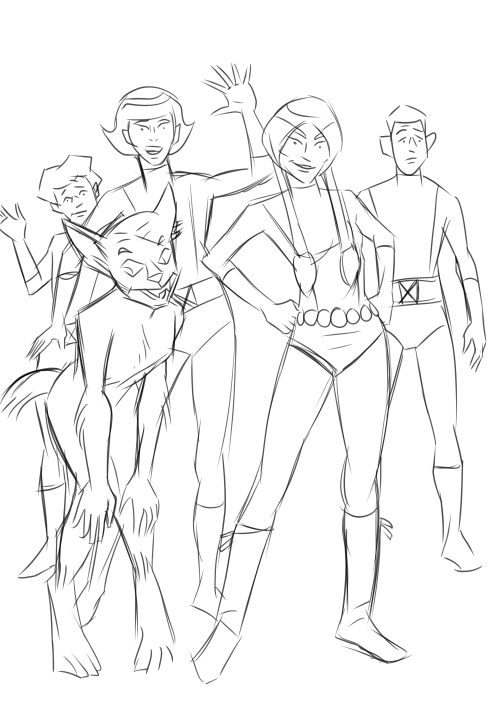
First pass at interpreting the New Mutants as 60s-70s Hanna-Barbera characters!


Inspiration struck yesterday and I couldn't rest until I made this image. There I was, teaching English, and I started wondering what the New Mutants characters-- my all-time fave super team-- would look like as 1960s-1970s Hanna-Barbera cartoons.  Obviously, Dani Moonstar would be the central character and steal most of the screen-time, and Sam Guthrie would be the clumsy, self-doubting comedic relief, with Rahne Sinclair as Dani's cutesy-pie animal sidekick a la Scooby-Doo and various members of his family.  Xi'an Coy Manh would be the mature voice of reason and Roberto da Costa the cocky muscle.  Too many uncertain lines and I haven't finished designing Rahne in her half-wolf form.  The doodles I did at work were a lot better than this.  The first Xi'an I drew had some appealing lines in her face and along the hair flip I didn't quite capture here.  That really inspired me to think I could pull this off.  How wrong I was!

Then again, I did this in about 15 to 20 minutes this morning while eating breakfast and drinking coffee.  I'll give it another go this evening and this weekend and see if I can't improve it.  Ink it and apply a wash or maybe some watercolors.  I'd love for it to come out looking like something found in the HB files, forgotten for years.  Again we see there is nothing my imagination can possess which my fumbling art skills cannot take away.

To end on a positive note, I largely avoided tangents (except, most glaringly, Dani's highlights meeting her eyebrows and where her boot fringe meets Xi'an's shinbone), which pleases me, and I really like Sam's body language here.  Just a slight slumping of the shoulders conveys quite a bit about his lack of self-confidence without over-selling it.

Tuesday, April 29, 2014

Bizarre Dani Moonstar sketch!


Dani Moonstar is upset about something, possibly how screwed up I made her hand.  Or maybe it's how oversized I drew her head.  Or maybe it's that Superman-type monstrosity in the foreground.  I did this as a warm-up before doing a more serious drawing.  Strictly linear Sam "Cannonball" Guthrie makes an appearance with either his left arm extremely foreshortened or else his hand swollen to impossible size.  Judging by his expression, the latter is very much a possibility.  Bored with that, I started copying Alex Toth faces to fill in some space.  I like the expression on that guy on the far left: "Why are you doing this?  Is it because you hate art?"

Tuesday, February 4, 2014

Monday, February 3, 2014

Hell's Angel: The Strange and Terrible Saga of the Outlaw New Mutants and the Time They Adopted Bird Brain

From the vantage point of our current mass media, where its characters permeate the zeitgeist, it may seem ridiculous, even the stuff of lunacy, but there came a time in the late 1980s when America's comics-hungry masses turned away from New Mutants.  As interest in the comic fell and sales flagged and talking heads hit the airwaves to postulate almost hysterically on the reasons-- anxiety over the ending of the Reagan era? Pre-millennial jitters?-- series star Dani Moonstar phoned the home office and demanded someone at Marvel do something. The Marvel solution as scripted by Louise Simonson was to honor that most wonderful and time-tested of sitcom traditions with the addition of a cute tagalong to the familiar cast.

In the human world, this new character would most likely be a baby or even Ted McGinley (already having done sterling work on Happy Days, The Love Boat and at the time coming off a stint revitalizing Dynasty as Clay Fallmont on his way to achieving legendary status as Jefferson D'Arcy on Married With Children).  Or a bespectacled blond-headed moon-faced boy susceptible to both pies in the face and Bobby Brady's ridiculous detective schemes.  In the world of teen mutant super-beings, the ideal Cousin Oliver proved to be a hideous feathered freak, the very antithesis of the almost supernaturally handsome McGinley.

And while The Brady Bunch failed to escape the event horizon of its particular ratings black hole, adding Bird Brain to the cast gave New Mutants enough of a lift to carry on for a few more years.  Bird Brain, the lovable weirdo.  Bird Brain, who made Gonzo the Great look like Cary Grant and the Chicken Lady from Kids in the Hall resemble his To Catch a Thief co-star Grace Kelly.  Bird Brain, who ate fish and probably smelled something awful. 

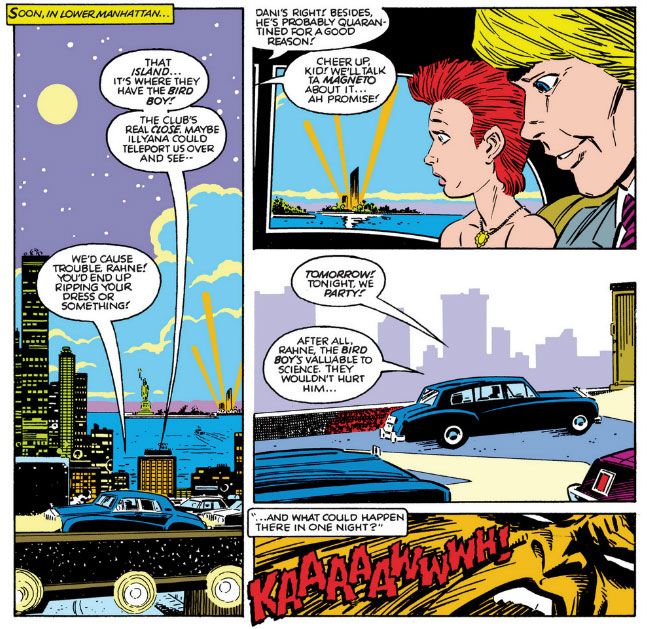
New Mutants #55 (September 1987), script: Louise Simonson, pencils: Bret Blevins, inks: Terry Austin

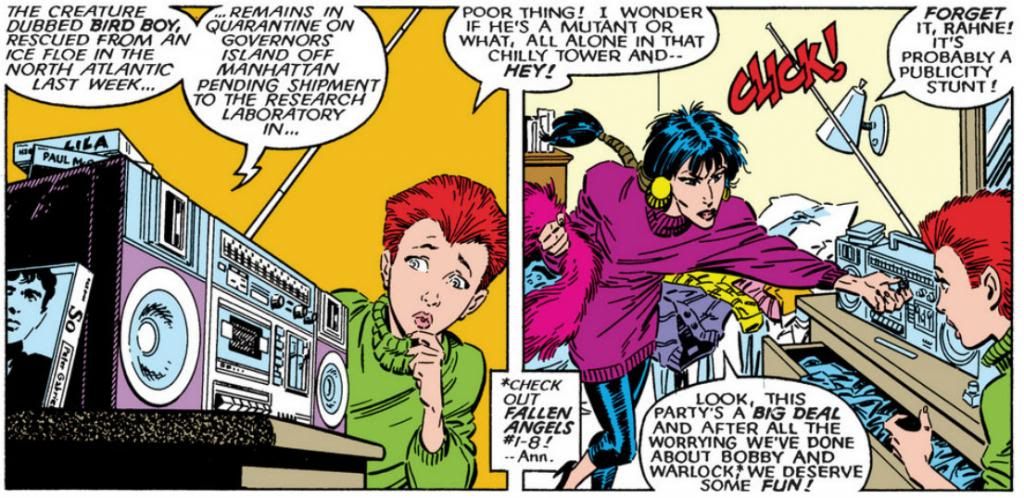
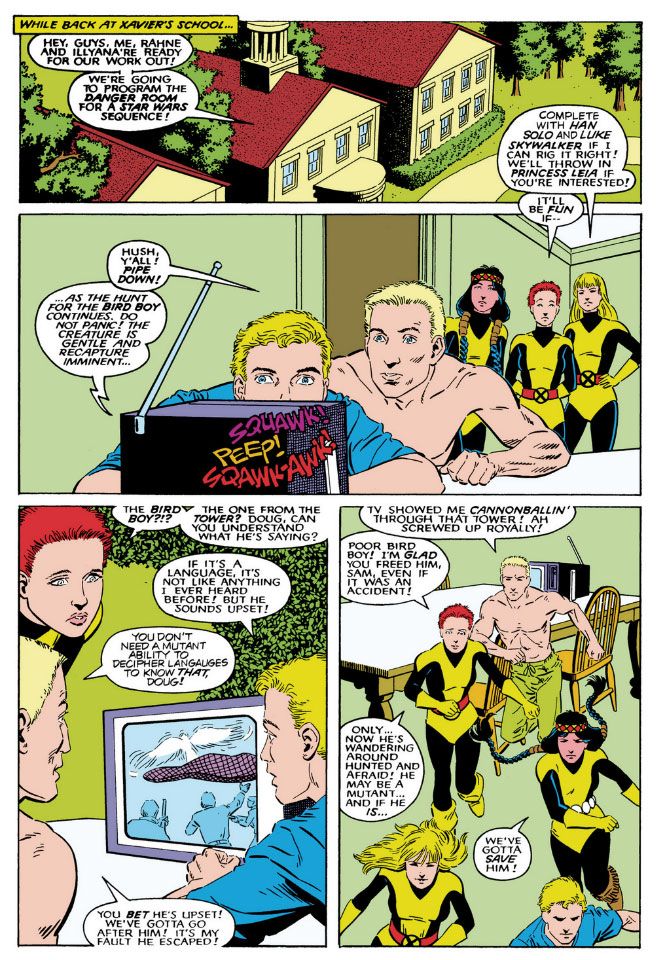
Online sources list New Mutants #55 (September 1987) as Bird Brain’s first appearance, and that's technically correct, although it's a mere cameo.  We do feel his presence throughout, starting early in the issue when the kids learn about Bird Brain from a radio news story.  Remember radio?  Artist Bret Blevins reminds of what this obsolete technology looks like with a highly detailed rendering that will no doubt become useful for future historians and archeologists as they try to recreate our late 20th century society. 

To you, highly advanced people of the future:  Yes, we primitives once used these devices to listen to music and learn about the world around us. 

Later, Rahne urges her friends to do something about Bird Brain's plight, and Bird Brain himself appears in an insert panel soon afterwards.  All we see is his beaked face.  Most of the story involves Sam Guthrie taking drugs at a party to impress his sometimes lover Lila Cheney, a space-thief who spends her down time rocking earth as a kind of Patti Smith/Pat Benatar/Joan Jett stand-in. 

For the record, I would fully support a Lila Cheney solo series.

New Mutants #55 (September 1987), script: Simonson, pencils: Blevins, inks: Austin

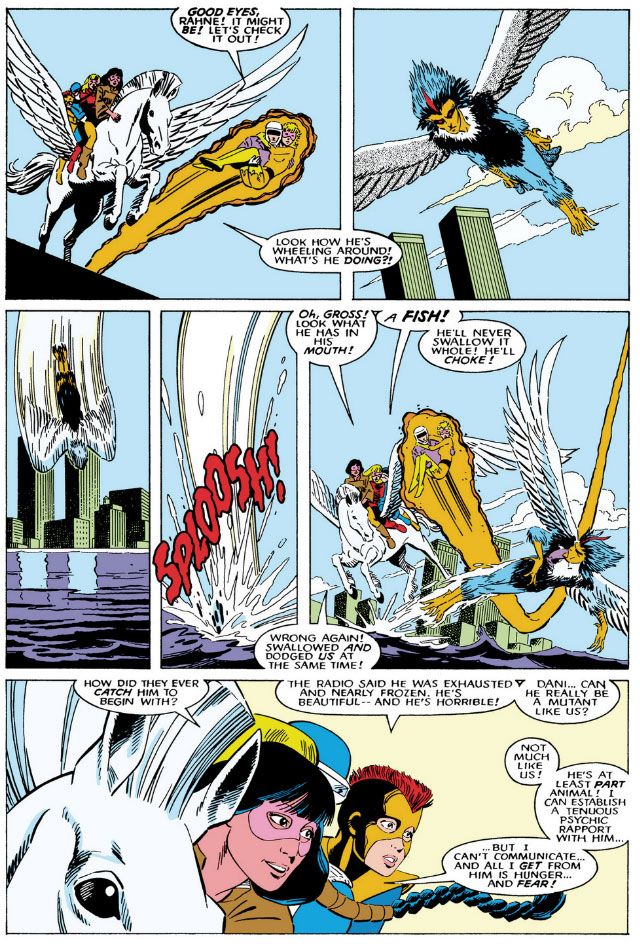
Anyway, Bird Brain.  New Mutants #56 (October1987) is the first comic truly to be all about his birdness and his brain.  We learn Sam has somehow inadvertently freed Bird Brain from his imprisonment in a research lab—it must have happened while he was groggily flying around trying to avoid some aliens who have it in for Lila.  For unknown reasons, we don’t actually see this happen in the story.  Just take Dani's word for it.  Or Sam’s.  Or Rahne’s.  Whether or not he's truly responsible, Sam feels so and goes to find the fugitive freak while Dani involves the entire team.  She even makes them wear their hideous “graduation uniforms,” for disguise purposes.  See, if they wore their New Mutant garb, everyone would know them, but a group of teens with identical powers and similar appearance in different clothes constitute a mystery even Reed Richards couldn’t solve.  And that guy is a genius, but obviously not as much so as Dani Moonstar. 

New Mutants #56 (October 1987), script: Simonson, pencils: June Brigman, inks: Austin
 
Let me just take a moment to express how much I wish June Brigman had penciled more New Mutants.  She did this issue and annual #4 (September 1988), but Marvel should have given her the monthly assignment.  She’s gold on this team, especially with Simonson's scripting.  Regular artist Blevins has an edgy, sketchy style with a lot of energy, but he makes Dani look about fifty years older than her supposed age (and kind of mean!), which is an unforgiveable lapse (although his Rahne Sinclair is cute as a button).  So while I admire Blevins' cartoony body language, with bent knock-kneed poses and dramatic gestures, I prefer Brigman's cleaner visuals and more controlled rendering.  Brigman, with the able assistance of inker Terry Austin, provides a sleek look that's a cool alternative to Blevins' more jittery work.  Her storytelling is fine, but it's the way she draws figures with lifelike proportions and impeccable facial “acting”  that grounds the book in some much-needed reality.  This gives outrĂ© characters like Bird Brain a bit more believability.  And this is without relying on the crutch of photorealism.

New Mutants #56 (October 1987), script: Simonson, pencils: Brigman, inks: Austin

Also, Louise Simonson has a way with naturalistic teen-speak that I find superior to Chris Claremont's more stilted dialogue.  Claremont crafted some dark classics during his run on the characters, particularly the "Demon Bear Saga," which received its own trade paperback collection (something that can't be said for the "Bird Brain Saga"), but Simonson's teens "sound" more like actual teens.  Especially when combined with Brigman's art, where they look like actual teens as well. 

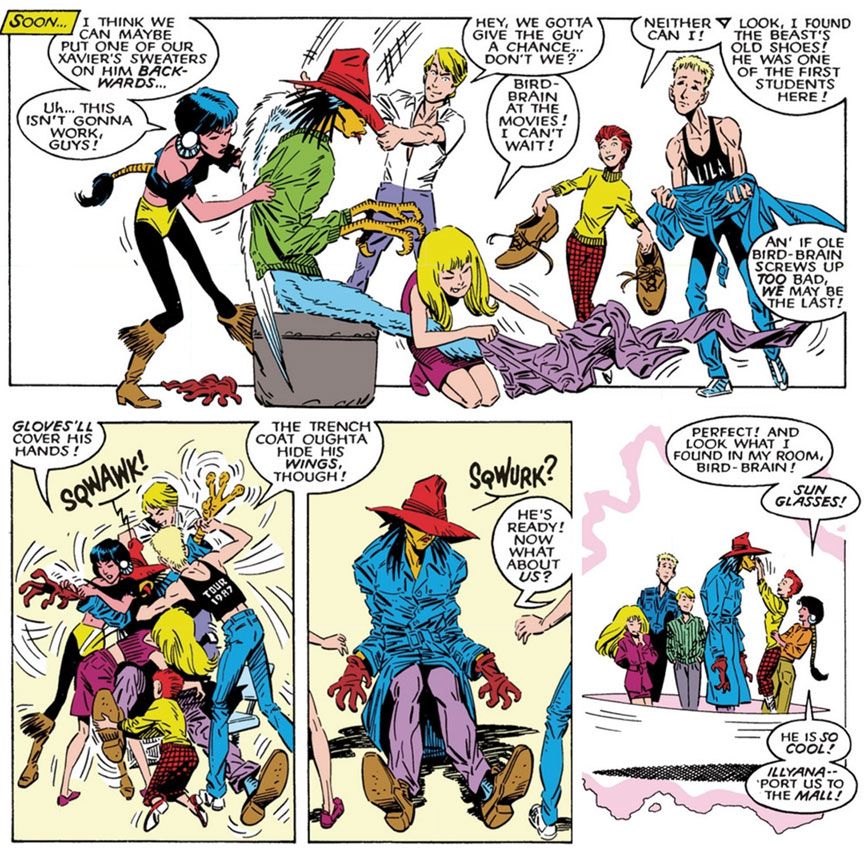
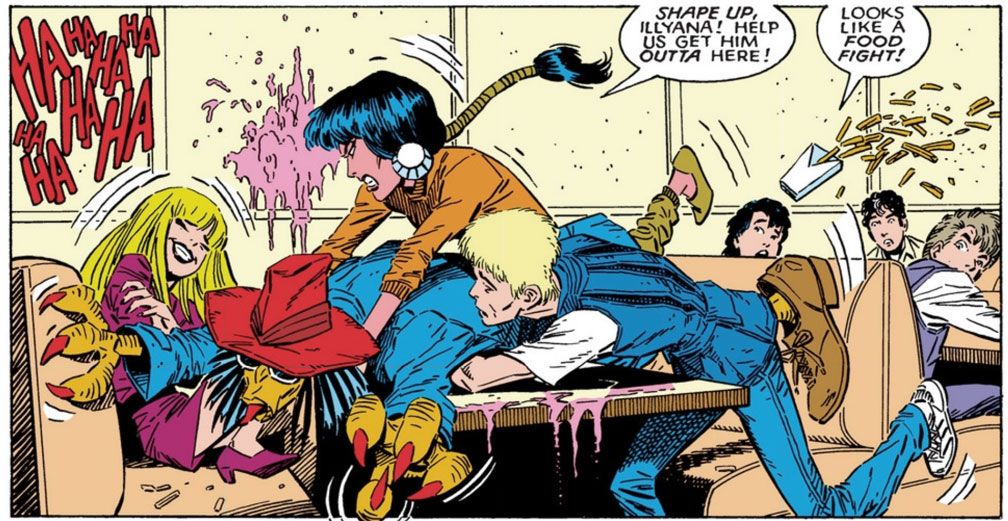
Also, Simonson's Bird Brain certainly is a bird brain!  It doesn't take Dani and the rest long to teach him the importance of dressing well.

New Mutants #57 (November 1987), script: Simonson, pencils: Blevins, inks: Austin

And the deliciousness of fast food.

New Mutants #57 (November 1987), script: Simonson, pencils: Blevins, inks: Austin

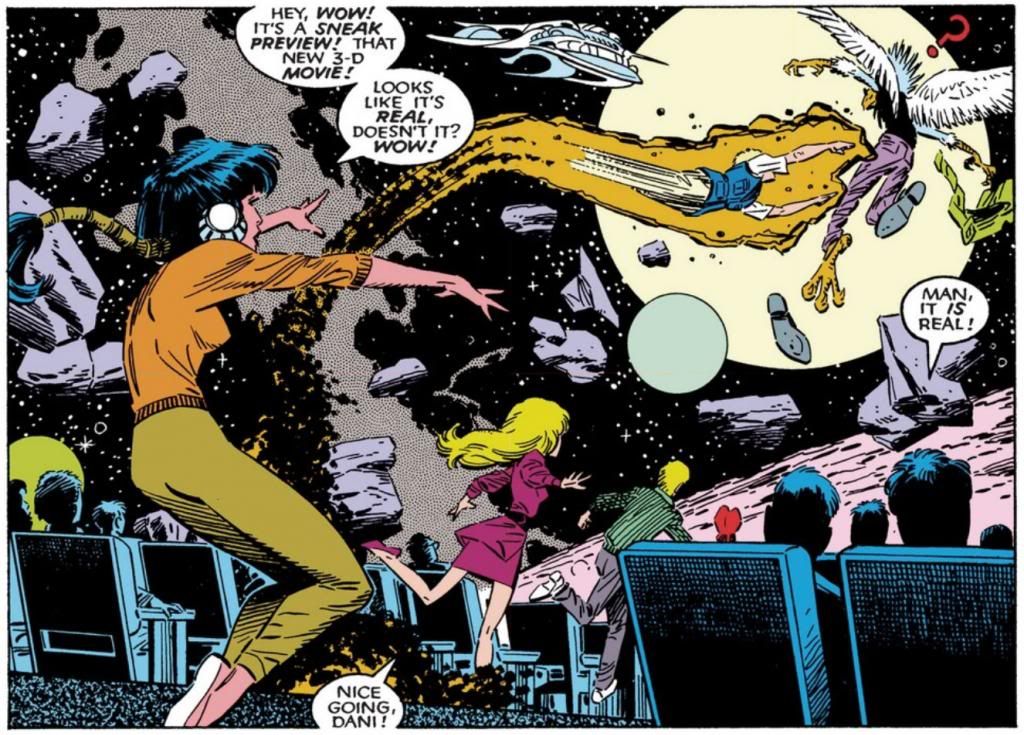
And the wonders of modern cinema.
 
New Mutants #57 (November 1987), script: Simonson, pencils: Blevins, inks: Austin

At this point, I will excuse you for asking,  "Just what in the name of Bill Sienkiewicz is going on here?"  In fact, ask me that.  Right now.

I don't know!  As a minor character Bird Brain would have been slightly annoying, but Simonson spotlights him over Dani Moonstar and other, more pressing plotlines like Sam's romance with Lila, Magneto's taking over the team and Amara's love-hate for one of the Hellions and her resulting arguments with Dani.  The kids' clumsy attempts at assimilating so alien a creature into teen society are amusing, but this is also a comic co-starring a girl who's literally from Hell and characters just one mistake away from death.  And the "Bird Brain Saga" isn't just a one or two issue romp.  It lasts approximately seven issues and for most of those seems little more than slapstick sit-com fodder, a bizarre digression for the series as a whole.

Okay, actually, I do know.  Because just when you've had about all the Bird Brain you can stand, Simonson ups the dramatic stakes by adroitly shifting tonally from comedy to sci-fi horror and the plot into a Moonstar-starring H.G. Wells' The Island of Dr. Moreau.  This happens in New Mutants #58 (December 1987) when the kids journey to a mysterious island to finally learn the true origin of Bird Brain.  After all, Bird Brain had to come from somewhere, so why not an island of animal-human hybrids presided over by a mad scientist with a skull for a hat?  By #59 (January 1988), the New Mutants are themselves captives and their humanity at risk.  

From there, the jeopardy growing from this development leavens the oddball comedy of the preceding issues.  The Moreau-style plotline is also particularly apt when dealing with characters on the cutting edge of human evolution.  Wells' themes--- including cruelty to animals (in Moreau, it's vivisection, in this story it's updated for the 80s to a more generalized laboratory research and then genetic splicing), which the Bird Brain story addresses obliquely from the beginning-- jibe quite well with Simonson's take on the team as concerned young people trying to make the world a better place.  By providing a classic literary explanation for this bizarre Bird Brain character, she finishes strongly, with a tragedy with lasting ramifications for the team in #60 (February 1988). 

Which I won't share with you because you owe it to yourself to read the entire Bird Brain saga in all its strangeness.   It's not exactly a "Demon Bear Saga," but on the other hand, it does feature Bird Brain.

Monday, December 23, 2013

New Mutants Winter Holiday Extravaganza starring Dani Moonstar!

If there's anything the New Mutants love more than ostracizing Kitty Pryde or cuddling up together on the sofa with some popcorn to watch Magnum, P.I., it's enjoying seasonal hijinks in the snow.  Let's take a moment to share a few holiday memories with Dani, Sam, Roberto, Rahne, Xi'an and all the rest.

The snow love starts as early as New Mutants #4:

New Mutants #4 (June 1983); words: Chris Claremont; art: Sal Buscema and Bob McLeod

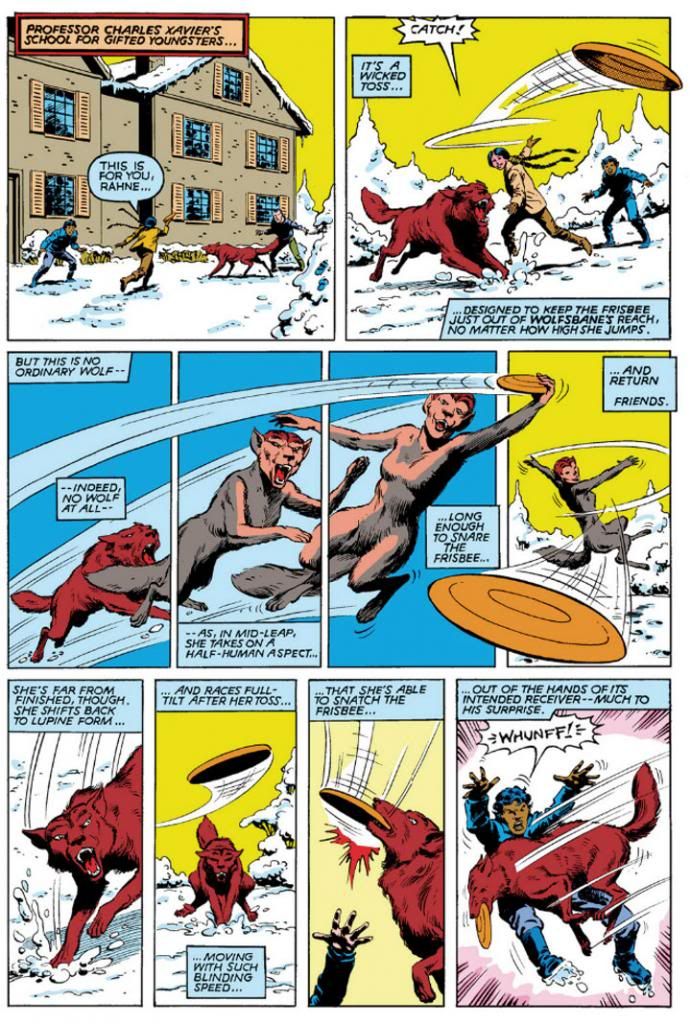
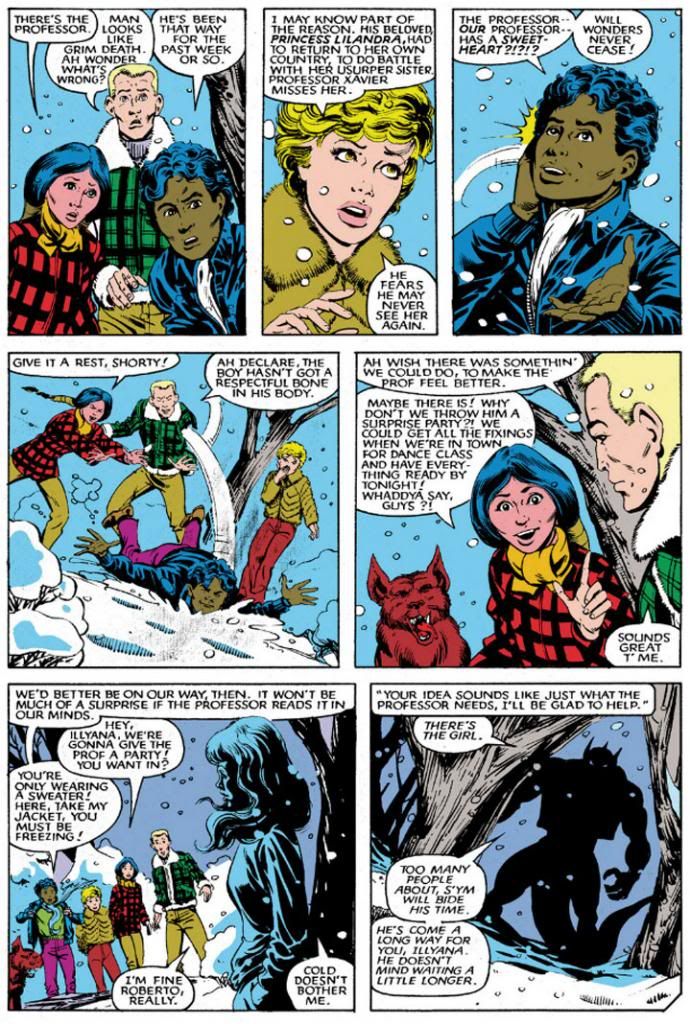
These sequences are useful for showcasing each kid's powers or personality, and for comedic relief.  Outdoor frolicking later helps the team quickly recover from the apparent death of leader Xi'an Coy Manh and welcome new additions Amara Juliana Olivians Aquilla and Illyana Rasputin to the team roster.  Amara shows her holiday spirit by helping plan a surprise party for a moping Professor Xavier.  Did you realize the Xavier School for Gifted Youngsters allows its students to get out of class early during inclement winter weather, even though they both live and study inside the school itself?  I didn't, either.  Here's proof, though:

New Mutants #14 (April 1984); words: Claremont; art: Buscema and Tom Mandrake

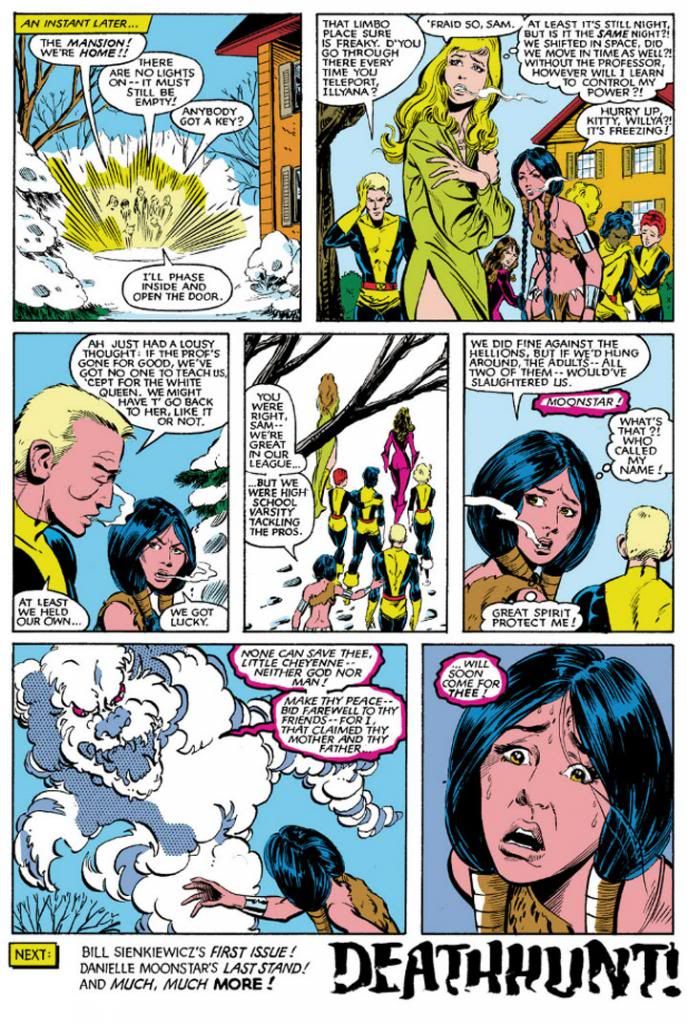
We all know how Dani shuns clothing in favor of what Xi'an jokingly calls l'aventures naturelles.  Leave it to the coolest mutant around to don a winter ensemble consisting of assless chaps and a loincloth even as the mercury dips below zero...

New Mutants #17 (July 1984); words: Claremont; art: Buscema and Mandrake

As someone who grew up in the Colorado mountains, Dani has probably developed a greater tolerance for low temperatures, but this is a bit much even for her.  After a quick hallucination as frostbite sets in, it's time to repair to the mansion to warm up with some hot cocoa and possibly a long inner monologue about recent events. 

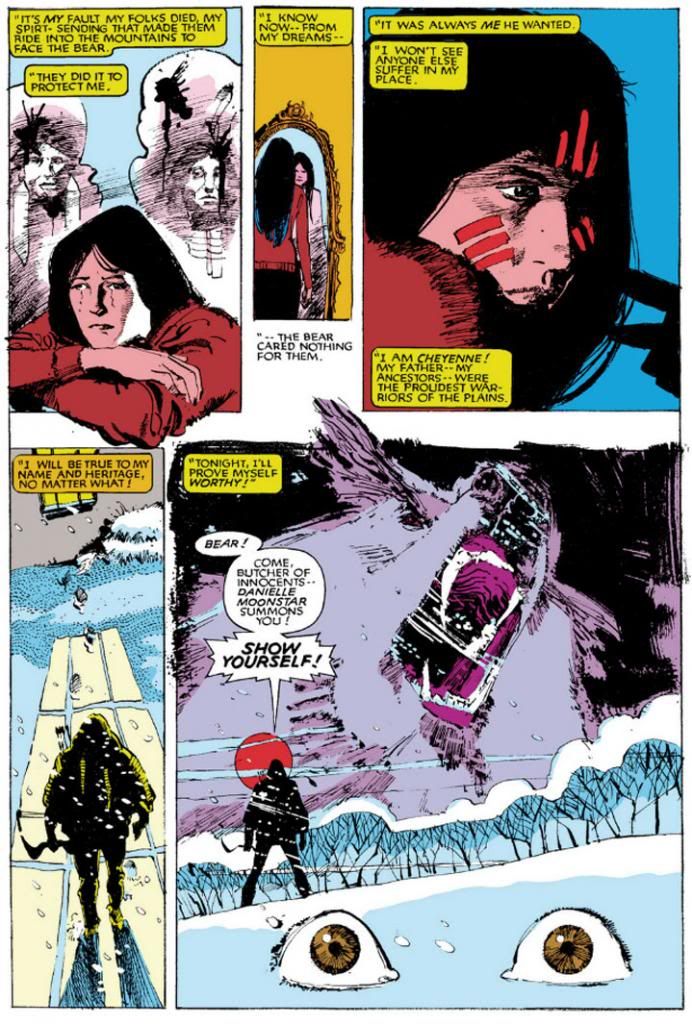
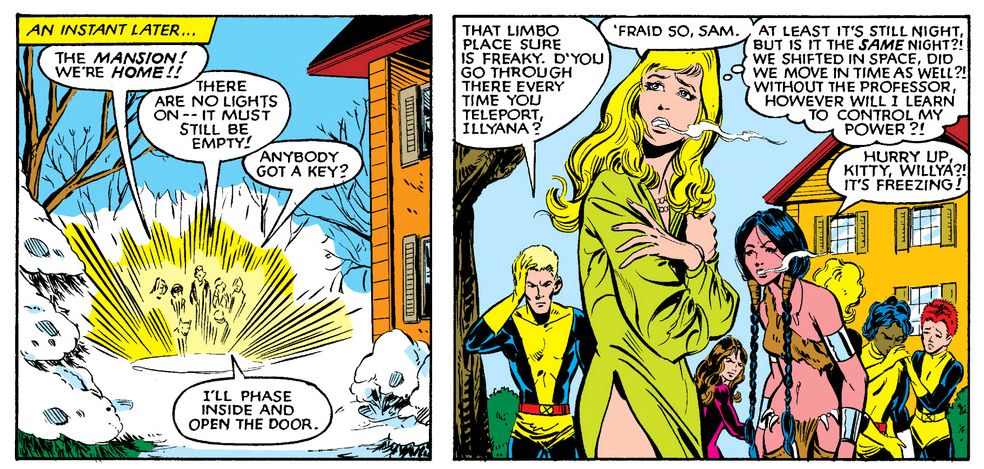
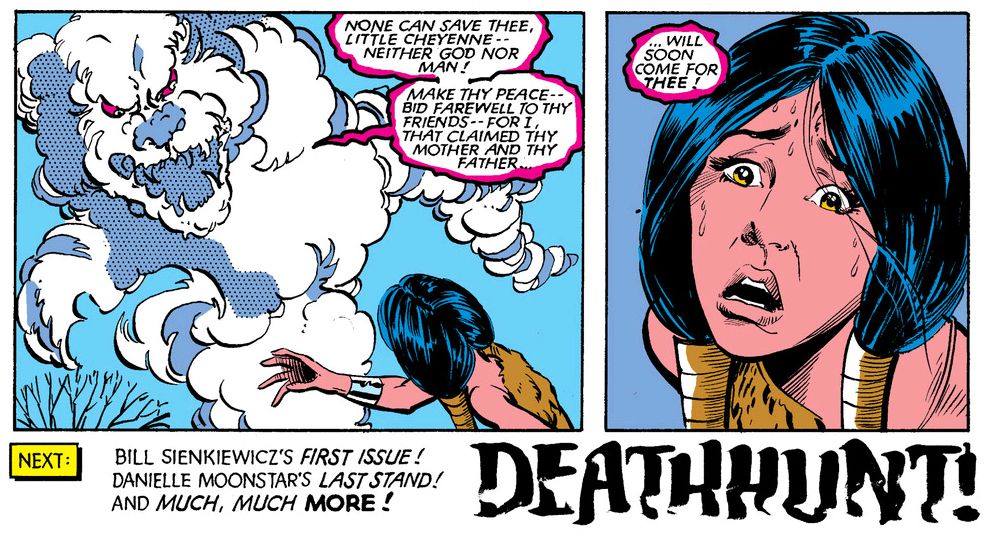
This next example isn't so much fun and festive as it is moody and menacing.  For Dani, snow isn't just about having fun and walking around half (or wholly) naked.  It's also about undertaking spirit quests.  Here's a dark and troubling page by Bill Sienkiewicz from New Mutants #18, where Dani goes solo against the demon bear that consumed her parents.

New Mutants #18 (August 1984); words: Claremont; art: Bill Sienkiewicz

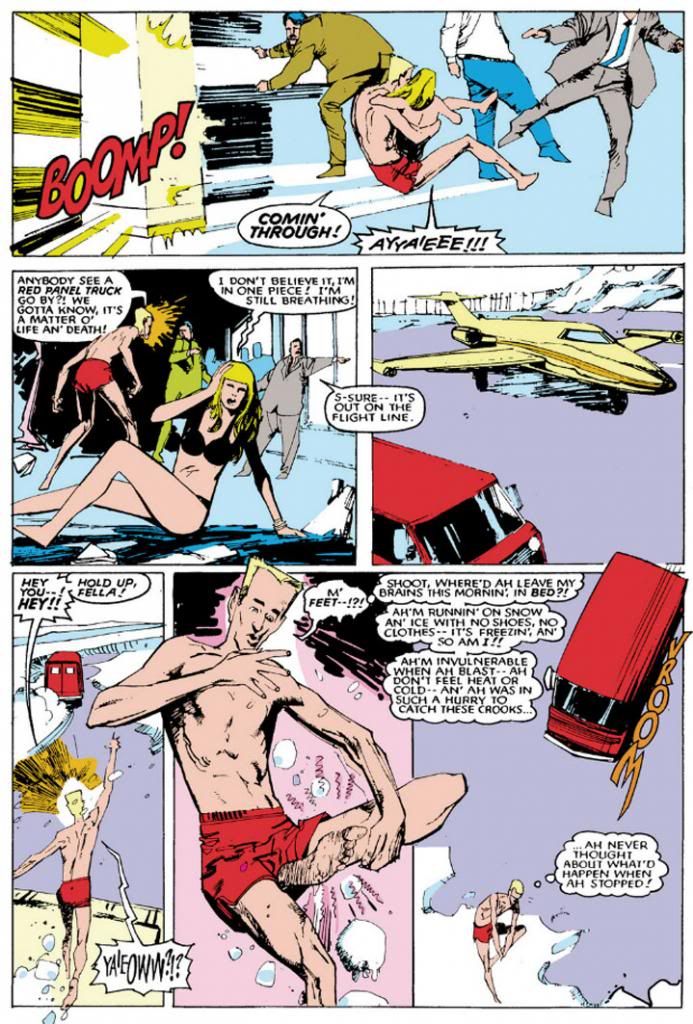
With Chris Claremont's genius for involving characterization, New Mutants rarely goes wrong when the story focuses on Dani, the best of all its characters.  But what's this?  Looks like Dani's not the only New Mutant trying for a membership in the Polar Bear Club.  Check out Sam Guthrie and Illyana in this slapstick sequence set at a local airport.

New Mutants #29 (July 1985); words: Claremont; art Sienkiewicz

Okay, so they're not just flying around in swimsuits because they enjoy it.  They do.  But more importantly, they're chasing after kidnappers who have just spirited away Roberto and Amara.  This happens while Dani and the others are fighting for their lives in a wartorn dreamscape inside a kid's mind.  No snow there, though, which is why I left it out.

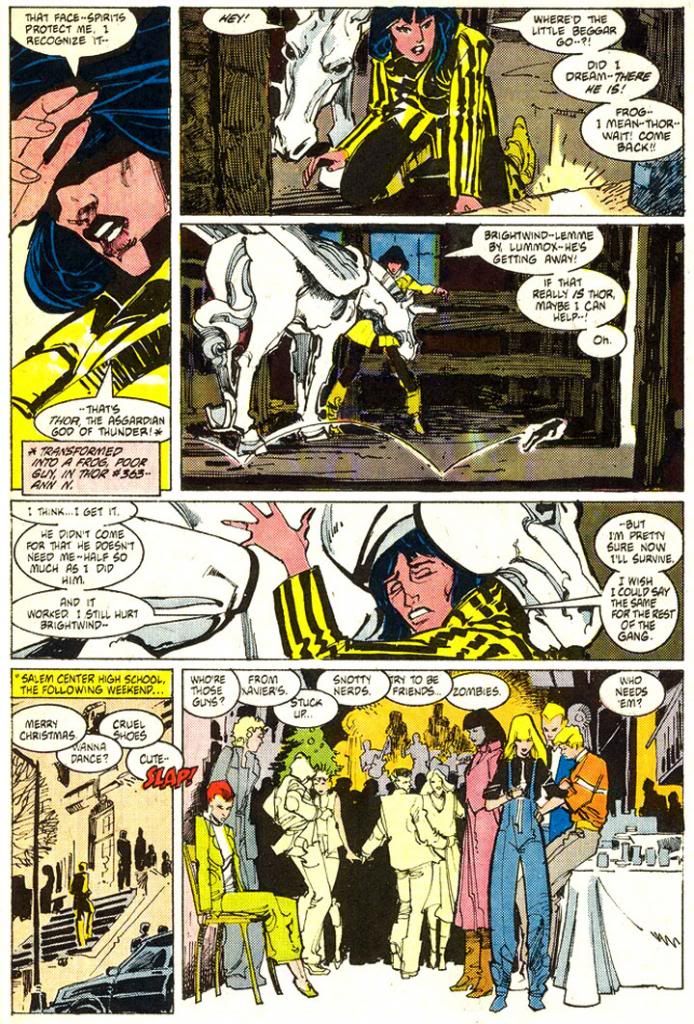
I'd hoped to find an issue with the team decorating a Christmas tree, lighting Chanukah or Kwanzaa candles, with Rahne doing her best Tiny Tim impression and Amara sharing a few Saturnalia traditions, but the only overt reference to a winter holiday comes in New Mutants #38, where the kids attend a party at Salem Center High School.  Dani, despite wearing a sweet party-appropriate black and yellow striped winter coat, decides to hang out in the Xavier school stables with Brightwind, her winged horse from Asgard.  Instead of the ghosts of Jacob Marley and Christmases Past, Present and Future, she gets a visit from what I believe is Thor in the guise of a frog.

New Mutants #38 (April 1986); words: Claremont; art Rick Leonardi and Sienkiewicz

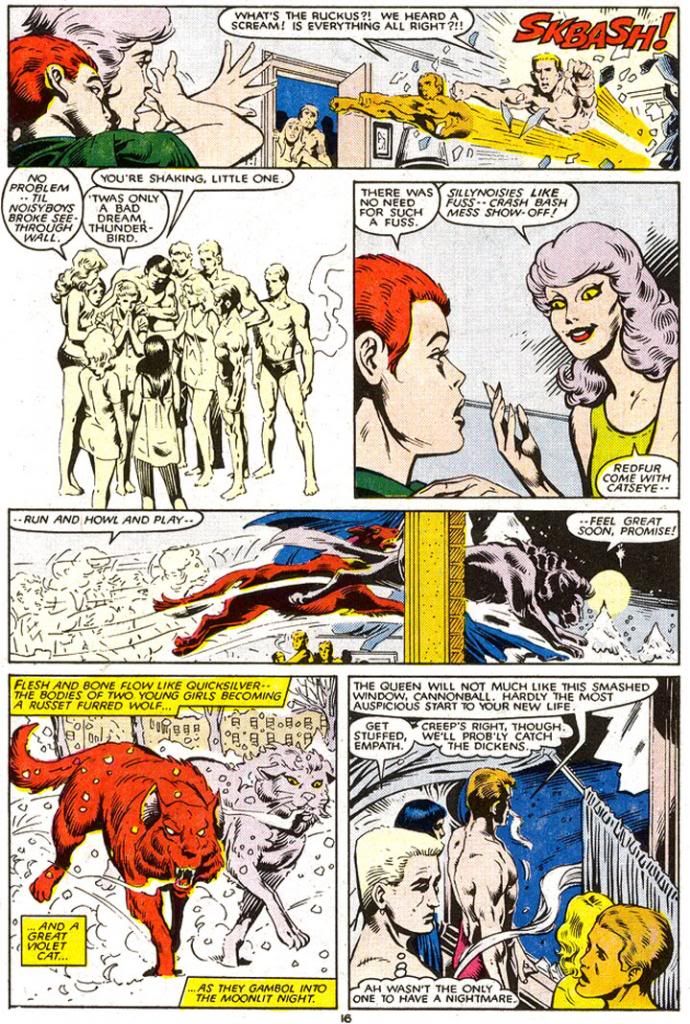
While Dani proves largely impervious to cold due to her upbringing and frequent nudity, her young pal Rahne Sinclair has the natural advantage of being able to transform into a wolf.  Each time she and Catseye (a member of the Hellfire Club's off-brand version of our heroes they call the Hellions), meet, they shapeshift into their "furforms" and go do lord knows what together.

New Mutants #39 (May 1986); words: Claremont; art: Keith Pollard and Del Barras

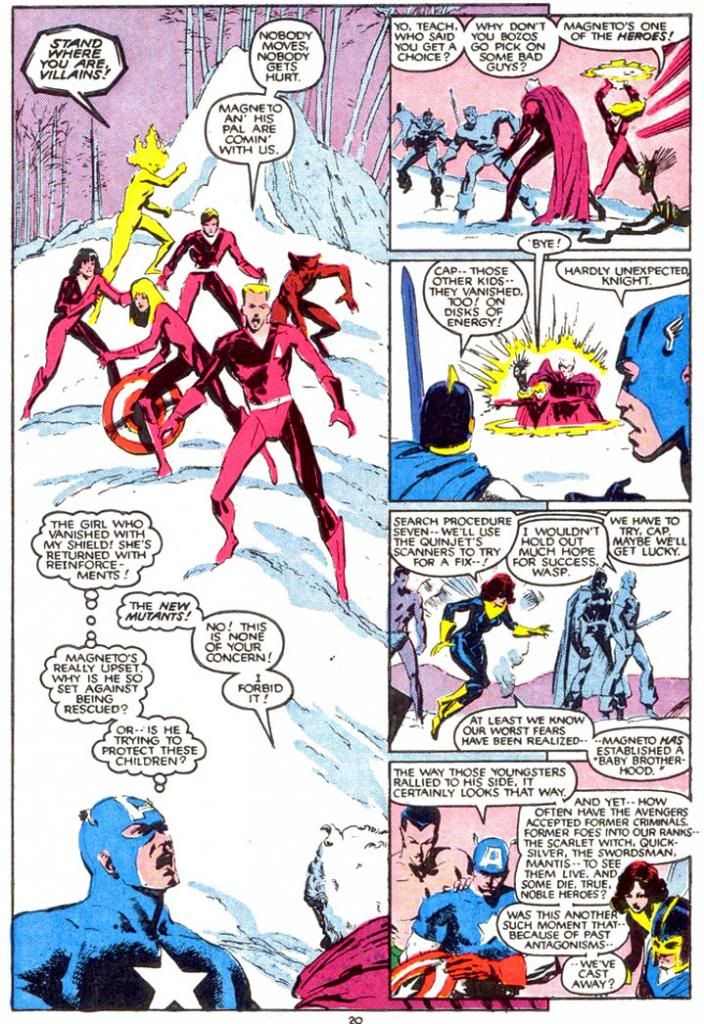
Around this time, new school headmaster Magneto decides it's better for his charges to become Hellions themselves, which leads to an extended run of issues where practically everyone wears magenta costumes.  And also to conflict with some of the Avengers.  Which, appropriately enough for today's theme, takes place in a scenic snow-frosted wilderness.

New Mutants #40 (June 1986); words: Claremont; art: Jackson Guice and Kyle Baker

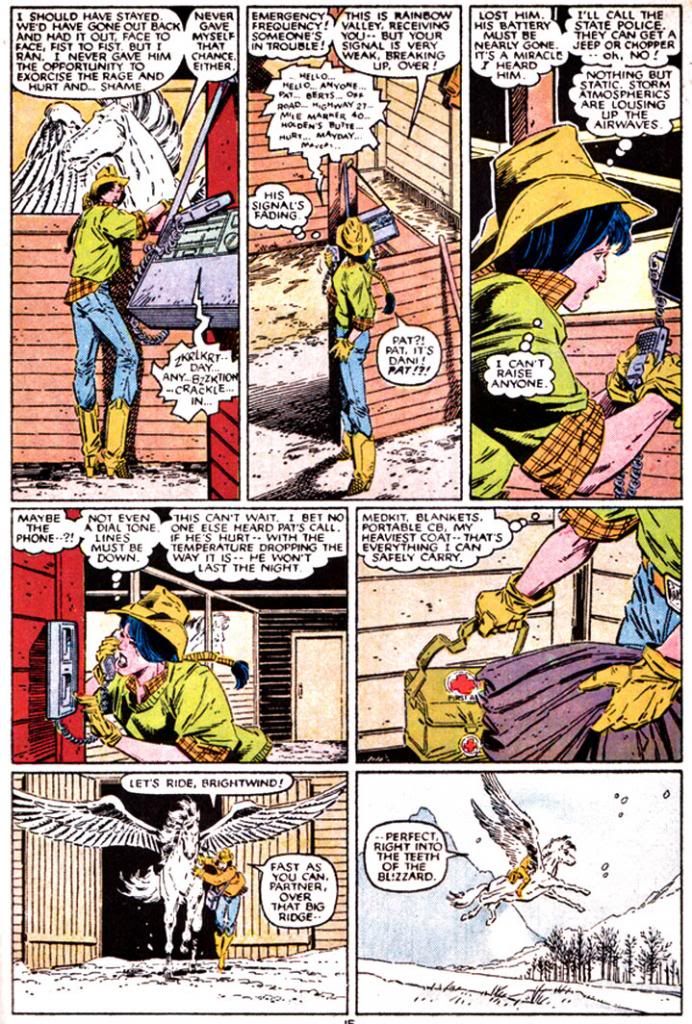
But what of the most important of all the kids, Dani Moonstar?  Not wanting any part of this magenta nightmare, she bugs out for her hometown in Colorado where she spends a lot of time...  you guessed it... in a stable with Brightwind.

New Mutants #41 (July 1986); words: Claremont; art: Guice and Terry Austin

I've never been, but I imagine with the Rocky Mountains being right there and all Colorado must have some beautiful winters.  During this particular story, a would-be boyfriend from Dani's past turns up and she has to engage in a fast draw duel with the personification of Death itself to save the guy's life (even though he's a complete creep).  It's your typical "guy likes girl, girl wants to be just friends, guy gets drunk and crashes his truck then goes into insulin shock, girl gunfights Death to save guy's life" story.

As if the Hellions costumes weren't bad enough, the team received their "graduation" uniforms soon after.  Poor Sam gets stuck in a purple and white jumpsuit with some kind of rejected prototype helmet left over from the Robocop pre-production phase and kneepads and Dani, much to her horror, has to wear a top that seems to have been woven from an old carpet Professor X had stored in the mansion's attic.

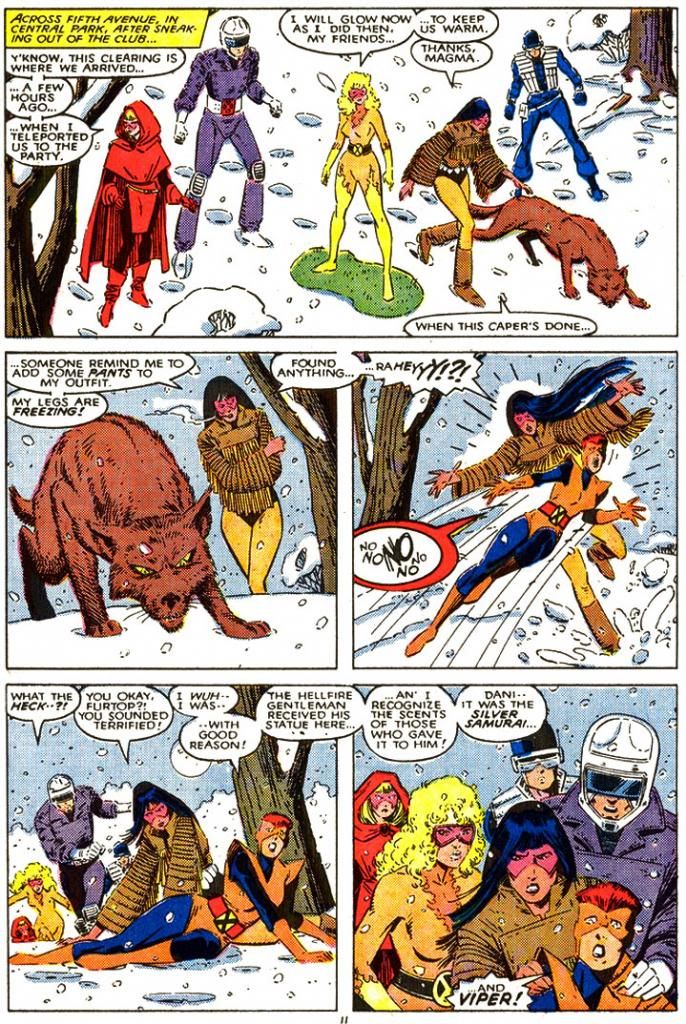
New Mutants #54 (August 1987); words: Claremont; art: Buscema and Austin

Amara looks like she just came from the Jem and the Holograms concert, or else she's splitting the visual difference between Spider-Man's animated friend Firestar and one of Santa's elves.  But with Rahne providing the perfect fifty-issue bookend by once again knocking over one of her teammates in the snow we've reached an appropriate stopping point.

Happy Holidays and a joyous 2014 to our reader!

Tuesday, December 17, 2013

Fun with search keywords

I'm working on a few new posts, but the holiday season is really kicking my butt so it's slow going.  In the meantime, here are this month's search keywords that tumble my blog on Google, plus the number of views they generated:

1. planet of the apes ape with rifle (5 views)
2. alex toth "bravo for adventure" (3 views)
3. tomb of Dracula comic book (3)
4. alex toth (2)
5. andy grittith cartoon (2)
6. barber shop hair (2)
7. girls from hopey locas (2)
8. golden key star trek comic covers (2)
9. mary blair (2)
10. photos of man sobbing (1)

Interesting.  We've discussed Planet of the Apes a few times here, but never with a particular emphasis on the apes' rifles.  Alex Toth is another popular subject for me, as is Marvel's Tomb of Dracula comic.  The spelling of Andy Griffith is unfortunate, but apparently Google understood.  I love Jaime Hernandez's Locas stories, and Hopey is my favorite character in them.  Mary Blair was a genius and my belief in her genius gained reinforcement from a Disney museum show we went to a few years back that featured a heapin' helpin' of Blair's preliminary designs for different movies, heavy on the Alice in Wonderland.  I don't write about her very often because this is a book about comic books.  Gold Key Star Trek remains a fave.  And the photos of a man sobbing are probably of me every time DC reboots its universe or stumbles into some horrific, self-inflicted public relations disaster.

Since we're approaching year's end, here are my all-time search keywords.

1. cassandra cain (346)
2. batgirl porn (206)
3. alicia Silverstone batgirl (189)
4. roddy mcdowall (169)
5. batgirl boobs (113)
6. claude akins (106
7. dani moonstar (81)
8. harlem globetrotters cartoon (80)
9. cassandra cain tim drake (73)
10. thomas magnum (69)

Lots of Batgirl-related searches.  Two Planet of the Apes searches, unless one is for The Misadventures of Sheriff Lobo.  Did I write anything about that show?  I should do a fake comic book cover for it sometime.  Of course we have Dani Moonstar on the list.  She's my all-time favorite comic book character and I probably reference her once a month.  Even that "thomas magnum" search relates to her.  I'm shocked Isis and Cindy Lee haven't made this list.

Thursday, November 21, 2013

Dani Moonstar versus Sarah Rainmaker (or How I learned to stop worrying and love Gen13)

Epitomizing 90s fluff, Gen13 was a kind of MTV Real World look at superheroics on one hand, an excuse for near-nudity and fart jokes on the other, and just some guys good-naturedly riffing on their favorite New Mutants and Uncanny X-Men storylines, plus throwing in a Trent Reznor clone as a villain for good measure on the third.  Or one of your feet, if you're not an alien or mutant creature.  Outrageously derivative, cluttered with pointless storylines that go nowhere, at times little more than a vehicle for J. Scott Campbell's "good girl" art-- and also so light and breezy entertainment I couldn't get enough of, so much so I even wrote a fan letter.  That's something I had done only once years before, to the fine folks responsible for making Sgt. Rock

And a lot of other readers felt the same way, at least for a while, because Gen13 inspired Gen13 Bootleg, a spin-off series with stories and art by the likes of Alan Davis, James Robinson, Walt and Louise Simonson, Adam Warren and even a two-issue miniseries by Adam Hughes which I think of as a largely forgotten near classic.  No less than Warren Ellis himself took a hand at writing the team's adventures in one regular series annual and one for Bootleg.  Image/Wildstorm also published DV8 and a number of mini-series.  Then the fun stopped.  Writer Brandon Choi and Campbell decamped and new creative teams came aboard.  They tried to use the comic's powers for good, but its zeitgeist had passed and subsequent attempts at revival in the years since have failed.

But back in those days, most Gen13 readers wanted to read about super-strong, super-smart, super-bodied team leader Caitlin Fairchild and the various ways she would lose her clothes, the "youngest and spunkiest member of the team" Roxy Spaulding and gross-out comedic relief -- with a code name dated even then-- Percival Edmund "Grunge" Chang.  There was also Bobby "Burnout" Lane, who had kind of an emo personality and a soul patch but otherwise made little impression on anybody.

But I, being forever contrary, preferred little-regarded Sarah Rainmaker, who was slightly more popular than Burnout only because, well, the main purpose of Gen13 wasn't beefcake.  I liked her because the creative team didn't seem to, and because she was more than a little similar to my beloved early-teens hero Dani Moonstar.  I mean, besides both being Native Americans. 

Poor Sarah Rainmaker.  The original writers used her mostly as a straw-figure to mock feminism, campus activists and also to do a bit of that MTV-style "amorphous sexuality tease aimed at hetero boys" stuff that later made such a star of Kate Perry.  But written sympathetically by Hughes in Gen13: Ordinary Heroes a more interesting, deeper character comes through and makes me wish they'd tweaked Rainmaker in the monthly to something a bit less... well... insulting.  Sometimes they did.  Often they didn't.  Anyway, maybe what I really I liked all along was this alternate Hughes-inspired version of Sarah Rainmaker I had in my mind.  One more righteous and less of a strident punching bag with a lot of "Take that, Political Correctness!" dudebro-humor wear and tear. 

Still, if you're going to do your own version of The New Mutants, of course you're going to do your own version of that book's most vital character and obvious star.  You know who I'm talking about from the title of this post, so with no further ado, here are some Dani Moonstar moments echoed by Sarah Rainmaker.

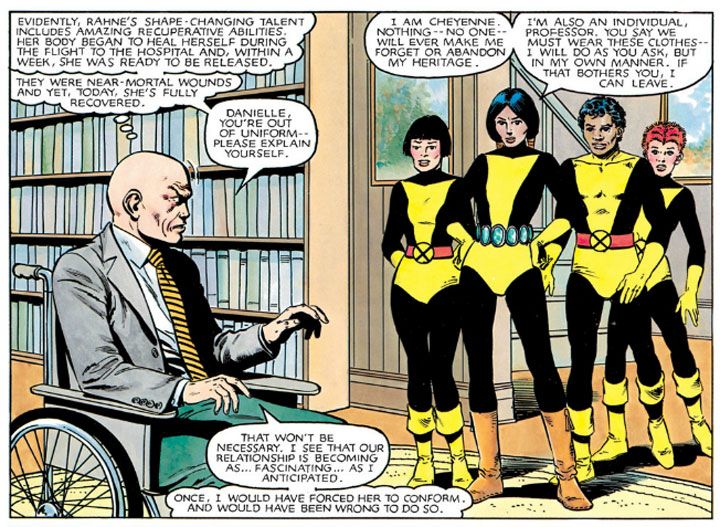
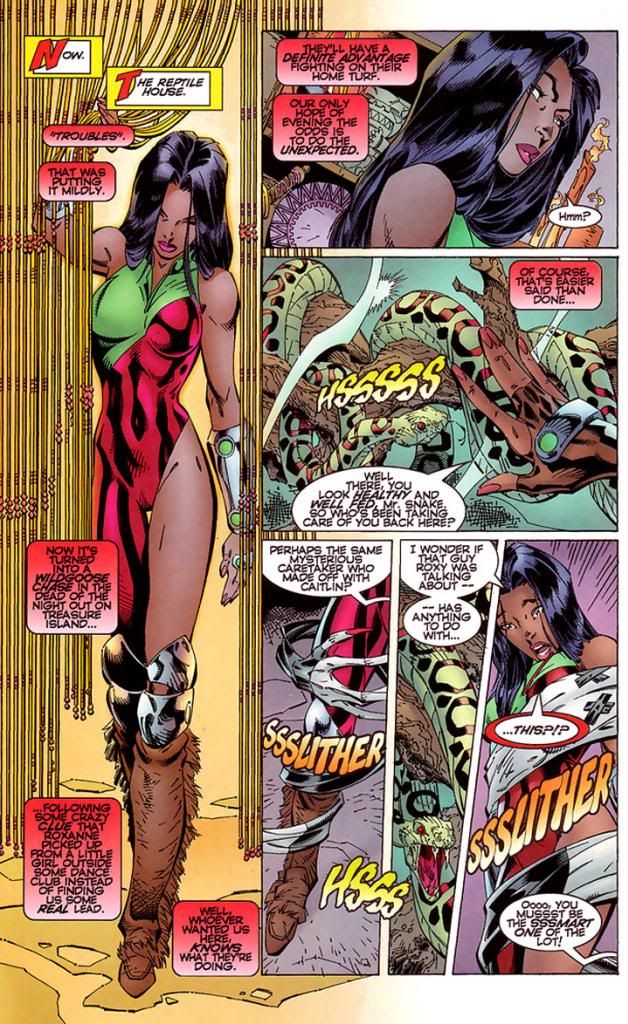
1.  Fabulous footwear.  In Marvel Graphic Novel #4 New Mutants (September 1982), Dani makes damn sure Professor X recognizes not just her individuality but her cultural heritage by accessorizing her one-size fits all uniform to something more unique.  The Gen13 kids received their own super suits right from the start, but obviously Rainmaker was paying attention when Dani set a precedent.  Because I'm about as Native American as Vladimir Putin, I have no idea how appropriate Rainmaker's boots are-- Dani is Cheyenne, Sarah is Apache and those are two distinct cultures-- but I do know when things look similar because I watched Sesame Street growing up.

Dani:

Marvel Graphic Novel #4: Script by Chris Claremont, art by Bob McLeod

Sarah:

Gen13 #8: Script by Brandon Choi, Jim Lee and J. Scott Campbell, art by Campbell and Alex Garner... or Richard Friend!

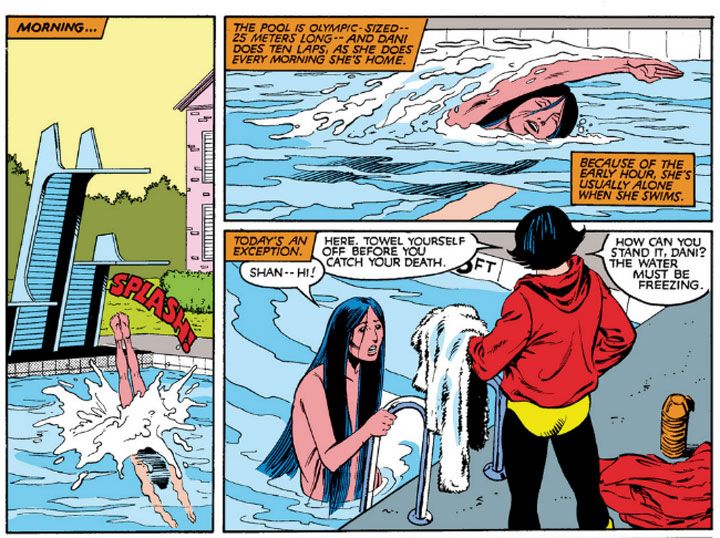
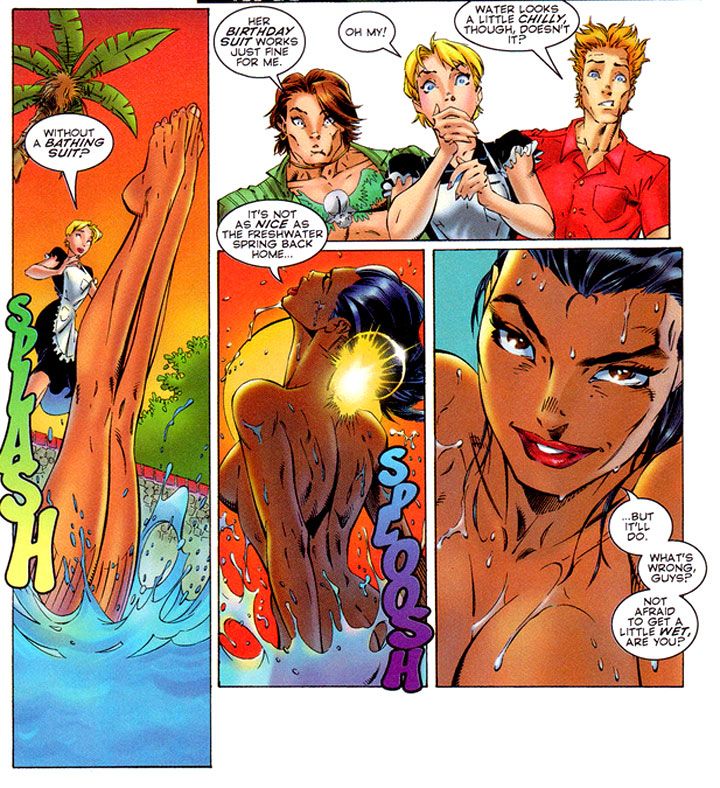
2. Swimming nude.  Dani makes a point to swim au natural in New Mutants #3 (May 1983) and Rainmaker follows (birthday) suit in Gen13 #1 (March 1995).  Chris Claremont treats this moment seriously and tastefully and it leads to a revealing (personality, not body) moment between Dani and her friend Xi'an Coy Manh where they bond and we get to know both of them better.  When Rainmaker takes a dip, Choi and Campbell play it as a striptease and while we do get to know a little more about the cast from this (Sarah likes to show off, the guys are pantingly hetero-sexist), the characterizations are roughly at the level of a beer commercial.

Dani:

New Mutants #3: Script by Claremont, art by McLeod and Mike Gustovich

Sarah:

Gen13 #1: Script by Choi and Campbell, art by Campell and Alex Garner... or Sandra Hope!

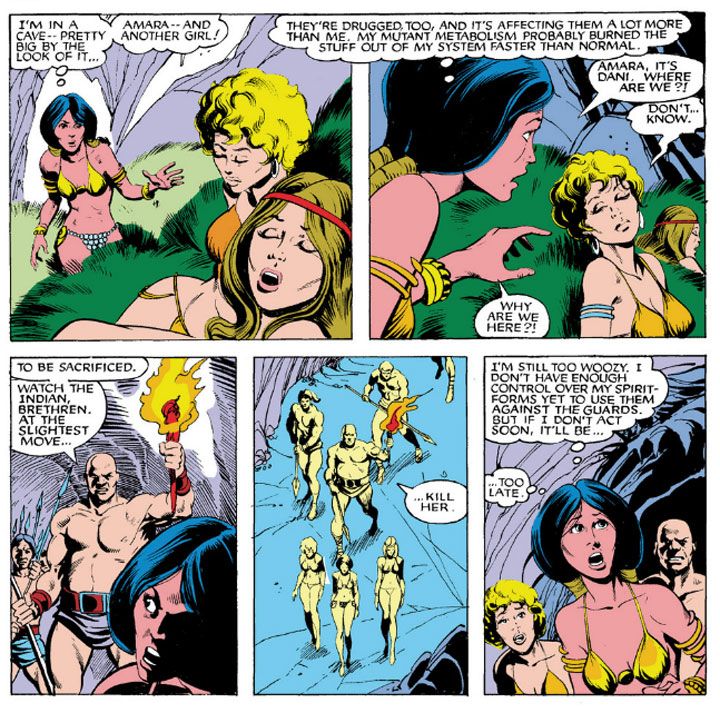
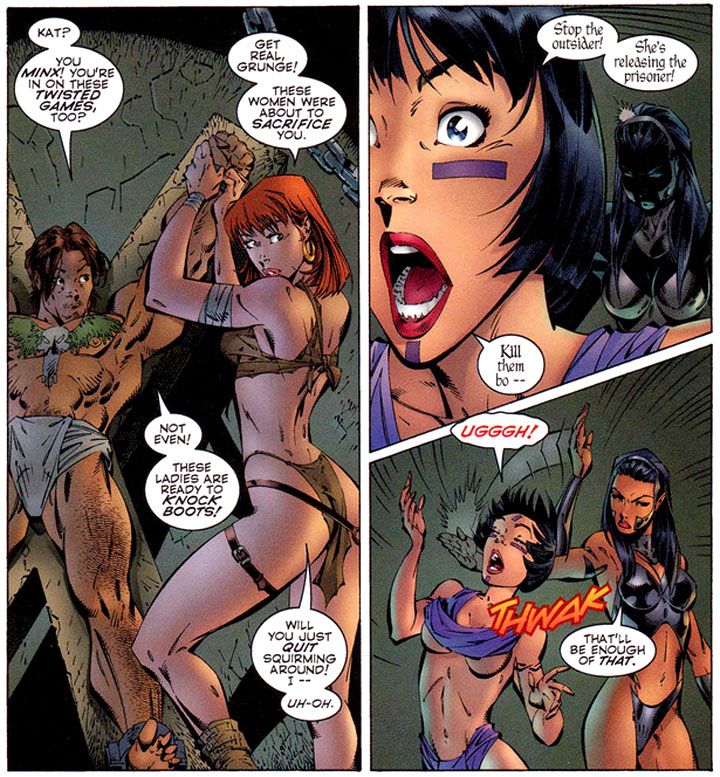
3.  Jungle adventures with anachronistic cultures that result first in wearing rags and then even more revealing outfits.  In New Mutants #8 (October 1983), the kids travel to the Amazon rainforest, have a lot of misadventures in which Dani first has to wear a swimsuit and then torn clothing.  When she and the rest of her team end up in Nova Roma, a hold out from the days of Imperial Rome, they adopt cultural-appropriate clothing.  Then a sorceress shows up and tries to sacrifice Dani, which requires her to wear a chain-mail bikini outfit stolen from a Red Sonja comic and then a low-cut evil sorceress gown.  When the Gen13 gang takes a similar journey to Africa in issues 3 through 5 of their comic (July-October 1995), they come across an all-female society of supermodel Amazonians who favor skimpy metal swimwear of their own.  Rainmaker quickly goes from ragged prisoner to shiningly metallic masturbatory fantasy warrior before you can say "Psyche-Mirage-Moonstar-Spellbinder-Dark Rider."

Dani:

New Mutants #10: Script by Claremont, art by Sal Buscema and Tom Mandrake

Sarah:

Gen13 #5: Script by Choi, Lee and Campbell, art by Campbell and Garner, Friend and Scott Williams 

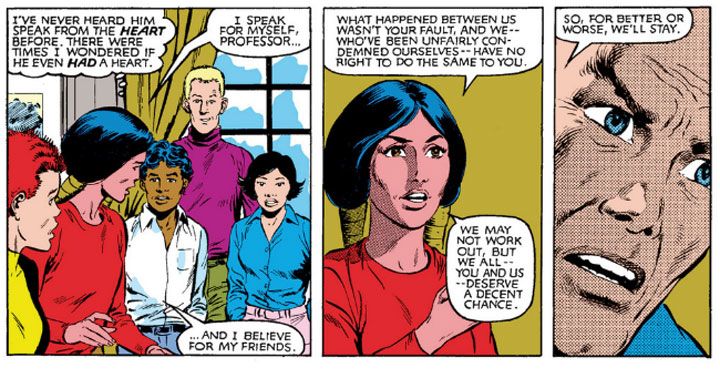
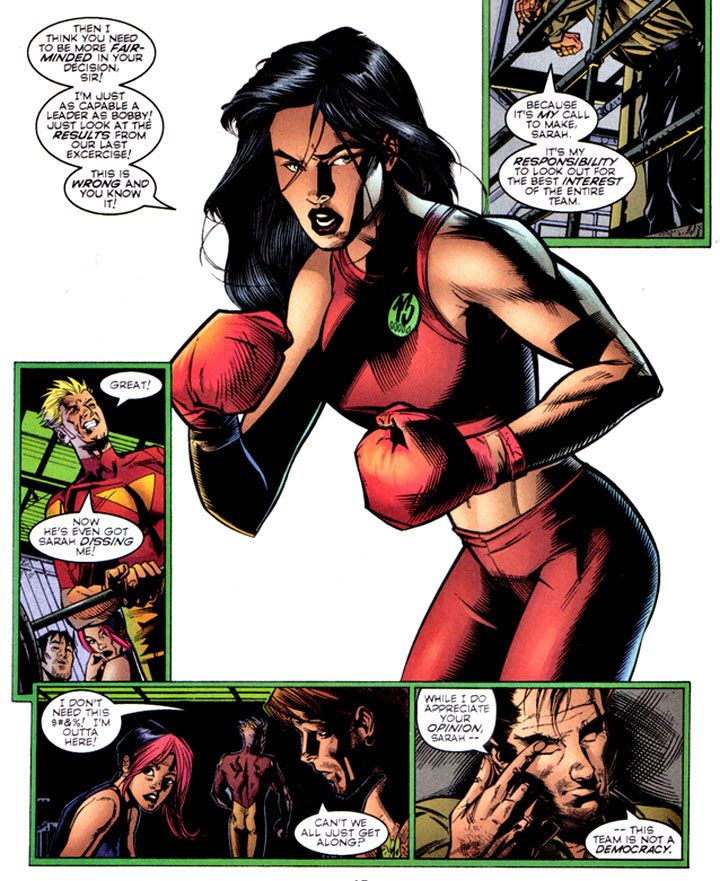
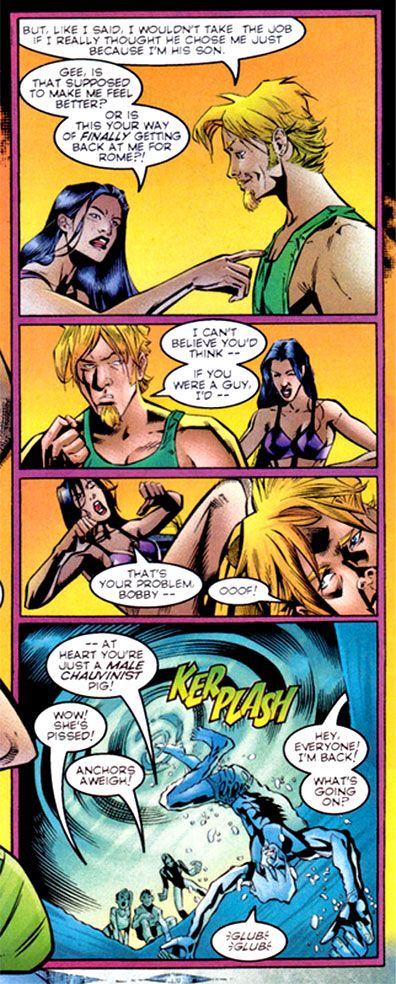
4.  That leadership thing.  Despite being a year or two younger than Sam Guthrie, the more capable Dani quickly takes over the top spot in the New Mutants team after first leader Xi'an Coy Manh goes missing.  In fact, she's already pushing Xi'an out of the top slot as early as New Mutants #4 (June 1983), with her friend standing right beside her!  When leader Caitlin Fairchild temporarily quits, Rainmaker makes an attempt to do the same in Gen13 #12 (August 1996), only to have mentor John Lynch (supposedly this ultra-tough black ops veteran) appoint his own dopey son over the smarter, more mature and combat-skilled Rainmaker in what's obviously a decision based solely on nepotism.  Burnout has shown absolutely zero leadership skills to that point, and kind of a mopey, shrinking-violet personality, while Rainmaker's intelligence is second only to Caitlin's, plus she's much wiser and more self-assured in many ways.  No wonder she reacts unfavorably to Lynch's completely illogical move (although in Lynch's defense, he may be pitting the two against each other in a "survival of the fittest" competition-- although that could also wreck team morale and field effectiveness in the long run as well, so maybe he is an idiot after all).  This also positions Sarah as the Dani-style team rebel.  In the same vein, both characters seem to have an innate talent for combat tactics, as well, with the New Mutants becoming more of a fighting force to be reckoned with under Dani's command, and with Sarah frequently barking out orders of her own during the many confrontations in Gen13.

Dani:

New Mutants #4: Script by Claremont, art by Bucema and McLeod

Sarah:

Gen13 #12: Script by Choi, Lee and Campbell, art by Michael Lopez and Troy Hubbs (I think) 

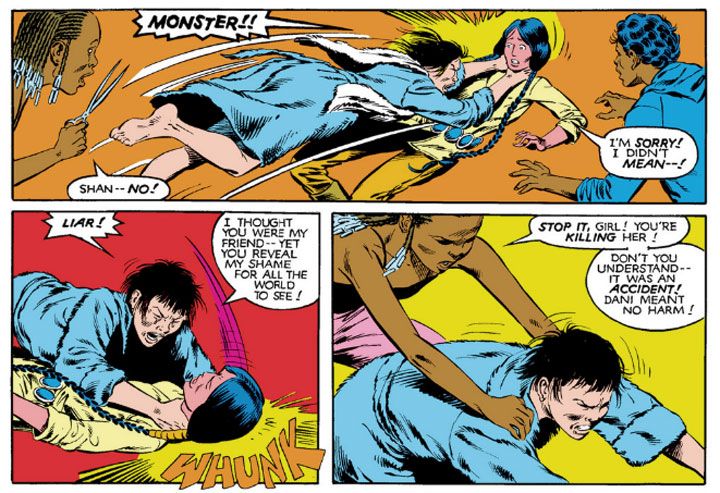
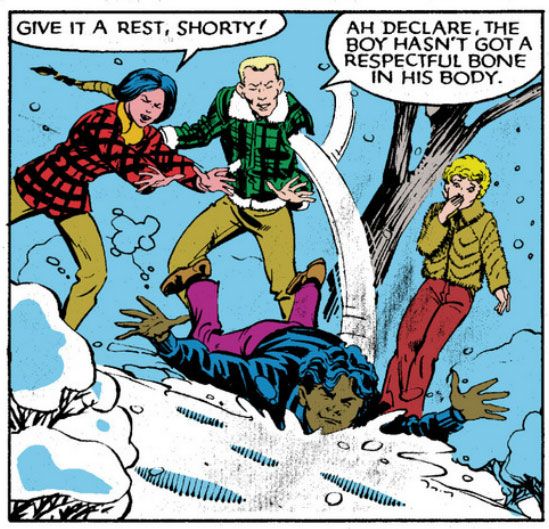
5.  Tussles with teammates.  I seem to remember Dani doing this a lot more, but I must be more than a little mixed up and fully conflating her with Sarah at this point.  I'm surprised Dani didn't beat up those two idiots Sam and Bobby two or three times a day with that temper of hers.  Instead, she seemed to take out her aggressions more on inanimate objects.  And despite frequently referencing the martial heritage of her Cheyenne people, she wasn't all that adept at fighting.  Oddly enough, in New Mutants #1 (March 1983), it was Xi'an who first went fisto-a-fisto with Dani-- well, actually, she choked the hell out of Dani and slammer her head against the floor with good reason: Dani had accidentally used her powers to pull images of her Xi'an's violent, tragic past out for all to see.  While the New Mutants had their share of inter-team arguments, it would be more than a year later, in New Mutants #14 (April 1984), before we'd see another instance of Dani-on-friend violence, this time a playful shove into the snow for Roberto DaCosta.  Sarah, on the other hand, goes full on kung fu queen on Bobby Lane after he made a poorly-timed snide remark at her expense during their leadership crisis. It happens in Gen13 #12.

Dani:

New Mutants #1: Script by Claremont, art by McLeod and Gustovich
New Mutants #14: Script by Claremont, art by Buscema and Mandrake

Sarah:

Gen13 #12: Script by Choi, Lee and Campbell, art by Lopez and Hubbs (I still think)

Okay, now I'm obviously reaching.  But I believe I've made my point-- there are certainly parallels, enough so Sarah Rainmaker became my favorite Gen13er.  What's been fun for me looking for these little moments is contrasting the writing on both series.  While Claremont's dialogue is sometimes stilted and a bit advanced for his characters' ages, his stories and characterizations are nothing if not sincere.  He genuinely cares about his cast and immersing the readers in their world.  Plus he displays the literary chops of a true writer's writer, someone in love with language.  If any of his work here is derivative, it's of real life or novels.  And occasionally movies.

By comparison, the Gen13 characters-- scripted by no less than two writers at a time!-- usually speak casually and naturally (unless there's need for some hard expository dialogue, that is). Actually, their dialogue is almost exclusively made up of then-current catchphrases and youth lingo.  While as individuals they're amusing enough, they're more tongue-in-cheek, broadly-sketched types owing most of their personalities to television shows and other comics (and not just New Mutants).

There are some interesting comic book characters in Gen13, but it would take other writers to flesh them out into real characters, especially under Warren who managed to make the book as smart as it was funny and sexy.  And, oddly enough, that's when the Gen13 finally died.

Sunday, March 31, 2013

Dani Moonstar, the Early Years 4! The UnBEARable Lightness of Being Dani

Then came the Second Golden Age of the Dani Moonstar.  And yet it was a dark age, as well.  With the addition of Bill Sienkiewicz on art-- a guy who combined Neal Adams and Ralph Steadman in almost equal measures-- The New Mutants became one of Marvel's most visually distinctive books.  Chris Claremont's writing took a great leap forward stylistically as well, the language becoming ornate and the plots ever more complex, with characterizations to match.  Finally, Dani Moonstar would have a story worthy of her, albeit one where she'd spend a good portion of it in a coma while her new friend Magik did the heavy lifting.

It kicks off in The New Mutants #18 (August 1984) with a painted Sienkiewicz cover that wastes no time announcing the book is something special.  Not the one you've been used to and slightly disappointed by for the last six months or so.  The Sienkiewicz Dani gazes intently at the reader, with a face recognizable as the Bob McLeod character, but now with thin-lipped determination and more culture-specific accessorizing (the forehead X is especially clever).  Behind her, however, the fangs of discord.  Danger in the snow.  Sienkiewicz brings a painterly approach with a strong design sense as well.

If you'll remember, way back in the first issue, Dani told Rahne a little bit about herself and the story of how her parents vanished while possibly fighting a mystical bear.  It was one of Dani's earliest moves towards becoming the book's standout character.  Then, in the third issue, we got to see the bear itself.  Kind of.  It was more than likely a mind-game the Brood-infected Professor X was playing on Dani, drawing out her worst fears.  Then the book went off on a Team America-Romans-living-in-South-America-Magik tangent and no one mentioned Dani's magic bear for a while.

Well, readers might have forgotten the exact details, but rest assured, Claremont did not.  A master of the slowly developing subplot, Claremont returned to this little biographical tidbit and spun it into a unique tale as psychological as it was action-packed, a genre-stretcher that took the kids out of their cozy heroic adventure home and tossed them into the deep, dark woods we like to call horror.  If this had been a DC book and Vertigo had existed in 1984, "The Demon Bear Saga" with its dripping blood and ever-shifting dreamscapes would have been a perfect fit.  And Seinkeiwicz, who must have bought india ink by the tanker truck-full, was just the guy to illustrate it.

Why a bear?  What am I, a cultural anthropologist?  What little I know about Native American culture comes from a single university folklore class, reading a few histories and novels like Tom Berger's novel Little Big Man and the essay  They Have Not Spoken:  American Indians in Films by Dan Georgakas.  In short, I know just enough to make an ass of myself.  To make matters worse, I'm going to rely on the Internet.  Apparently, bears are very powerful animals.  Magically powerful.  There's a wonderful story in which a great bear chased some girls (perhaps Lakota, not Cheyenne, but many tribes tell variants of this one), who took refuge on a rock.  They prayed that the rock would grow and save them from the bear.  It did and they took to the sky as the Pleiades (also known in Greek myth as the "Seven Sisters").  The bear in its hunger and rage clawed the sides of the rock, leaving it scarred.  Today we know this rock as the Devils Tower, Wyoming.
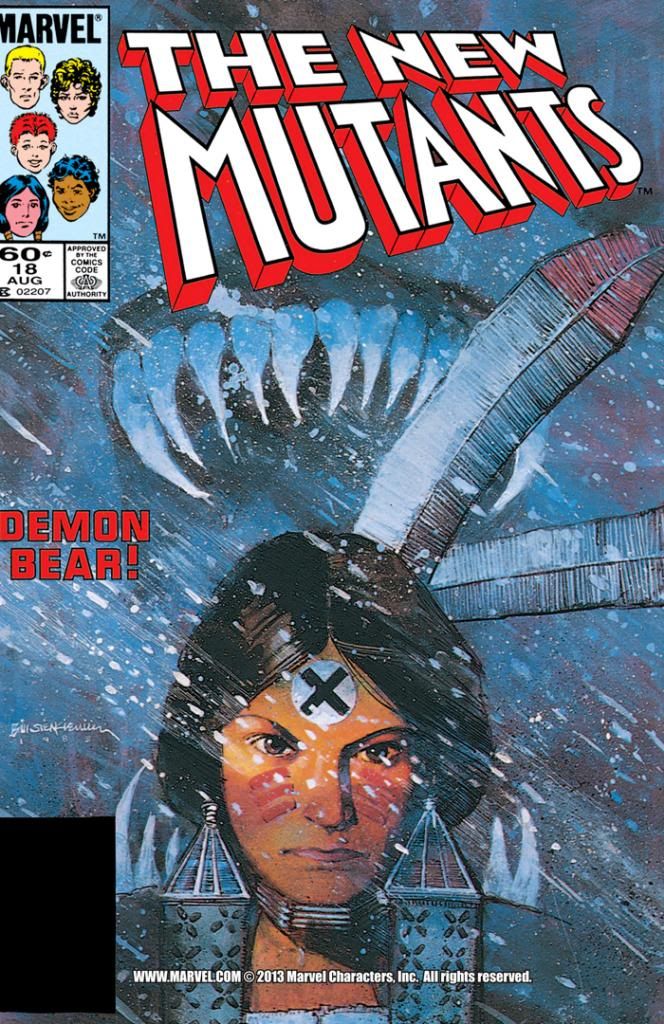
The point is, bears figure in a lot of myths and stories, so a bear makes an excellent choice for Dani's spirit antagonist.

One aspect of Marvel's mutant books is how mutant powers and the reactions of those manifesting them and by society at large as a response to these powers can be read as an allegory on race, gender, sexuality, or any kind of "othering."  The sexuality reading has ascendancy these days, especially in light of its treatment in the X-Men films, where Iceman's parents ask him if he's tried not being a mutant (X2: X-Men United, 2003)  and where Mystique anachronistically tells Beast to be "mutant and proud" in 1962 (X-Men: First Class, 2011).  The scene where Beast has his mutant status inadvertently revealed is especially evocative of an outing.  Reinforcing this is the trope within the comics themselves that mutant powers typically manifest at puberty.

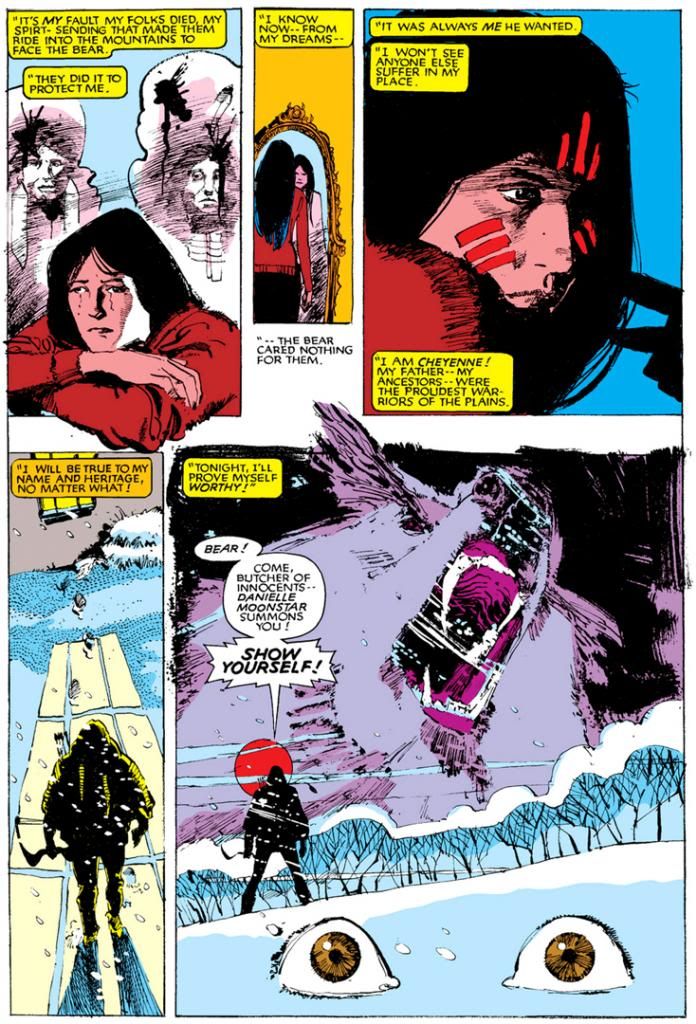
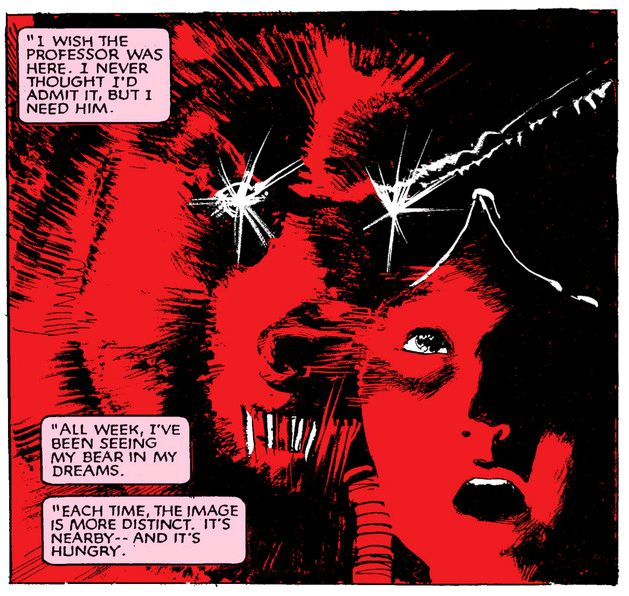
Appropriately, “The Demon Bear Saga” is a story rife with sexual symbolism, no doubt resulting from a happy synergy between Claremont, operating at the utmost of his considerable skills as a writer and an insightful artist in Sienkeiwicz, one open to expanding the literary vocabulary of superhero comics through experimental techniques.  In the opening splash page, Dani cowers in bed while Claremont has her narrate her plight and Sienkeiwicz and colorist Glynis Wein cover her in a red sheet imprinted with a dream image of the demon bear.  It’s a shocking image, our favorite mutant swaddled in what appear to be blood-soaked sheets and the red motif would recur, reappearing with the bear imagery as Dani thinks about her most recent dreams involving her foe in a later scene and again when Dani ritualistically paints her face as she prepares for the climactic confrontation.

Chris Claremont, scipt/Bill Sienkiewicz, art/Glynis Wein, colors (The New Mutants #18,  August 1984)

Significantly, the bear enters Dani’s life at the same time her mutant powers appear, roughly around puberty as per Marvel's mutant mythology—one of her first acts as a full-fledged mutant is to show her parents their apparent deaths at the bear’s claws, which becomes a self-fulfilling prophecy.  In the real world, there is another power, another type of becoming, of a great and personal change, that fulfills itself at puberty through blood.  You can find it providing one subtextual reading of the fairy tale "Little Red Riding Hood" and horror authors and creators before Claremont and since have used it more overtly to add resonance to their works.  Steven King and Brian DePalma used this theme to great effect in both the novel Carrie (1974) and its classic film adaptation (1976).  More recently, screenwriter Karen Walton explored these associations in the werewolf film Ginger Snaps (2001), directed by John Fawcett.  Dani’s horrified response to developing a power she lacks the experience and understanding to control, and one that causes her parents’ deaths is ultimately a signifier of her ambivalent response to having matured sexually in a patriarchal society that marginalizes her as a woman.  Dani's real struggle is to overcome this ambivalence and the shame and self-loathing that results.
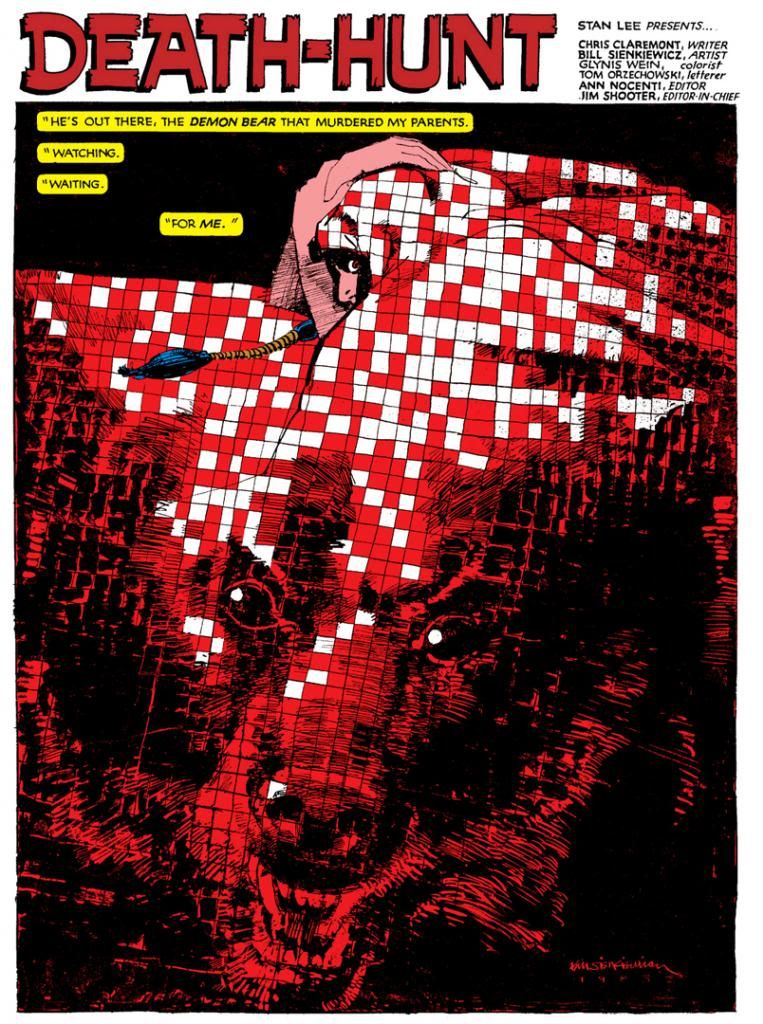
Chris Claremont, scipt/Bill Sienkiewicz, art/Glynis Wein, colors (The New Mutants #18,  August 1984)

Unfortunately for Dani, her parents were unable to protect her at a time when these changes were at their most intense.  In fact, the root of Dani's guilt is that this maturation, this physical change, visited in her desires or thoughts she equates with the bear's utter destruction of her parents.  Feeling betrayed by her body, she has taken responsibility at having violated the nuclear family.  But because she is essentially a strong, brave young woman, after an initial period of understandable dread, she will attempt to attack the problem head-on.  It won't be easy, and requires an elaborately ritualistic preparatory regimen. 

Chris Claremont, scipt/Bill Sienkiewicz, art/Glynis Wein, colors (The New Mutants #18,  August 1984)

In preparing herself to contest the bear, Dani turns not to her chaste and inexperienced friend Rahne, but to the wiser-- and therefore, no longer innocent-- Magik.  Magik, having spent her formative years in Limbo, is an enigmatic figure, and an outsider.  She is also symbolically corrupt in the same way Dani believes herself to be.  Not quite human, not quite mutant, not quite demon.  Dani reveals through her narration that she's not even particularly close to Magik-- Illyana is best friends with Kitty Pryde-- so this makes her choice of confidante all the more telling.  But such is Dani's confused acquiescence to the cultural idea there is shame and uncleanliness in having become fertile that she is unable to tell even Magik her true motivation.  The more experienced Magik provides Dani an outlet for exploration and experimentation as she seeks to understand the nature of her new-found desires and physically ability to feel and act upon them.

Chris Claremont, scipt/Bill Sienkiewicz, art/Glynis Wein, colors (The New Mutants #18,  August 1984)

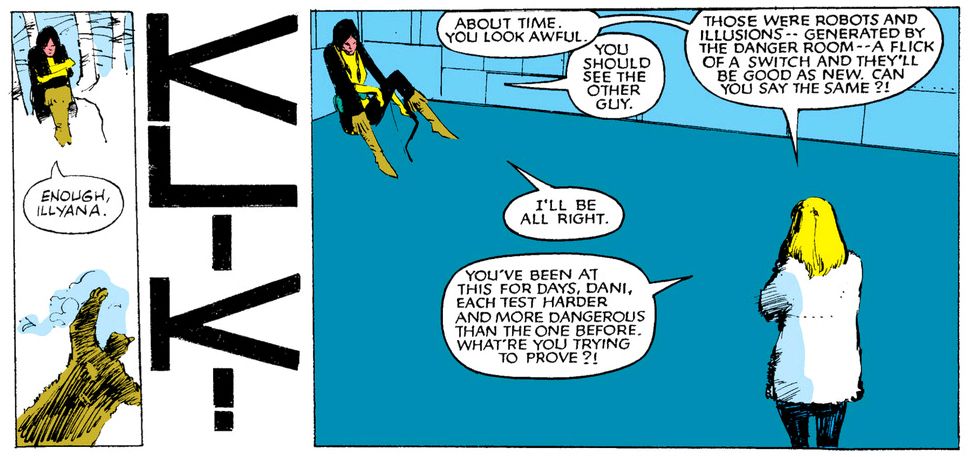
Bears are largely masculine figures, and in order to confront hers, and with Magik playing the role of sexual agent, Dani must cross genders (at one point she jokes with Magik, "You should see the other guy," guy being sometimes gender neutral, but generally a masculine noun; Dani clearly identifies herself here as a guy at least in a symbolic sense), or at least add male characteristics to her own innate female identity.  In the Cheyenne tradition, men acted as hunters and warriors, but one might reject this path and begin living as a woman.  Dani subverts, or rather, inverts this by taking on the role of hunter-warrior, but not without symbolically daubing herself with her own menstrual blood (I'm also reminded of the scene in Sylvia Plath's The Bell Jar, where her protagonist, Esther, bloodies the nose of her attempted-rapist and he similarly paints her face with it), represented as red war paint.  Only then is she prepared to do more than cower in bed or react in fear.  Thus cloaked in the accouterments of maleness, Dani is free to act, to slay the bear.  

For this, Dani uses a weapon associated with Native Americans by history and custom, the bow and arrow.  The arrow is phallic.  It penetrates and Dani has made herself expert in its use thanks to her training sessions with Magik.  And yet Dani is also reminiscent of Diana of Roman myth, from the similar names, to the choice of weapon, to the time at which she forces this confrontation-- that is, night time.  Diana has associations with the moon.  She is also the goddess of the hunt.  And of chastity.  It's worth noting, too, that Artemis, the Greek version of Diana, is goddess of childbirth as well.  In order to battle the bear, Dani requires herself to embody both sides of the gender dichotomy.  In this way she becomes both her own father and mother.
 
Chris Claremont, scipt/Bill Sienkiewicz, art/Glynis Wein, colors (The New Mutants #18,  August 1984)

The confrontation with this male presence occurs in snowy woods.  The snow, of course, is white.  This can be seen as purity, but snow may also be representative of death.  Woods hide mysteries and figure in many fairy tales as places where terrible things may happen to children.  Here, Dani-- drawn by Sienkiewicz as a silhouette, all her sexual characteristics blotted out or hidden-- calls out the bear as "butcher of innocents," which we can also understand as "butcher of innocence."  The dialogue here is artificial and lacks the voice of a teenage girl.  It's more in the epic tradition, something Beowulf might say to Grendel in translation.  The bear then appears, and Wein colors it various shades of purple, representing pain or bruising, while on the next page it's a more naturalistic brown as it has fully manifested before Dani.  Its threat is no longer confined to the subjective space of Dani's dreams but rather has become real and potent. 

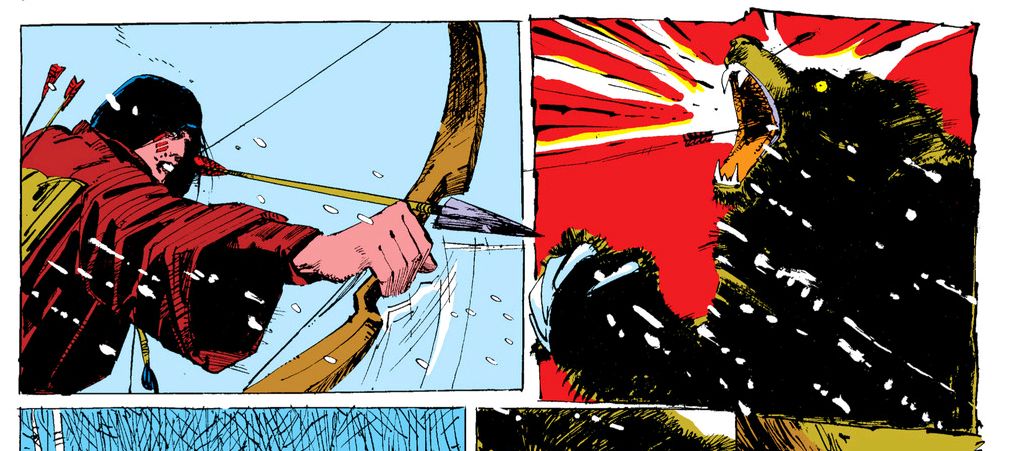
Dani first uses her mutant power-- which she has always found problematic-- to attack the creature with its greatest fear.  Which turns out to be Dani herself.  The masculine power fears the feminine one.  The basis of gender relationships in Western culture is an unequal power dichotomy in which female strength is denied and negated in favor of the male out of fear and loathing, which includes a belief that menstruating women are somehow unclean.  Here, using her innate strength, Dani comes closest to achieving victory.  Dani, however, does not attempt to derive any deeper understanding of why the bear fears her as much as she fears it.  Instead, she reverts to using the phallic arrow, striking the bear harmlessly in the neck, though she describes it as a "killing shot."  If she intends to use the patriarchy's weapons against it, this proves to be a fatal decision.  The bear easily sweeps the bow from her hands and batters Dani.  She's able to injure the bear with a handheld arrow and earn a brief respite.

Escaping the bear's clutches, Dani retrieves her bow and fires another phallus into the one vulnerable opening the bear presents-- its mouth.  Here, having penetrated the bear at last, she achieves a false victory and turns from her foe in premature triumph.  In relying on a substitute penis, and denying herself the use of her own power-- despite its tantalizing glimpse of deeper wisdom-- Dani has not dealt fully with her own ambivalence towards her sexual maturation and gender role.  As she walks away into the night, the bear's eyes open. 

Chris Claremont, scipt/Bill Sienkiewicz, art/Glynis Wein, colors (The New Mutants #18,  August 1984)

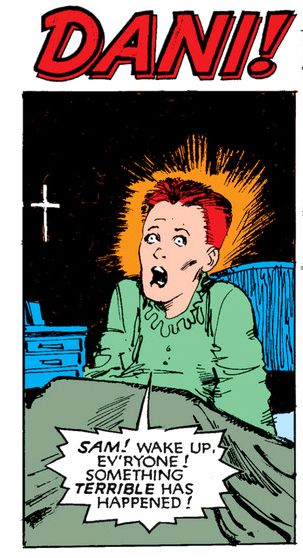
And, importantly, it's the virginal Rahne (Sienkiewicz clothes her in a prim, ruffled nightgown and places a cross behind her) who senses the danger and alerts the others.  Dani has been struck down by the complexities and ambiguities of adulthood, but it's the most child-like of the New Mutants who reacts, having felt it psychically.  Dani's friends run to help her-- Sam, the oldest boy, carries yet another phallus, what appears to be a shotgun-- and find Dani's gutted body staining white the snow of innocence with the red of her secret knowledge, which she is now in no shape to parse.


Not to equivocate, but simply as a response to the richness of Claremont’s writing, I want to offer some alternate readings to the “Demon Bear Saga.”  The jumbled mess above—no more than a B- effort if I were to turn it in to one of my old lit professors—is just one way of reading the subtext.  Here are some others, probably equally as confused.


Hm.  That is equivocation.  Oops!

In another reading, the bear isn’t a stand-in for the patriarchy, but rather Dani’s rage at the patriarchy and her enforced role within a system devised to limit her choices.  Just as Dani’s mutant power allows her to call forth the images of anyone’s greatest fears, her mutation allows her to project her rage as a monstrous, destructive creature.  This is supported by her guilt pangs at having to carry the weight of her parents’ deaths.  Why would Dani’s rage have struck them down?  Because they were—however protective they meant it—participating in Dani’s diminution, the limiting of her spirit. 

Let’s also consider the bear as representing Dani’s sexual maturation in another way.  At some point, Dani violated the incest taboo by involving her parents—one or the other, or both—in a masturbatory fantasy.  Remember—she lives in guilt because of transgression against her parents, not the other way around.  She had what was essentially a fleeting, blameless thought, one that’s probably quite common at the onset of sexual yearnings, but one fraught with shame, and was perhaps caught by her parents during the act.  Humiliated, and with no one to turn to, Dani becomes confused and self-loathing.  Hence the bear, a stern, punishing father figure she creates in reaction to these negative feelings.  In this reading we can view Dani’s Danger Room preparations also as a form of masturbation.  The X-Men use the unreal world of the Danger Room to rehearse real world scenarios in much the same way we prepare ourselves sexually by self-exploration and fantasization.  To this end, as we’ve already discussed, Dani seeks the counsel of the (sexually) experienced Magik.

In a related reading, the bear is sexual maturation itself as loss of innocence.  Corruption of an innocent is a recurring Claremont theme—Magik is the prime example, so much so he wrote an entire miniseries about just that.  In Uncanny X-Men #160 (August 1982) and the Magik (December 1983-March 1984) series, the devilish Belasco abducts child Illyana into Limbo where she literally loses her soul by gaining premature knowledge of the world.  Her innocence becomes corrupted by this knowledge—one cover by John Buscema shows what’s essentially an underwear-clad Illyana given diabolic aspect complete with horns and a phallic knife—and she literally loses her soul.  As a result, Illyana instantly returns to the real world miraculously the immediately post-pubertal age of thirteen years old.  It’s hard to think of another genre story that examines these themes so overtly.

And not just Illyana.  For whatever reason, Claremont visits this theme most frequently (but not exclusively… it just seems that way sometimes) upon female characters.  Jean Grey becomes Dark Phoenix, Illyana becomes Magik, Selene attempts to seduce Dani into becoming her evil sorcerer’s apprentice, super-innocent Rahne turns into a nearly mindless avatar of light under the influence of drugs in a story involving adult predators victimizing teen runaways, Storm from a powerful yet naĂ¯ve goddess into the worldly punk-look leader of the Morlocks, Madelyn Pryor becoming the Goblin Queen, Dani again in Asgard going from high-flying Valkyrie to evil, skeletal Odin-slaying version thanks to Hela.  And those are just the ones I know by heart.  We can approach the bear as another version of this theme, with Dani’s war against it a struggle of innocence versus knowledge, supported by the use of Magik as her teacher/helper, the red versus white color scheme and the setting of the main confrontation within snowy woods.

So Dani responds negatively to this knowledge, which, as it did with Magik, comes much too soon.  Unready or unwilling, she rejects it, literally and figuratively fights against it.  Through this struggle, she comes to terms with it and assimilates it within her healing psyche thanks to the intervention of guide Magik and the others.  This saves Dani and reaffirms her friendships, but as many do to gain wisdom, Dani pays a heavy price—as do others; this is a transformative wisdom in a literal sense—and temporarily loses the ability to walk.

Then there’s the matter Dani’s gendering.  While Dani may or may not be transgender, she does have an ambivalent response to her biological gender.  When we first see her in Marvel Graphic Novel #4:  The New Mutants, she’s a solitary figure, free from the misperceptions of others and, thus, allowed to clad herself in attire that codes as male or, at most, ambiguously female.  Throughout the subsequent comics, Dani frequently wields her grandfather’s knife (a specific provenance it’s important to note, as well as the knife’s phallic nature) and invokes the Cheyenne warrior tradition and Claremont gives her clipped, militaristic speech at times.  As she frequently casts off her clothes, she is casting off the coding of the gender role in which she’s largely perceived by her friends and the larger society in which she operates.  In The New Mutants #5 (July 1983), Dani essentially becomes a man when, under the influence of the exclusively male gestalt Team America, she transforms into Dark Rider, with a firm and powerful machine between her legs.  Motorcycles traditionally code as male, both in movies and in literature.  For a woman to ride one is seen as transgressive and empowering, tropes exploited by B-movies and genre TV shows like James Cameron’s Dark Angel.  

In the biker world, women are largely constrained to the subsidiary role of “mama,” and the spot behind the motorcycle’s rider is colloquially and dismissively referred to as the “bitch seat.”  But Dani becomes neither supporting player, nor domme a la Russ Meyer.  She's the Dark Rider and so characters see Dani as a man.  It’s not until she tumbles from the motorcycle-- suffered a figurative castration-- that they can strip away the male disguise and reveal her true gender.  Which is also a matter of perception in absence of any definitive identification by Dani herself.  And yet we must ask ourselves, why did this male gestalt power single out Dani among the thousands of people attending the Team America performance, including the biologically male members of the New Mutants and bystanders?

As we’ve already seen, in the “The Demon Bear Saga,” Dani symbolically genders herself largely male—albeit with elements of the female-- in order to fight the bear.  Once again, the menstrual imagery comes into play as Dani struggles to come to terms with her sexual maturation as a biologically functioning woman, a limiting of options and something she dreads and fears in the same way young transmen and transwomen struggle with their own unwelcome bodily changes and processes.  If we accept her Danger Room sessions as symbolic masturbation, then we read the arrow as a phallus and Magik as her fantasy-partner as Dani assumes the masculine, if not outright male, role.  While there are plenty of story elements suggesting a largely heterosexual female identification for Dani, Claremont introduces enough ambiguity to suggest Dani may not occupy any definitive place within the gender or sexuality spectrum and the struggle with the bear is a struggle with either herself or with society at large to establish her own gender and sexual identity, free from all these imposed concepts.

And all this is without even getting into Dani’s frequent association with horses and horse imagery and symbolism!  That’s a term paper unto itself.


While supporting multiple readings and interpretations-- the psychological, the mythic, as a gender critique and the literary-- this story also functions as a straightforward action narrative.  Because this is a comic book, the bear isn't just a manifestation of Dani's psyche.  It's also a very real external threat.  What makes "The Demon Bear Saga" such a rich work (even though it does have a few of those terse Claremontian couplets in the narration-- "The bear misses.  I don't."-- that lend themselves so easily to parody) is how well it assimilates all these aspects of storytelling while presenting a compelling and genuinely frightening read.   While Marvel made good use of Claremont's "Dark Phoenix Saga" and "Days of Future Past" storylines, and similarly considered important enough for a graphic novel collected edition to call its very own, I rank this particular tale ahead of them because it digs deeper for its themes and motivations than simply "absolute power corrupts absolutely" or "prejudice is a bad thing."

And we're talking largely about the first half of the story.  The second can no doubt be mined for just as much meaning.  It takes place largely within a dreamscape and features the transformation of two minor characters into Native Americans.  What can we make of this?  Well, we'll just have to think about it for a while and see what we come up with.  

Time to turn our gaze towards the future and another of my favorite characters...

Wednesday, March 27, 2013

Dani Moonstar, the Early Years 3! Mutants in Rivalry

By the time the first year of The New Mutants drew to a close, Dani Moonstar had assumed leadership of the team.  Co-leadership, but come on, obviously Sam Guthrie was a mere figurehead, there to rubberstamp Dani's decisions and give the others a sense of false security that they were in anything other than a benevolent dictatorship headed by the Coolest Comic Character Ever Created.

Unfortunately, the comic itself had become lethargic, with lackluster plots and art to match.  While it had once promised to become the platonic ideal of a Chris Claremont book-- ostensibly empowered teen girls repeatedly finding themselves bound and gagged and forced to wear skimpy costumes, a couple well-meaning but vaguely dim-witted dudes, all of them awash in a frothy mix of soap opera-ish personal drama, mundane daily events and superheroic adventure complete with overwrought dialogue filling each panel with dense word-walls-- The New Mutants had become simply generic, a timid tag-along to its older, wiser sibling, Uncanny X-Men.

Dani had earned her starring role in what was supposed to be an ensemble book by defeating all comers-- her creators, teammates, the Hellfire Club, an alien insect, a space empress, a Mr. T rip-off, holdovers from the Roman Empire, some kind of soul-sucking witch who wanted to adopt her as an apprentice.  All had challenged Dani's supremacy and all had fallen before her strength of character and force of will.  While writer Claremont made a few efforts to re-establish the team dynamic, Dani was having none of it.  Until Claremont presented her with her most dangerous foe.

Chris Claremont, script/Sal Buscema, Tom Mandrake, art (The New Mutants #14,  April 1984)

Illyana "Magik" Rasputin had been around for a few years as a minor X-Men character, little sister to metal man Colossus.  In fact, she made her first, albeit nameless, appearance in Giant-Size X-Men #1 (April 1975), the legendary issue that showed the world international stereotypes could be forged into a top-selling comic book fighting force.  The first time we see Illyana, she's practically an infant, and Soviet agricultural technology being what it was at the height of the Cold War, her big bro has to use his mutant powers to save her from a runaway tractor on their collective farm.  This could not have happened at a privately-owned farm here in the Free World.  Our tractors are the flawless product of a capitalist system, where the invisible hand of the free market has already weighed and rejected any farm machinery that doesn't work exactly as advertised.  Illyana survives her brush with the ineptly-manufactured product of a flawed, atheistic political system only to grow up into a young woman best described as...

Semi-evil.

Chris Claremont, script/Sal Buscema, Tom Mandrake, art (The New Mutants #14,  April 1984)

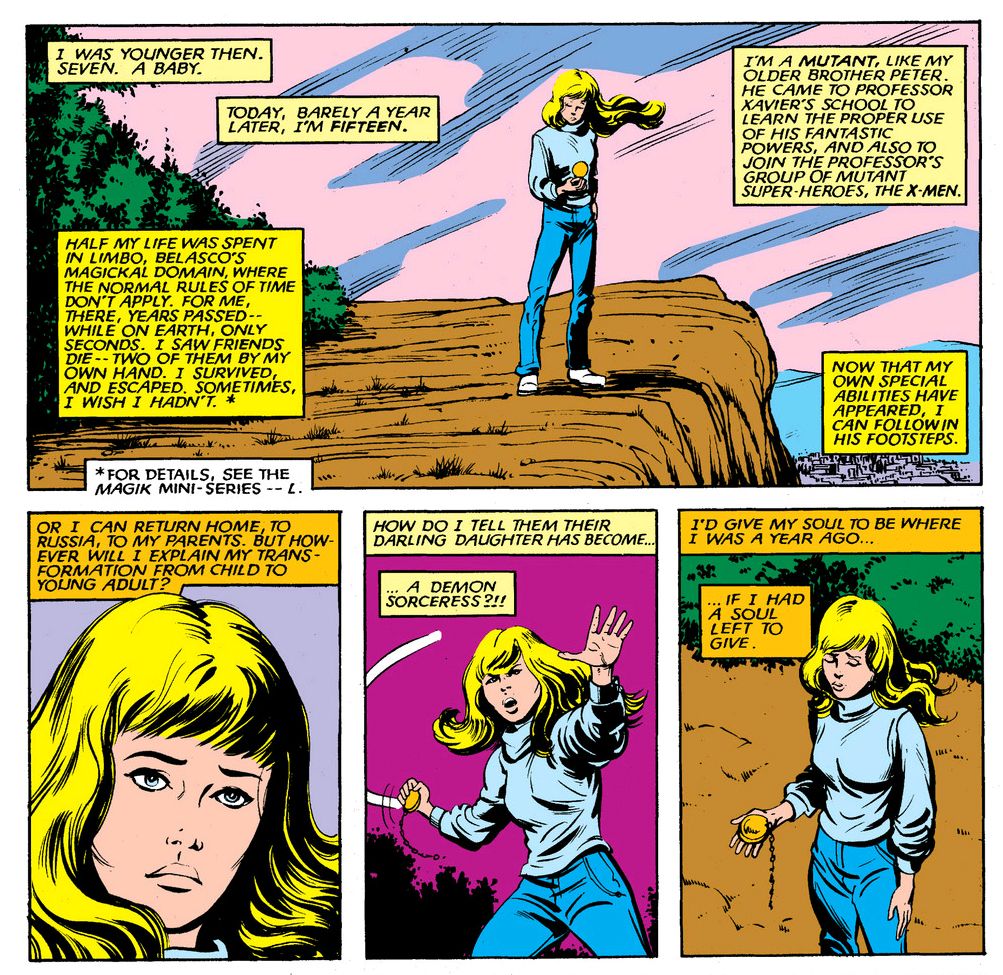
Claremont's crafty plan to undermine Dani and wrest control of his comic from her originates in Uncanny X-Men #160 (August 1982), where Claremont and art team Brent Anderson and Bob Wiacek have a demon named Belasco spirit the child away to a timeless limbo called, conveniently if unimaginatively, Limbo.  At the end of the issue, Illyana pops back in, only now she's thirteen years old and she's not only a mutant, but also a demonic sorcerous with a magical sword that manifests itself from time to time.  Flash-forward two years and, with Dani putting pressure on editor Louise Jones to have her book re-named Moonstar and the Other Mutants, Claremont knew it was time to take decisive action.  He tossed Illyana, now code-named Magik, into The New Mutants and instantly changed the book's power structure.

While no scheme or villain the increasingly desperate creative team could devise would force Dani completely into the background, she would now have to learn to share the spotlight with Magik, who appears to have been especially beloved by Claremont, possibly because she embodied a number of his characteristic tropes of this era-- a young girl with vaguely BDSM leanings, a penchant for transformations and inner turmoil lending itself to verbose internal monologues.  Plus frequent opportunities to indulge himself in baroque adjectives like "eldritch" and the creation of portmanteau words like "Darkchild" and "Soulsword."

Chris Claremont, script/Sal Buscema, Tom Mandrake, art (The New Mutants #14,  April 1984)

Not one to underestimate Dani, Claremont and Jones knew they had to do more than simply foist Magik off on the New Mutants.  They had to further enhance Magik's position as prime Dani-challenger.  Rather than dole out Illyana's Limbo experience through the occasional flashback or multi-panel thought bubble reverie, Claremont teamed with artists John Buscema, Ron Frenz, Sal Buscema and Tom Palmer to produce Storm and Illyana: Magik, a four-issue mini-series, from December 1983 to March 1984.  Wow, Marvel was really pushing Magik on their readers, weren't they?  What Dani did organically by inhabiting the book with her own innate awesomeness, Magik would do through corporate strategy.  Top that, Dani!

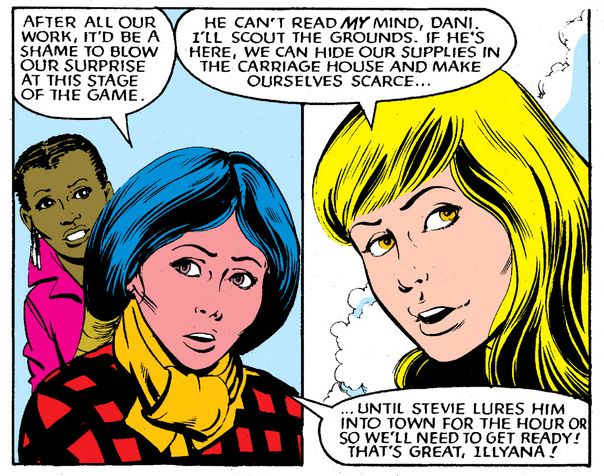
In fact, under the aegis of Claremont and with the approval of Marvel's upper echelon-- specifically, editor-in-chief Jim Shooter, who feared Dani might supplant the Amazing Spider-Man as the company's flagship character and force them to produce a whole slew of new promotional materials as well as wreck their deal with toy manufacturer Mattel (the company licensing Marvel's heroes for a line of action figures and play-sets based on Shooter's Marvel Super Heroes Secret Wars title, due to hit the shelves in May of that year)-- Magik gets to do something Dani never could: she actually narrates her very first The New Mutants issue, #14 (April 1984), in a story called "Do You Believe in Magik?" (Marvel certainly did!) which is all about how her twisted minions journey to Xavier's school to steal her back. Claremont and Sal Buscema even gift Magik with those solo pages once accorded to Dani.  Oh, you know Dani felt the sting.

So, how did Dani handle this upstart?  Actually, the career-savvy Dani was smart enough to cozy up to Magik almost from the start, quickly becoming her partner in crime.  Mild crimes, like planning a party for Professor X and trying to figure out how to surprise a guy who can read your merest thoughts.  And adding Magik to the group proved to be a move of pure Claremontian genius, because it was at this point The New Mutants began to develop its own voice, becoming darker and more mysterious.

Much as the artistic tension between Paul McCartney and John Lennon fueled some of the Beatles' finest albums, the strange dichotomy between the straight-forward Dani and the shadow-motivated Magik recharged Claremont's creative batteries.  The first pairing between these visual and philosophical opposites comes during the Mutants' multi-part battle with Emma Frost's Hellion team (caused by that snobby Kitty Pryde) in The New Mutants #15-17 (May-July 1984).  While this kind of story-- where the stakes are nothing more than deciding which fake philosophy will triumph while people wearing different-colored clothes clash meaninglessly-- never impressed me, it does provide us with a glimpse of better things to come when Magik takes Dani to her personal hell-dimension and introduces her to leather vest and ass-less chaps.

Chris Claremont, script/Sal Buscema, Tom Mandrake, art (The New Mutants #16,  June 1984)

Oh, and S'ym, one of those Claremont touches where he pays homage to whatever comic book he happened to be a fan of at the time because the world of comics in the Eighties was just one big, happy family of like-minded creatives making fabulous art.  So you'd see a poster featuring certain properties hanging in Kitty Pryde's room, or one of Dani's friends would gushingly mention a sci-fi/fantasy writer you just know Claremont had dinner with on a regular basis or at least hung out with after hours at some comic convention or another and you'd go, "Wow!  Even though I'm a dork, I'm validated because a fictional teen who has amazing adventures across space and time also likes the same weird things I love that everyone in my real life thinks are a waste of time!"

I mock, but I really have to thank Claremont sincerely for that because it did keep me going during those lonely, masturbatory years.

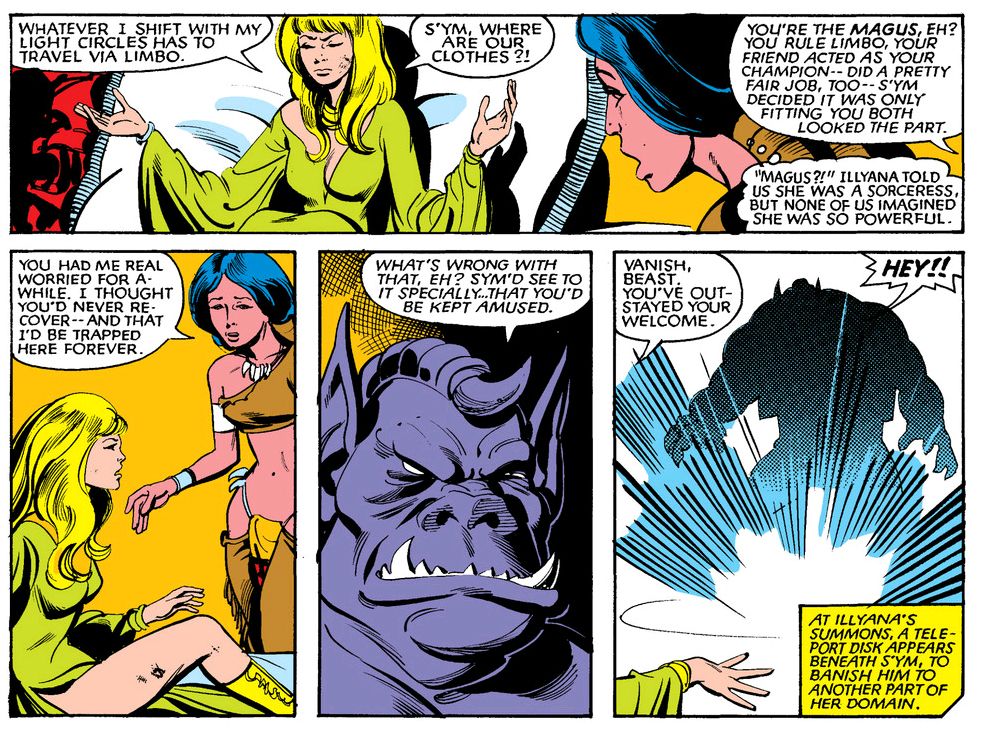
What point was I making?  Oh yeah.  S'ym.  S'ym is Magik's demon assistant, but his name is curiously similar to a particular Canadian independent comic book creator's and he just happens to somewhat resemble that creator's famous aardvarkian-barbarian creation right down to his vest.  His lurid interest in "amusing" Dani is probably reminiscent as well, but it's been years since I last read anything about earth pigs.

Chris Claremont, script/Sal Buscema, Kim DeMulder, art (The New Mutants #17,  July 1984)

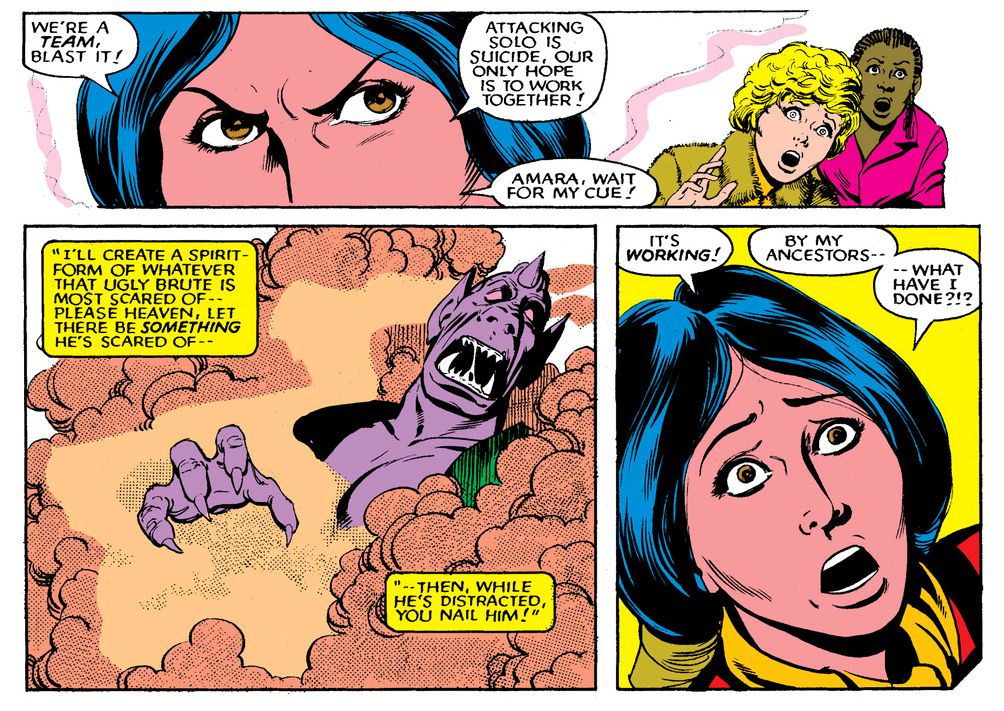
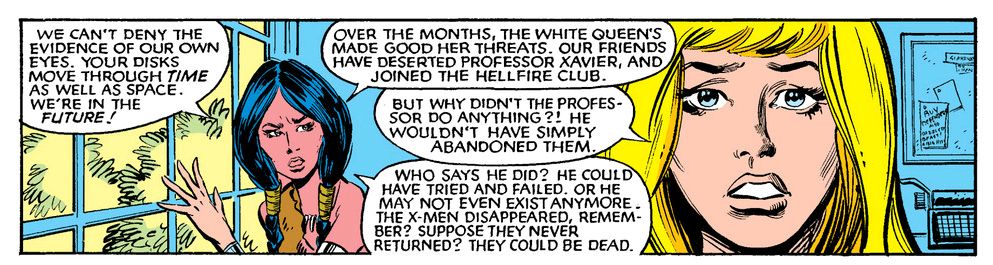
Well, whatever his inspirations, the now fully-engaged Claremont has both girls work together to save the team this time (from a nasty future in which they've become Hellions) for almost two full issues.  And throughout, Dani refrained from plunging her knife into Magik's semi-evil heart and Magik didn't transform Dani into a toadstool and sit on her.  Progress of a sort, I guess.

Chris Claremont, script/Sal Buscema, Kim DeMulder, art (The New Mutants #17,  July 1984)

 Speaking of progress, the success of the Magik-gambit led Claremont to inaugurate phase two of his plan.  This involved the arrival of Bill Sienkiewicz on art duties, and would see The New Mutants become more consistently interesting and genre-expanding than the book it spun-off from.  Which in turn benefitted Dani, because without Magik giving Claremont the impetus to start experimenting and moving away from stale Uncanny X-Men cast-off plots and toy line team-ups, Dani might not have achieved her greatest victory, over a plot element introduced way back in the very first issue and all but forgotten since.

Which would very nearly prove Dani's untimely death, leaving Magik the undisputed lead character.

Chris Claremont, script/Sal Buscema, Kim DeMulder, art (The New Mutants #17,  July 1984)